


Acrylic on panel.
Unique work. Signed and dated to verso ‘Richard Anuszkiewicz 1975’.
Soft Gray (1975) by Richard Anuszkiewicz is a unique acrylic on panel measuring 49.8 × 65.7 cm. A leading figure of the Op Art movement, Anuszkiewicz uses precise geometry and subtle shifts in color to create a vibrating sense of depth and optical rhythm. Here, a field of soft gray is punctuated by vertical linear elements that transition from turquoise to deep violet, producing a pulsating visual effect that seems to expand and contract as the eye moves across the surface. The work exemplifies Anuszkiewicz’s exploration of color interaction and perception, turning rigorous abstraction into a meditative yet dynamic experience.
Artwork Copyright © Richard AnuszkiewiczRichard Anuszkiewicz (USA, 1930–2020) was a leading figure in the Op Art movement, renowned for his vibrant, geometric paintings that explore optical perception and color theory. Influenced by Josef Albers, his works use precise patterns and contrasting hues to create dynamic visual effects. Anuszkiewicz's art remains celebrated for its hypnotic and mathematically inspired compositions.
Artwork Copyright © Richard AnuszkiewiczSoft Gray, 1975
Form
Medium
Size
- Inches
- Centimeters
Edition
Price
- Authenticity Guaranteed
- Insured Shipping
- Online Since 2005
●Inventory 16178
●Signed
●Comes with gallery invoice and certificate
●Sell Us a Similar Artwork. Learn more.
Acrylic on panel.
Unique work. Signed and dated to verso ‘Richard Anuszkiewicz 1975’.
Soft Gray (1975) by Richard Anuszkiewicz is a unique acrylic on panel measuring 49.8 × 65.7 cm. A leading figure of the Op Art movement, Anuszkiewicz uses precise geometry and subtle shifts in color to create a vibrating sense of depth and optical rhythm. Here, a field of soft gray is punctuated by vertical linear elements that transition from turquoise to deep violet, producing a pulsating visual effect that seems to expand and contract as the eye moves across the surface. The work exemplifies Anuszkiewicz’s exploration of color interaction and perception, turning rigorous abstraction into a meditative yet dynamic experience.
Artwork Copyright © Richard AnuszkiewiczRichard Anuszkiewicz (USA, 1930–2020) was a leading figure in the Op Art movement, renowned for his vibrant, geometric paintings that explore optical perception and color theory. Influenced by Josef Albers, his works use precise patterns and contrasting hues to create dynamic visual effects. Anuszkiewicz's art remains celebrated for its hypnotic and mathematically inspired compositions.
Artwork Copyright © Richard Anuszkiewicz- Recently Added
- Price (Low-High)
- Price (High-Low)
- Year (Low-High)
- Year (High-Low)

Richard Anuszkiewicz
Soft Gray, 1975
Painting
Acrylic paint
Inquire For Price

Richard Anuszkiewicz
Untitled OP Art Cube, 1968
Sculpture / Object
Mixed Media
USD 2,990
Related Artists
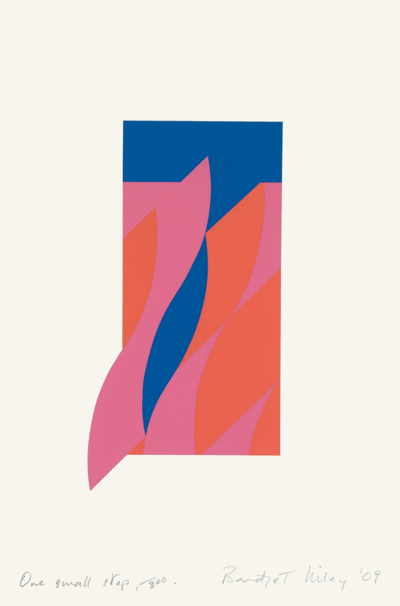


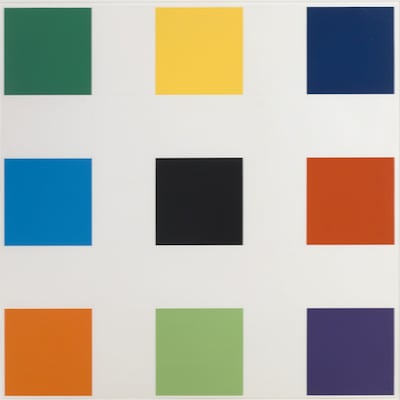
Artwork by Ellsworth Kelly
What is Hard Edge Art?
Hard Edge art is a style of abstract painting that became popular in the 1960s. It features areas of color separated by crisp, sharp edges that are painted with geometric precision. The term hard-edge painting was coined by art critic Jules Langsner to describe this approach, which contrasts with the softer, more fluid forms of other abstract styles.

Richard Anuszkiewicz
Soft Gray, 1975
49.8 x 65.7 cm


