
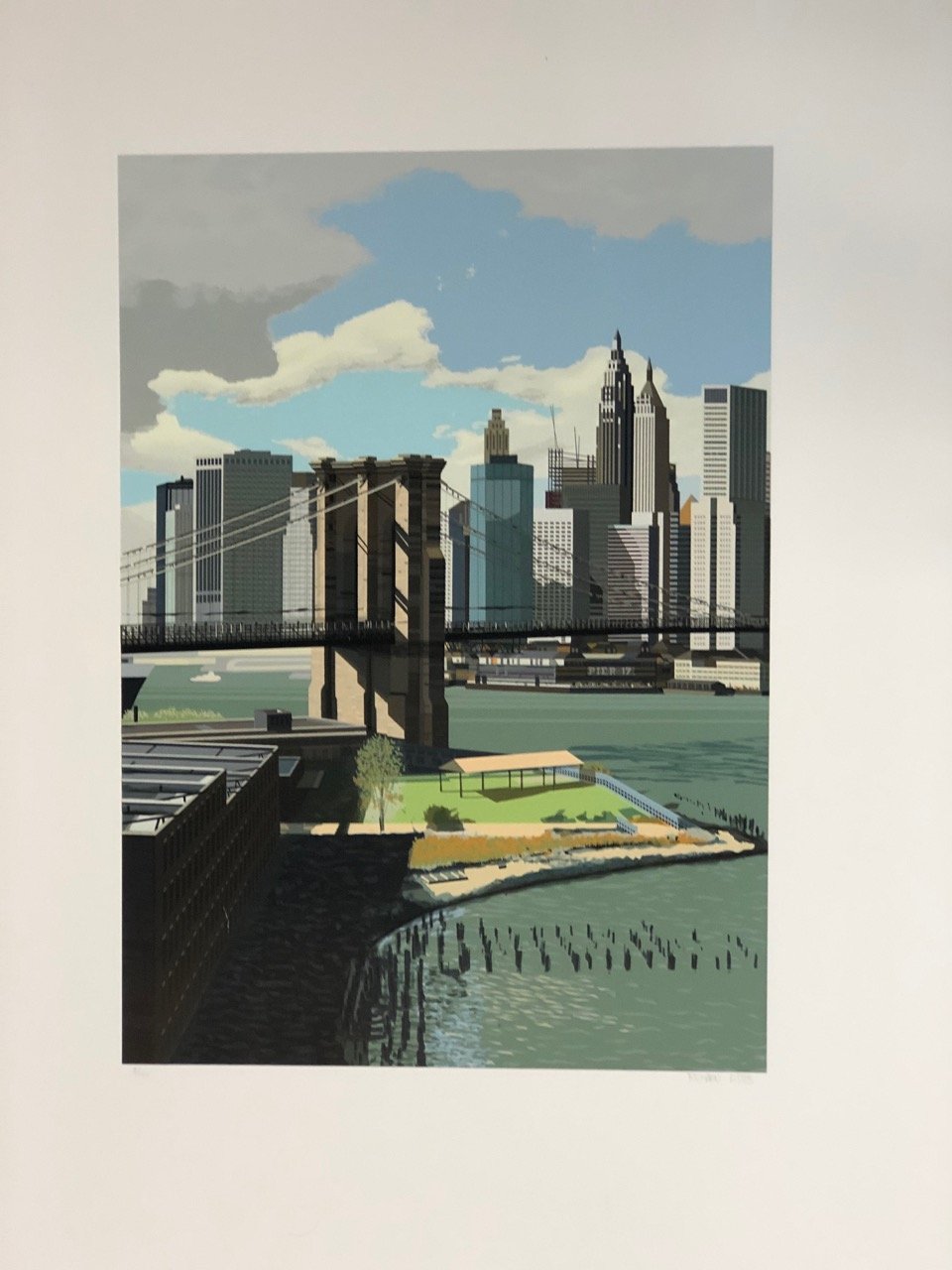
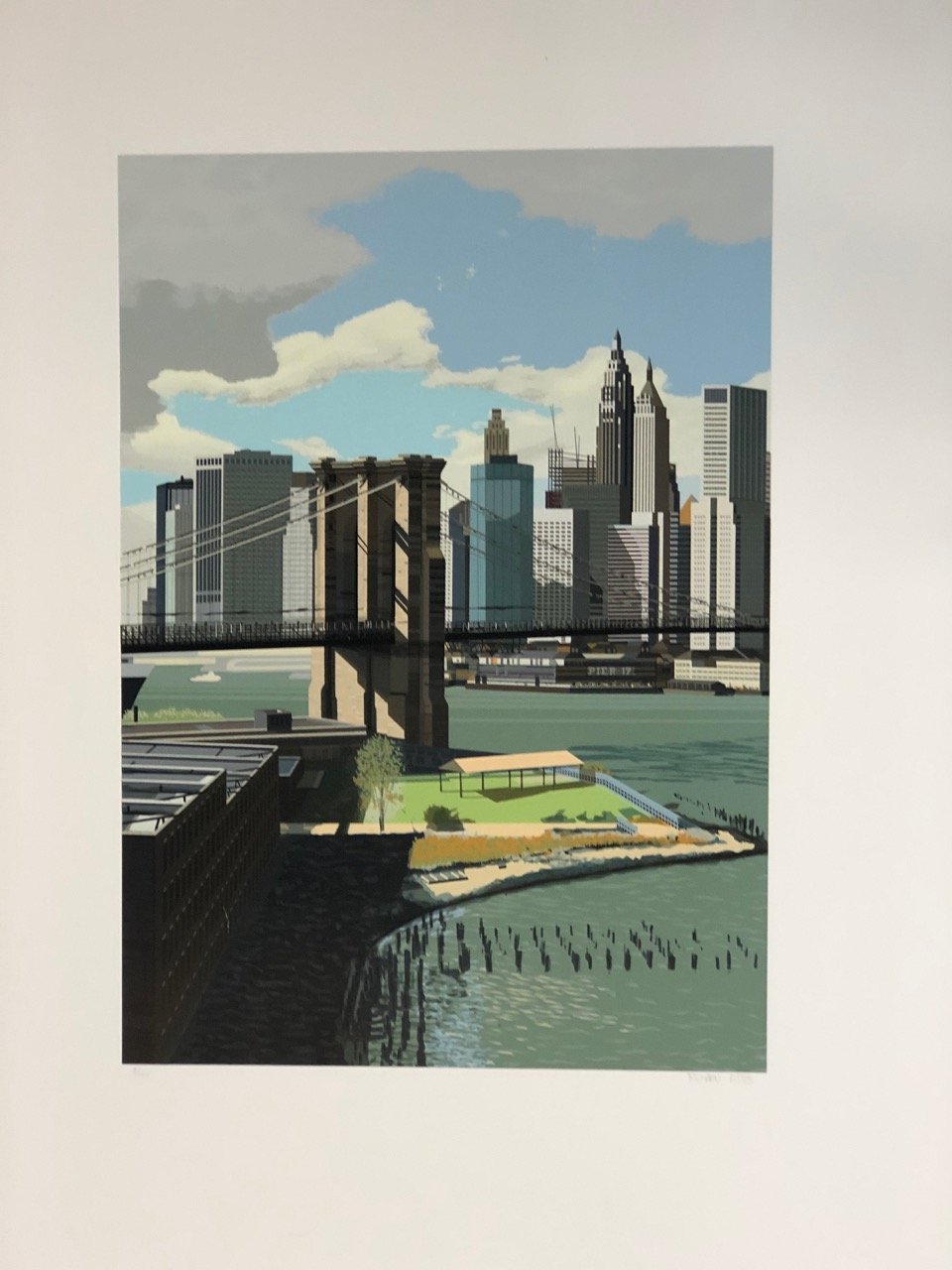
// East River, New York by Richard Estes is a detailed serigraph from 1989 that captures a view of New York City’s iconic Brooklyn Bridge and the surrounding skyline. Rendered in Estes’ signature photorealistic style, the print showcases meticulous detail in the architecture, the shadows cast by the buildings, and the reflections on the water. The composition includes a bright sky with soft clouds, adding depth and contrast to the structured forms of the cityscape. Estes' work often reflects the urban environment with clarity and precision, and this piece offers a serene yet dynamic view of the bustling city, encapsulating a moment of calm within the metropolis.
Artwork Copyright © Richard EstesRichard Estes (USA, 1932) is a leading figure in Photorealism, celebrated for his meticulous urban scenes. Using photographs as references, he creates hyper-detailed paintings of reflective surfaces, storefronts, and cityscapes, capturing modern life with stunning precision.
Artwork Copyright © Richard EstesEast River, New York, 1989
Form
Medium
Size
- Inches
- Centimeters
Edition
Price
Available works →
- Authenticity Guaranteed
- Insured Shipping
- Online Since 2005
●
●Inventory 7531
●Signed
●Comes with gallery invoice and certificate
●Sell Us a Similar Artwork. Learn more.
// East River, New York by Richard Estes is a detailed serigraph from 1989 that captures a view of New York City’s iconic Brooklyn Bridge and the surrounding skyline. Rendered in Estes’ signature photorealistic style, the print showcases meticulous detail in the architecture, the shadows cast by the buildings, and the reflections on the water. The composition includes a bright sky with soft clouds, adding depth and contrast to the structured forms of the cityscape. Estes' work often reflects the urban environment with clarity and precision, and this piece offers a serene yet dynamic view of the bustling city, encapsulating a moment of calm within the metropolis.
Artwork Copyright © Richard EstesRichard Estes (USA, 1932) is a leading figure in Photorealism, celebrated for his meticulous urban scenes. Using photographs as references, he creates hyper-detailed paintings of reflective surfaces, storefronts, and cityscapes, capturing modern life with stunning precision.
Artwork Copyright © Richard Estes- Recently Added
- Price (Low-High)
- Price (High-Low)
- Year (Low-High)
- Year (High-Low)

Richard Estes
Big Diamonds, 1979
Limited Edition Print
Screen-print
Currently Not Available

Richard Estes
East River, New York, 1989
Limited Edition Print
Serigraph
Currently Not Available
Related Artists
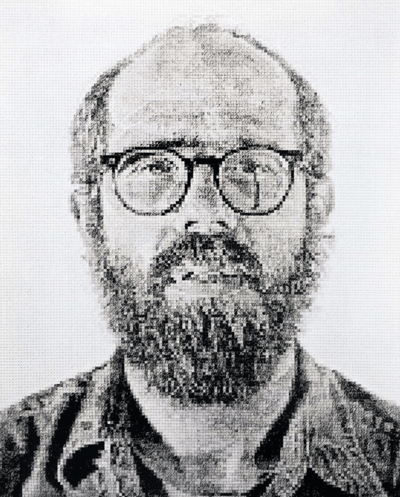
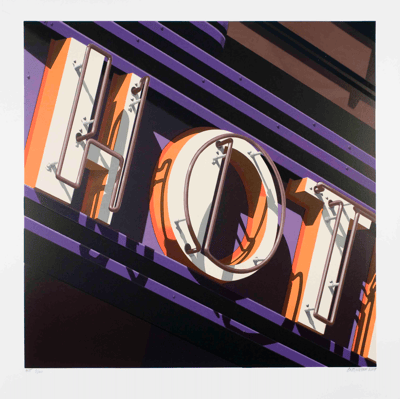
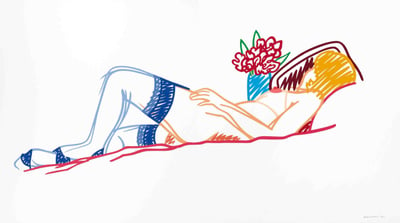
Artwork by Robert Cottingham
What is Hyper-realism?
Hyperrealism is a genre of sculpture and painting that closely resembles high-resolution photographs. It is an evolution of Photorealism and is often applied to an independent art style or movement that became prominent in Europe and the United States in the early 2000s. Hyperrealist artists focus on extreme detail and precision, creating works that are often indistinguishable from real-life images.

Richard Estes
East River, New York, 1989
45 x 30.5 cm


