

Original screenprint in colors on paper - Published by Parasol Press New York.
Richard Estes’ Salzburg Cathedral (1982) is a striking screen print that captures the essence of photorealism. The artwork presents an intricate view through glass doors, where interior reflections merge seamlessly with the sunlit exterior of the cathedral. The architectural details are meticulously rendered, with sharp lines and precise shading that evoke the realism of a photograph. Through the layers of glass, viewers glimpse the historic cathedral’s facade bathed in warm light, contrasting with the shadowed interior. Estes masterfully plays with transparency and reflection, creating an almost surreal perspective that draws attention to the interaction between indoor and outdoor spaces.
Artwork Copyright © Richard EstesRichard Estes (USA, 1932) is a leading figure in Photorealism, celebrated for his meticulous urban scenes. Using photographs as references, he creates hyper-detailed paintings of reflective surfaces, storefronts, and cityscapes, capturing modern life with stunning precision.
Artwork Copyright © Richard EstesSalzburg Cathedral, 1982
Form
Medium
Size
- Inches
- Centimeters
Edition
Price
Available works →
- Authenticity Guaranteed
- Insured Shipping
- Online Since 2005
●
●Inventory 8698
●Signed
●Comes with gallery invoice and certificate
●Sell Us a Similar Artwork. Learn more.
Original screenprint in colors on paper - Published by Parasol Press New York.
Richard Estes’ Salzburg Cathedral (1982) is a striking screen print that captures the essence of photorealism. The artwork presents an intricate view through glass doors, where interior reflections merge seamlessly with the sunlit exterior of the cathedral. The architectural details are meticulously rendered, with sharp lines and precise shading that evoke the realism of a photograph. Through the layers of glass, viewers glimpse the historic cathedral’s facade bathed in warm light, contrasting with the shadowed interior. Estes masterfully plays with transparency and reflection, creating an almost surreal perspective that draws attention to the interaction between indoor and outdoor spaces.
Artwork Copyright © Richard EstesRichard Estes (USA, 1932) is a leading figure in Photorealism, celebrated for his meticulous urban scenes. Using photographs as references, he creates hyper-detailed paintings of reflective surfaces, storefronts, and cityscapes, capturing modern life with stunning precision.
Artwork Copyright © Richard Estes- Recently Added
- Price (Low-High)
- Price (High-Low)
- Year (Low-High)
- Year (High-Low)

Richard Estes
Big Diamonds, 1979
Limited Edition Print
Screen-print
Currently Not Available

Richard Estes
East River, New York, 1989
Limited Edition Print
Serigraph
Currently Not Available
Related Artists
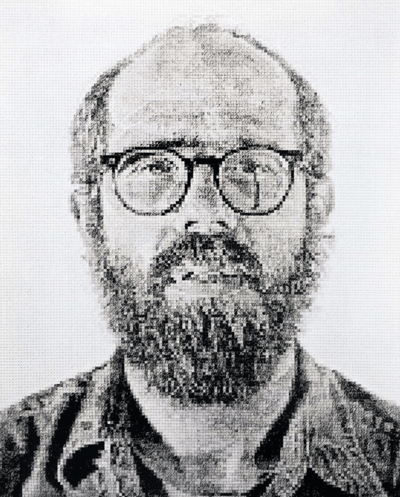
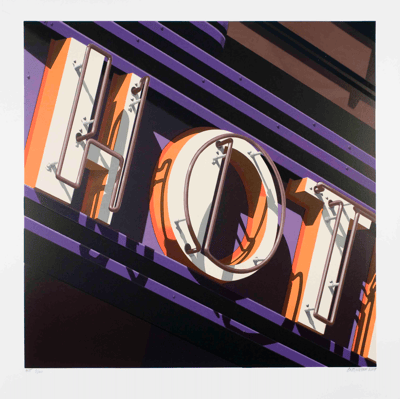


Artwork by Robert Longo
What is photorealism?
Photorealism is a genre of art or artistic movement that involves drawing, painting, and other graphic media in which the artist carefully studies a photograph and attempts to reproduce it as realistically as possible in another medium. While the term can broadly describe any artwork created in this manner, it specifically refers to a group of painters and paintings in the U.S. art movement that emerged in the late 1960s and early 1970s.


