
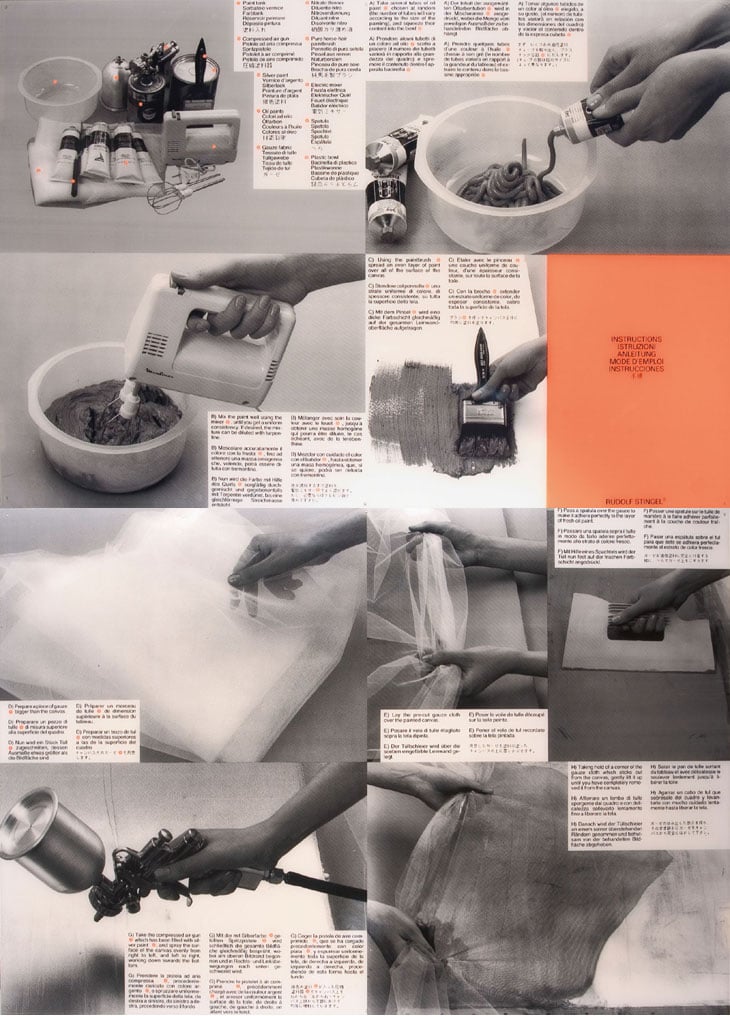
silkscreen ink on Sintra
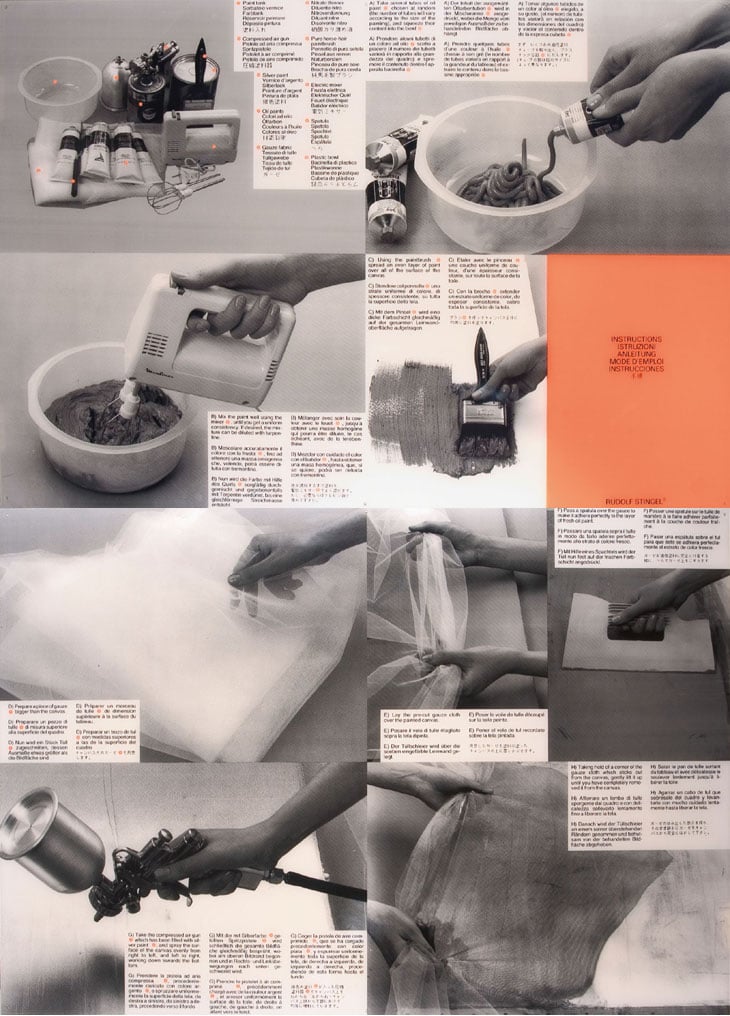
Instructions by Rudolf Stingel is a limited edition silkscreen print created in 1989. Using black-and-white photographic images accompanied by text, this piece serves as a visual guide on various art-making techniques, emphasizing the materiality and process of creation. The montage-like layout shows hands mixing, rolling, and manipulating materials, echoing instructional manuals while blending art with a practical guide. The use of Sintra as the substrate enhances the piece's durability and gives it a slightly industrial feel. With only five copies and five artist proofs, Instructions is a rare piece that encapsulates Stingel’s conceptual approach, bridging art and instructional text.
Artwork Copyright © Rudolf StingelRudolf Stingel (Italy, 1956) is a contemporary artist renowned for his conceptual approach to painting and installations. Utilizing unconventional materials like carpet, Styrofoam, and aluminum, he challenges traditional perceptions of art. Stingel's participatory installations often invite audience interaction, blurring the lines between artist and viewer. His work has been exhibited globally, including at the Whitney Museum of American Art and the Venice Biennale.
Artwork Copyright © Rudolf StingelInstructions, 1989
Form
Medium
Size
- Inches
- Centimeters
Edition
Price
Available works →
- Authenticity Guaranteed
- Insured Shipping
- Online Since 2005
●
●Inventory 3793
●Signed
●Comes with gallery invoice and certificate
●Sell Us a Similar Artwork. Learn more.
silkscreen ink on Sintra
Instructions by Rudolf Stingel is a limited edition silkscreen print created in 1989. Using black-and-white photographic images accompanied by text, this piece serves as a visual guide on various art-making techniques, emphasizing the materiality and process of creation. The montage-like layout shows hands mixing, rolling, and manipulating materials, echoing instructional manuals while blending art with a practical guide. The use of Sintra as the substrate enhances the piece's durability and gives it a slightly industrial feel. With only five copies and five artist proofs, Instructions is a rare piece that encapsulates Stingel’s conceptual approach, bridging art and instructional text.
Artwork Copyright © Rudolf StingelRudolf Stingel (Italy, 1956) is a contemporary artist renowned for his conceptual approach to painting and installations. Utilizing unconventional materials like carpet, Styrofoam, and aluminum, he challenges traditional perceptions of art. Stingel's participatory installations often invite audience interaction, blurring the lines between artist and viewer. His work has been exhibited globally, including at the Whitney Museum of American Art and the Venice Biennale.
Artwork Copyright © Rudolf Stingel- Recently Added
- Price (Low-High)
- Price (High-Low)
- Year (Low-High)
- Year (High-Low)
Rudolf Stingel
Untitled, 2023
Limited Edition Print
Digital print on canvas
USD 5,000 - 6,000
Rudolf Stingel
Instructions, 1989
Limited Edition Print
Silkscreen
Currently Not Available
Available works by Rudolf Stingel
See all →Rudolf Stingel
Untitled, 2023
Limited Edition Print
Digital print on canvas
USD 5,000 - 6,000
Related Artists



Artwork by Shepard Fairey
What is appropriation?
Appropriation in art involves using pre-existing images or objects with little or no modification. This technique has played a significant role across various art forms, including visual arts, music, performance, and literature. In visual arts, appropriation refers to the practice of adopting, sampling, recycling, or borrowing elements—or even entire forms—of existing visual culture, integrating them into new works to create meaning or critique.

Rudolf Stingel
Instructions, 1989
155 x 107 cm


