

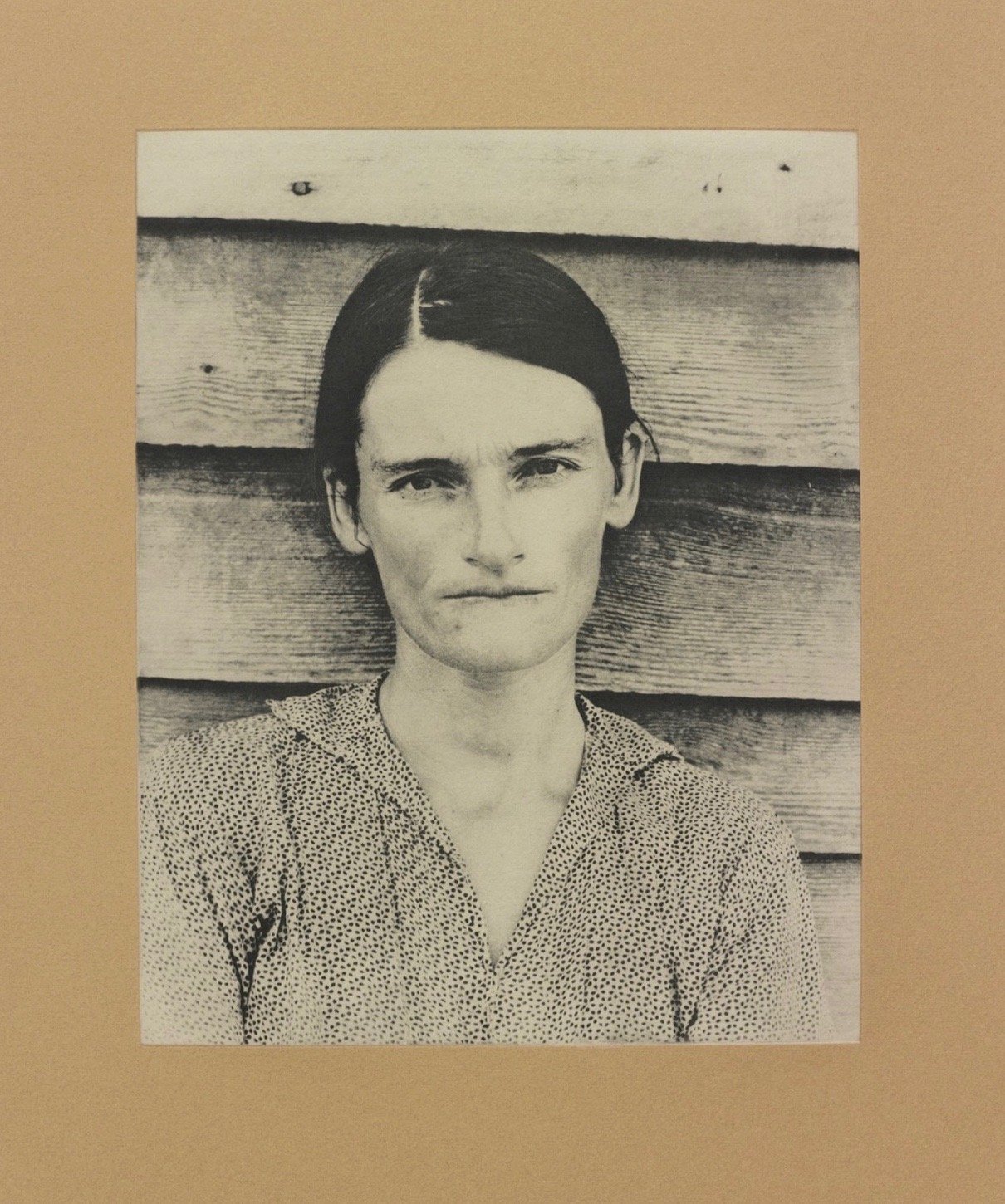
// Barcham Green Portfolio No. 5 by Sherrie Levine, created in 1986, is a photogravure that examines themes of appropriation and originality. Known for recontextualizing existing imagery, Levine often draws from iconic photographs, as seen in this portrait, which evokes the stark, raw authenticity of Depression-era photography. The subject’s solemn expression and the worn texture of the wooden backdrop convey a sense of resilience and hardship. By reproducing and presenting this image as her own, Levine invites viewers to consider the nature of authorship, identity, and artistic legacy. This piece, part of a limited edition of 25, exemplifies Levine’s challenge to traditional ideas of originality in art.
Artwork Copyright © Sherrie LevineSherrie Levine (United States, 1947) is a conceptual artist known for her provocative appropriations of iconic artworks, challenging notions of originality and authorship. Her re-photographs of Walker Evans' images and bronze casts of Marcel Duchamp's 'Fountain' exemplify her critique of art history and the male-dominated art world.
Artwork Copyright © Sherrie LevineBarcham Green Portfolio No. 5, 1986
Form
Medium
Size
- Inches
- Centimeters
Edition
Price
Available works →
- Authenticity Guaranteed
- Insured Shipping
- Online Since 2005
●
●Inventory 6893
●Signed
●Comes with gallery invoice and certificate
●Sell Us a Similar Artwork. Learn more.
// Barcham Green Portfolio No. 5 by Sherrie Levine, created in 1986, is a photogravure that examines themes of appropriation and originality. Known for recontextualizing existing imagery, Levine often draws from iconic photographs, as seen in this portrait, which evokes the stark, raw authenticity of Depression-era photography. The subject’s solemn expression and the worn texture of the wooden backdrop convey a sense of resilience and hardship. By reproducing and presenting this image as her own, Levine invites viewers to consider the nature of authorship, identity, and artistic legacy. This piece, part of a limited edition of 25, exemplifies Levine’s challenge to traditional ideas of originality in art.
Artwork Copyright © Sherrie LevineSherrie Levine (United States, 1947) is a conceptual artist known for her provocative appropriations of iconic artworks, challenging notions of originality and authorship. Her re-photographs of Walker Evans' images and bronze casts of Marcel Duchamp's 'Fountain' exemplify her critique of art history and the male-dominated art world.
Artwork Copyright © Sherrie Levine- Recently Added
- Price (Low-High)
- Price (High-Low)
- Year (Low-High)
- Year (High-Low)

Sherrie Levine
Barcham Green Portfolio No. 5, 1986
Limited Edition Print
Photogravure
Currently Not Available
Related Artists
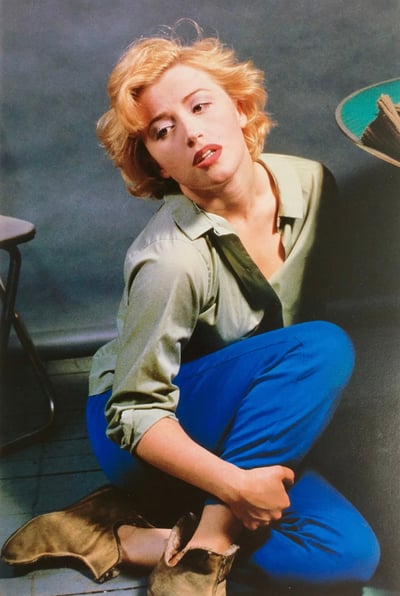

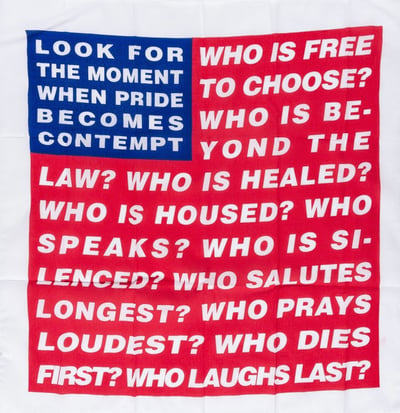

Artwork by Miles Aldridge
What is contemporary art?
Contemporary art refers to avant-garde or innovative art created in the recent past or present day. The exact starting point of contemporary art varies depending on the institution, often tied to the founding year of museums or galleries that showcase the style. Contemporary art is characterized by its focus on current ideas, diverse media, and the exploration of new concepts and techniques.
Sherrie Levine
Barcham Green Portfolio No. 5, 1986
78.7 x 57.2 cm


