

// Natural History by Arakawa Shusaku is a serigraph print that explores abstract concepts of decision-making and perception through minimalist design and textual elements. The artwork features a line that begins on the left and subtly slopes downward, accompanied by a colorful cluster of vertical lines on the right. Below, phrases such as the length of decision and the nature of taste or bullshit provoke thought on human choices and subjective interpretation. Created in 1969, this limited edition print (192/200) embodies Arakawa’s intellectual approach to art, where language and geometry intersect to question reality and the nature of decision.
Artwork Copyright © Shusaku ArakawaShusaku Arakawa (Japan, 1936–2010) was a visionary artist and architect whose work challenged conventional perceptions of space and existence. Co-creator of 'reversible destiny' architecture, he blended conceptual art with experimental design to provoke thought about life and mortality. Arakawa’s groundbreaking works, often in collaboration with Madeline Gins, continue to influence contemporary art and architecture.
Artwork Copyright © Shusaku ArakawaNatural History, 1969
Form
Medium
Size
- Inches
- Centimeters
Edition
Price
Available works →
- Authenticity Guaranteed
- Insured Shipping
- Online Since 2005
●
●Inventory 5280
●Hand Signed
●Comes with gallery invoice and certificate
●Sell Us a Similar Artwork. Learn more.
// Natural History by Arakawa Shusaku is a serigraph print that explores abstract concepts of decision-making and perception through minimalist design and textual elements. The artwork features a line that begins on the left and subtly slopes downward, accompanied by a colorful cluster of vertical lines on the right. Below, phrases such as the length of decision and the nature of taste or bullshit provoke thought on human choices and subjective interpretation. Created in 1969, this limited edition print (192/200) embodies Arakawa’s intellectual approach to art, where language and geometry intersect to question reality and the nature of decision.
Artwork Copyright © Shusaku ArakawaShusaku Arakawa (Japan, 1936–2010) was a visionary artist and architect whose work challenged conventional perceptions of space and existence. Co-creator of 'reversible destiny' architecture, he blended conceptual art with experimental design to provoke thought about life and mortality. Arakawa’s groundbreaking works, often in collaboration with Madeline Gins, continue to influence contemporary art and architecture.
Artwork Copyright © Shusaku Arakawa- Recently Added
- Price (Low-High)
- Price (High-Low)
- Year (Low-High)
- Year (High-Low)
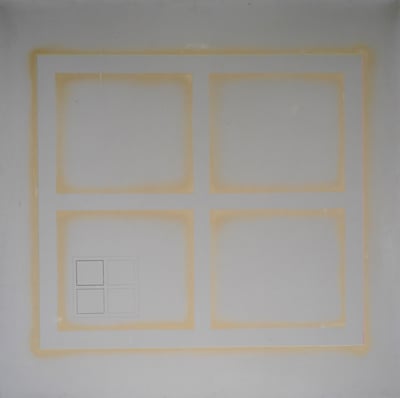
Shusaku Arakawa
Four dimensions exist in one dimension, 1965
Painting
Acrylic on canvas
USD 105,000 - 130,000

Shusaku Arakawa
Natural History, 1969
Limited Edition Print
Serigraph
Currently Not Available
Available works by Shusaku Arakawa
See all →Shusaku Arakawa
Four dimensions exist in one dimension, 1965
Painting
Acrylic on canvas
USD 105,000 - 130,000
Related Artists

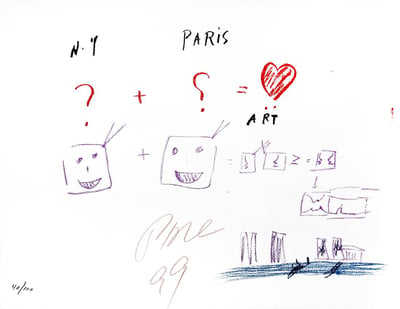
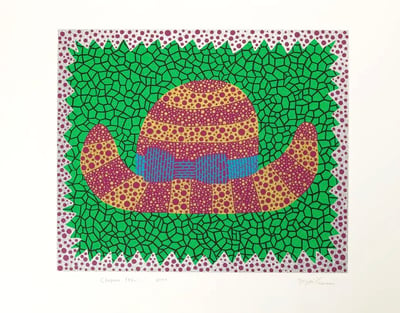


Artwork by Laure Prouvost
What is Lettrism?
Lettrism is an art form that uses letters, words, and symbols to create artwork. The movement was established in Paris in the 1940s and later gained popularity in the 1950s in America. Lettrisme is the French spelling of the movement's name, derived from the French word for letter.

Shusaku Arakawa
Natural History, 1969
65 x 50 cm


