

Accompanied by certificate of authenticity signed and numbered by the artist.
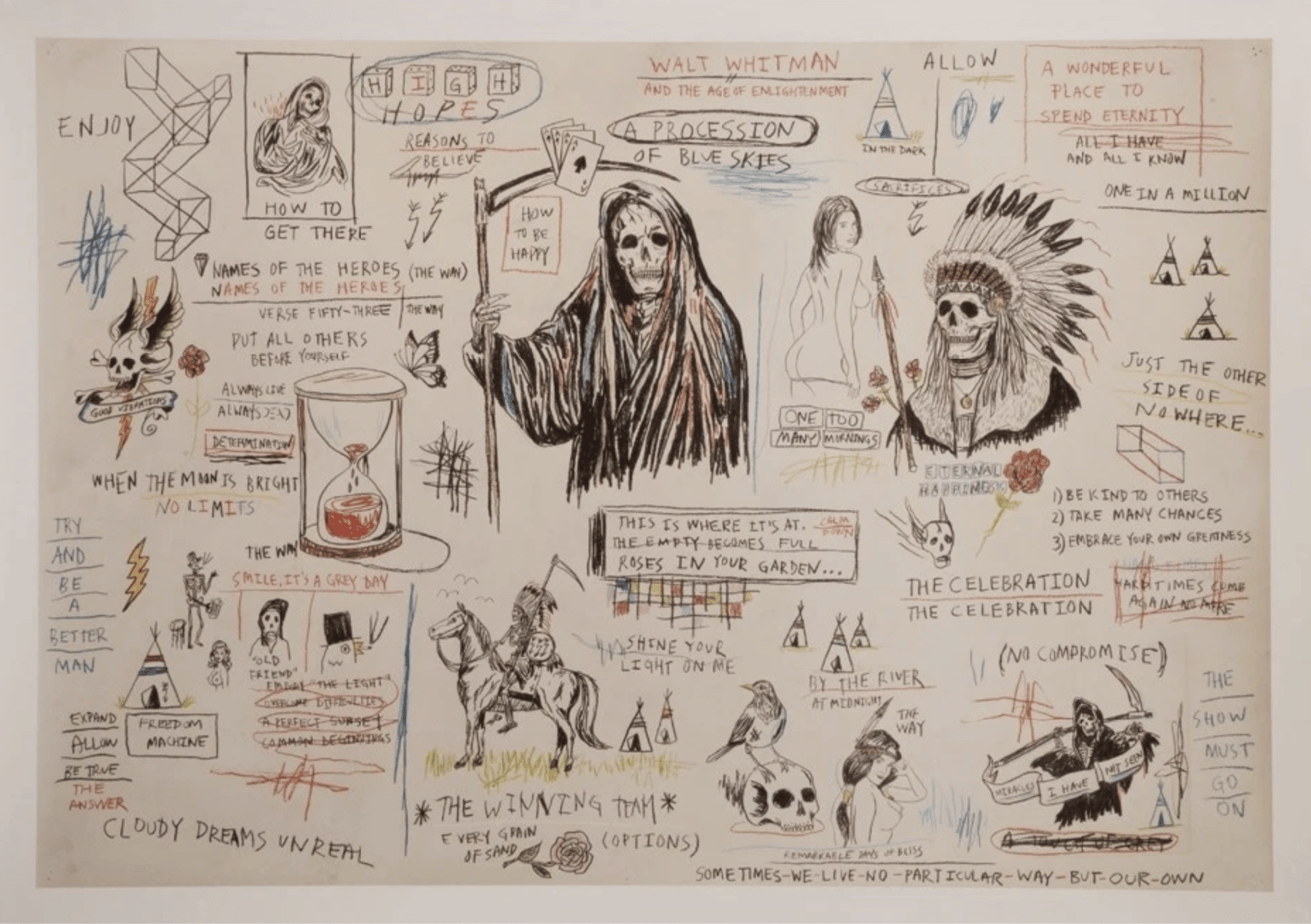
Standing on the Moon by Wes Lang is a 2013 limited-edition archival print that fuses text, sketches, and symbolic imagery in a collage-like composition. The artwork features repeated motifs of skulls, Native American headdresses, skeletons, and handwritten notes that explore themes of mortality, spirituality, and American identity. Lang incorporates quotes, references to Walt Whitman, and phrases like A Procession of Blue Skies, weaving together a narrative that is both introspective and reflective on cultural heritage. The loose, sketchy style gives the piece a raw, unfiltered quality, echoing themes of impermanence and the search for meaning in a chaotic world. This complex visual tapestry invites viewers to interpret its symbols and phrases within their own understanding of life and death.
Artwork Copyright © Wes LangWes Lang (USA, 1972) is a contemporary artist known for his evocative paintings and drawings that fuse American iconography with personal symbolism. His work incorporates motifs like skulls, Native American imagery, and references to the American West, exploring freedom and self-discovery. Influenced by Cy Twombly and Jean-Michel Basquiat, Lang has exhibited internationally.
Artwork Copyright © Wes LangStanding on the moon, 2013
Form
Medium
Size
- Inches
- Centimeters
Edition
Price
Available works →
- Authenticity Guaranteed
- Insured Shipping
- Online Since 2005
●
●Inventory 8631
●Signed on the certificate
●Comes with gallery invoice and certificate
●Sell Us a Similar Artwork. Learn more.
Accompanied by certificate of authenticity signed and numbered by the artist.
Standing on the Moon by Wes Lang is a 2013 limited-edition archival print that fuses text, sketches, and symbolic imagery in a collage-like composition. The artwork features repeated motifs of skulls, Native American headdresses, skeletons, and handwritten notes that explore themes of mortality, spirituality, and American identity. Lang incorporates quotes, references to Walt Whitman, and phrases like A Procession of Blue Skies, weaving together a narrative that is both introspective and reflective on cultural heritage. The loose, sketchy style gives the piece a raw, unfiltered quality, echoing themes of impermanence and the search for meaning in a chaotic world. This complex visual tapestry invites viewers to interpret its symbols and phrases within their own understanding of life and death.
Artwork Copyright © Wes LangWes Lang (USA, 1972) is a contemporary artist known for his evocative paintings and drawings that fuse American iconography with personal symbolism. His work incorporates motifs like skulls, Native American imagery, and references to the American West, exploring freedom and self-discovery. Influenced by Cy Twombly and Jean-Michel Basquiat, Lang has exhibited internationally.
Artwork Copyright © Wes Lang- Recently Added
- Price (Low-High)
- Price (High-Low)
- Year (Low-High)
- Year (High-Low)

Wes Lang
For the good times, 2020
Limited Edition Print
Archival Print
Currently Not Available

Wes Lang
Standing on the moon, 2013
Limited Edition Print
Archival Print
Currently Not Available
Related Artists

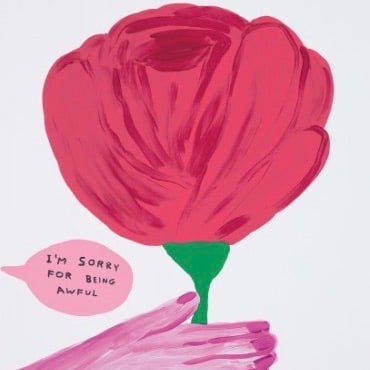
Artwork by David Shrigley
What is Naive Art?
Naïve art describes a style of artwork that is simple and unsophisticated, often created by artists without formal training in an academy or art school. The style is characterized by a lack of advanced techniques, giving it a childlike appearance. Naïve art often features bright colors, simple shapes, and a straightforward approach to subject matter, reflecting the artist's untrained perspective.

Wes Lang
Standing on the moon, 2013
50.5 x 74 cm


