

New York: Caldecott Chubb, 1978. - 8 chromogenic prints, bound into a 4to volume with slipcase; each approximately 8 x 5 3/8in. (20.3 x 13.8cm.)
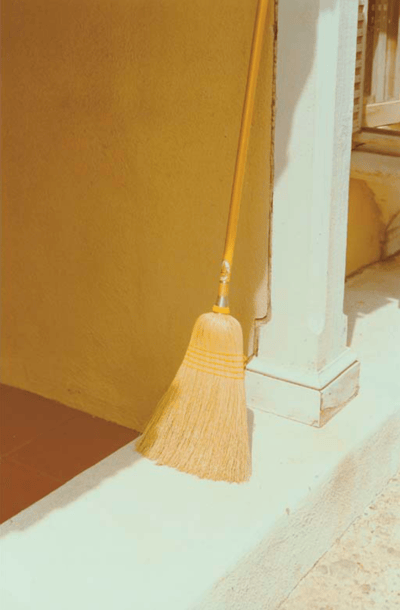
Morals of Vision by William Eggleston, created in 1978, is a chromogenic photograph that captures the subtle beauty of everyday objects through Eggleston’s pioneering use of color photography. This image features a simple broom leaning against a sunlit wall, casting soft shadows that emphasize its textured bristles and wooden handle. The warm tones of the wall and floor complement the natural hues of the broom, creating a serene and contemplative composition. Eggleston's focus on mundane subjects elevates them to art, highlighting the poetic resonance of overlooked details in ordinary settings. This work is part of a collection published by Caldecott Chubb in New York, presenting a quiet yet powerful meditation on the aesthetics of the commonplace.
Artwork Copyright © William EgglestonWilliam Eggleston (USA, 1939) is a pioneer of color photography, elevating it to fine art status in the 1970s. Known for his vivid depictions of everyday scenes in the American South, Eggleston captures mundane details with striking composition and saturated hues, transforming the ordinary into the extraordinary.
Artwork Copyright © William EgglestonMorals of Vision, 1978
Form
Medium
Size
- Inches
- Centimeters
Edition
Price
- USD
- EUR
- GBP
- CHF
- Authenticity Guaranteed
- Insured Shipping
- Online Since 2005
●Inventory 10443
●Signed
●Comes with gallery invoice and certificate
●Sell Us a Similar Artwork. Learn more.
New York: Caldecott Chubb, 1978. - 8 chromogenic prints, bound into a 4to volume with slipcase; each approximately 8 x 5 3/8in. (20.3 x 13.8cm.)
Morals of Vision by William Eggleston, created in 1978, is a chromogenic photograph that captures the subtle beauty of everyday objects through Eggleston’s pioneering use of color photography. This image features a simple broom leaning against a sunlit wall, casting soft shadows that emphasize its textured bristles and wooden handle. The warm tones of the wall and floor complement the natural hues of the broom, creating a serene and contemplative composition. Eggleston's focus on mundane subjects elevates them to art, highlighting the poetic resonance of overlooked details in ordinary settings. This work is part of a collection published by Caldecott Chubb in New York, presenting a quiet yet powerful meditation on the aesthetics of the commonplace.
Artwork Copyright © William EgglestonWilliam Eggleston (USA, 1939) is a pioneer of color photography, elevating it to fine art status in the 1970s. Known for his vivid depictions of everyday scenes in the American South, Eggleston captures mundane details with striking composition and saturated hues, transforming the ordinary into the extraordinary.
Artwork Copyright © William Eggleston- Recently Added
- Price (Low-High)
- Price (High-Low)
- Year (Low-High)
- Year (High-Low)
William Eggleston
Morals of Vision, 1978
Photography
Mixed Media
USD 49,000
Related Artists



Artwork by Laure Prouvost
What is Lettrism?
Lettrism is an art form that uses letters, words, and symbols to create artwork. The movement was established in Paris in the 1940s and later gained popularity in the 1950s in America. Lettrisme is the French spelling of the movement's name, derived from the French word for letter.


William Eggleston
Morals of Vision, 1978
20.3 x 13.8 cm


