

David LaChapelle
David LaChapelle (USA, 1963) is a visionary photographer and director, renowned for his surreal, colorful imagery blending pop culture, religion, and social commentary. His work spans fine art and commercial photography, featuring celebrities and vibrant narratives. LaChapelle’s style merges high fashion with hyperrealism, creating iconic, thought-provoking visual statements.
© David LaChapelle. All rights reserved.
- Recently Added
- Price (Low-High)
- Price (High-Low)
- Year (Low-High)
- Year (High-Low)

David LaChapelle
First I need your hand then forever can begin, 2009
Photography
C-Print
USD 11,900

David LaChapelle
Lost and Found - Good News, Art Edition: Arch Angel Uriel, 2019
Limited Edition Print
Archival Print
USD 2,950

David LaChapelle
Anna Kournikova: The Courts Free, 1998
Photography
Lithograph
USD 13,750
Success to me is being a good person, treating people well.
- David LaChapelle
- David LaChapelle
David LaChapelle, born on March 11, 1963, in Fairfield, Connecticut, is a contemporary artist whose work has blurred the lines between fine art photography and popular culture. With an oeuvre that spans over three decades, LaChapelle has established himself as one of the most provocative and influential photographers of his time. Combining the techniques of both classical portraiture and commercial photography, he captures the zeitgeist of an era defined by the confluence of celebrity, advertising, and media.
Known for his saturated color schemes, hyper-realistic settings, and often surreal tableaux, LaChapelle's photography is instantly recognizable. Although he achieved fame in the 1990s through his editorial work for publications like Vanity Fair, Interview, and Rolling Stone, his artistic scope has far exceeded the pages of fashion and celebrity magazines. He has photographed some of the most iconic figures of our time—ranging from Tupac Shakur and Michael Jackson to Hillary Clinton and Pope John Paul II—but his work transcends mere celebrity portraiture. His images often engage in socio-political commentary, addressing issues such as consumerism, climate change, and the human condition.
LaChapelle began his career in the 1980s in New York City, where he was discovered by Andy Warhol. Impressed by LaChapelle's unique vision, Warhol gave him his first professional photography job at Interview Magazine. This early mentorship had a lasting impact on LaChapelle's work, embedding in him a sense of audacity and a fearless willingness to push boundaries. Although the influence of Warhol is evident, LaChapelle has carved out a distinct artistic identity, fusing elements of surrealism, Baroque art, and popular culture into his creations.
Over the years, LaChapelle's work has found its way into major art institutions worldwide, with solo exhibitions at the Barbican Museum in London, the Musée d'Orsay in Paris, and the Museum of Contemporary Art in Taipei, among others. His photographs are included in the permanent collections of prestigious museums such as the Los Angeles County Museum of Art (LACMA) and the National Portrait Gallery in Washington, D.C.
Aside from his still photography, LaChapelle has also ventured into film, directing critically acclaimed documentaries and music videos. His short film "Rize" (2005) explores the subculture of "clowning" and "krumping" dance styles in Los Angeles, providing yet another lens through which LaChapelle interrogates the complexities of contemporary life.
A multiple award-winner, LaChapelle has received accolades such as the Young Photographers' Alliance Lifetime Achievement Award and the Art Directors Club Award for his contributions to the visual arts. Yet, for all the recognition he has gained, LaChapelle remains an enigmatic figure committed to pushing the envelope, challenging societal norms, and redefining the boundaries of what is considered "art."
In a world oversaturated by images, David LaChapelle's work remains a testament to the power of photography as a medium that can both captivate and critique, revealing the beauty, absurdity, and contradictions inherent in the human experience. (Artist Website)
Known for his saturated color schemes, hyper-realistic settings, and often surreal tableaux, LaChapelle's photography is instantly recognizable. Although he achieved fame in the 1990s through his editorial work for publications like Vanity Fair, Interview, and Rolling Stone, his artistic scope has far exceeded the pages of fashion and celebrity magazines. He has photographed some of the most iconic figures of our time—ranging from Tupac Shakur and Michael Jackson to Hillary Clinton and Pope John Paul II—but his work transcends mere celebrity portraiture. His images often engage in socio-political commentary, addressing issues such as consumerism, climate change, and the human condition.
LaChapelle began his career in the 1980s in New York City, where he was discovered by Andy Warhol. Impressed by LaChapelle's unique vision, Warhol gave him his first professional photography job at Interview Magazine. This early mentorship had a lasting impact on LaChapelle's work, embedding in him a sense of audacity and a fearless willingness to push boundaries. Although the influence of Warhol is evident, LaChapelle has carved out a distinct artistic identity, fusing elements of surrealism, Baroque art, and popular culture into his creations.
Over the years, LaChapelle's work has found its way into major art institutions worldwide, with solo exhibitions at the Barbican Museum in London, the Musée d'Orsay in Paris, and the Museum of Contemporary Art in Taipei, among others. His photographs are included in the permanent collections of prestigious museums such as the Los Angeles County Museum of Art (LACMA) and the National Portrait Gallery in Washington, D.C.
Aside from his still photography, LaChapelle has also ventured into film, directing critically acclaimed documentaries and music videos. His short film "Rize" (2005) explores the subculture of "clowning" and "krumping" dance styles in Los Angeles, providing yet another lens through which LaChapelle interrogates the complexities of contemporary life.
A multiple award-winner, LaChapelle has received accolades such as the Young Photographers' Alliance Lifetime Achievement Award and the Art Directors Club Award for his contributions to the visual arts. Yet, for all the recognition he has gained, LaChapelle remains an enigmatic figure committed to pushing the envelope, challenging societal norms, and redefining the boundaries of what is considered "art."
In a world oversaturated by images, David LaChapelle's work remains a testament to the power of photography as a medium that can both captivate and critique, revealing the beauty, absurdity, and contradictions inherent in the human experience. (Artist Website)
Related Artists


Related Articles
Collecting - March 27, 2025
Collecting Photography: A Beginner’s Guide to Fine Art Photos
Learn how to collect fine art photography—from print types and editioning to care tips and top photographers like Adams, Sherman, and Gursky.Read More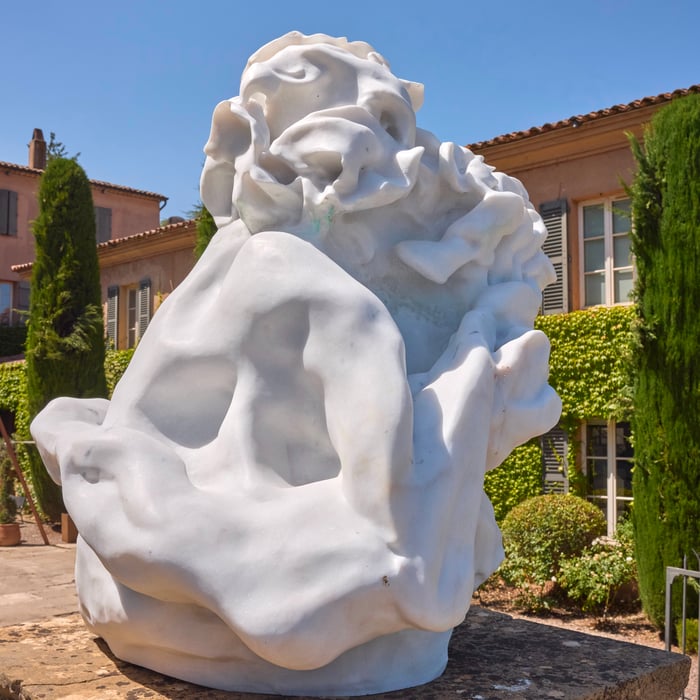
News, Popular, Collecting, Artists - August 12, 2026
In Minor Keys: Finding Intimacy and Identity at the 61st Venice Biennale — and in Your Collection
Explore how Koyo Kouoh’s 61st Venice Biennale vision, In Minor Keys, is shifting contemporary collecting toward quiet introspection, memory, and personal identi…Read More
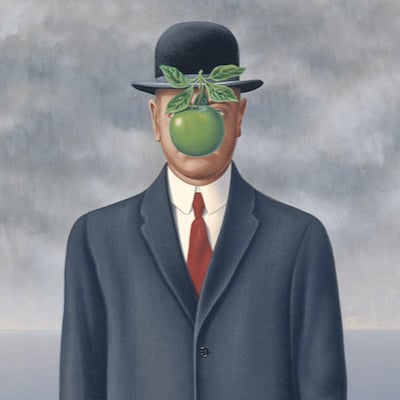 Artwork by Rene Magritte
What is Surrealism?
Surrealism began in the 1920s as an art and literary movement with the goal of revealing the unconscious mind and unleashing the imagination by exploring unusual and dream-like imagery. Influenced by Sigmund Freud’s theories of psychoanalysis, Surrealist artists and writers sought to bring the unconscious into rational life, blurring the lines between realit…
Explore »

