
Glenn Ligon
Glenn Ligon (United States, 1960) is a conceptual artist whose work delves into race, language, and identity. Renowned for his text-based paintings, he draws from literary sources like James Baldwin and Zora Neale Hurston. Ligon's art critically examines American history and culture, challenging perceptions and narratives.
© Glenn Ligon. All rights reserved.
- Recently Added
- Price (Low-High)
- Price (High-Low)
- Year (Low-High)
- Year (High-Low)

Glenn Ligon
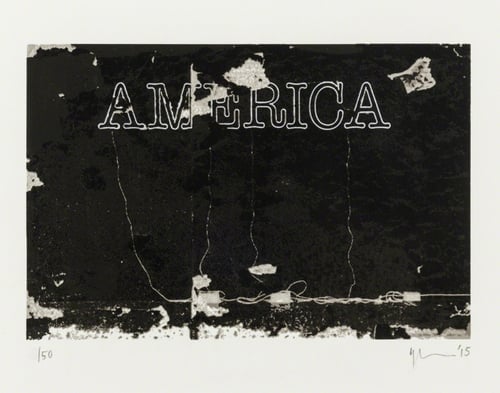
America , 2015
Limited Edition Print
Screen-print
Currently Not Available
No sold works to show.
Art points to things. It's a way of giving people not the standard way of looking at the world.
- Glenn Ligon
- Glenn Ligon
Glenn Ligon is a Conceptual artist that uses his chosen mediums to explore the themes of society, literature, and history in a way that is interesting and thought-provoking. Ligon graduated from Wesleyan University with a Bachelor of Arts degree and proceeded to attend theWhitney Museum Independent Study Program a few years later. Ligon uses his artwork as a platform to explain his own personal experiences with racism and homophobia in the United States, as he has had to deal with both firsthand. He is best known for his text-based paintings, which use words and phrases in varying levels of complexity to show his point of view. The first painting in which Glenn Ligon used text drew inspiration from the prologue to Ralph Ellison'sInvisible Man. However, despite his success with this style of work, Glenn Ligon does not limit himself to paintings; he has also used photography, installation, sculpture and video to explore the same themes. (Artist website)
Related Artists


Related Articles

Art Movements - June 23, 2023
Night Voices for Hidden Stories: Unlocking the Marginal Root of Queer Art
Explore the roots of queer art, its transformative role in challenging norms, and its impact on culture through powerful expressions of identity and activism.Read More
News, Popular, Collecting, Artists - August 12, 2026
In Minor Keys: Finding Intimacy and Identity at the 61st Venice Biennale — and in Your Collection
Explore how Koyo Kouoh’s 61st Venice Biennale vision, In Minor Keys, is shifting contemporary collecting toward quiet introspection, memory, and personal identi…Read More
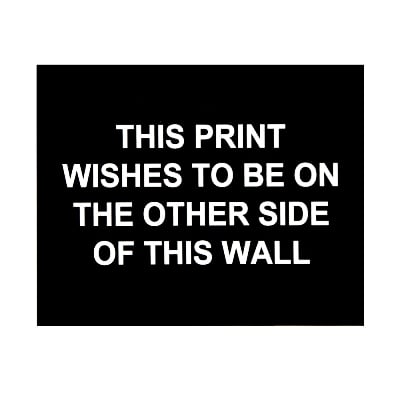 Artwork by Laure Prouvost
What is Lettrism?
Lettrism is an art form that uses letters, words, and symbols to create artwork. The movement was established in Paris in the 1940s and later gained popularity in the 1950s in America. Lettrisme is the French spelling of the movement's name, derived from the French word for letter.
Explore »

