

Hans Op de Beeck
Hans Op de Beeck (Belgium, 1969) is a multidisciplinary artist whose immersive installations, sculptures, and videos explore themes of time, memory, and the human condition. Known for his monochromatic works and poetic atmospheres, Op de Beeck creates contemplative spaces that invite viewers to reflect on life’s transient nature.
© Hans Op de Beeck. All rights reserved.
- Recently Added
- Price (Low-High)
- Price (High-Low)
- Year (Low-High)
- Year (High-Low)
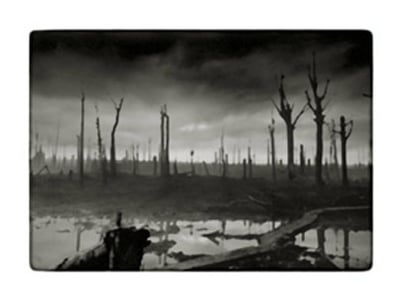
Hans Op de Beeck
Loss - Landscape, 2004
Limited Edition Print
Lithograph
Currently Not Available
Another element that strongly refers to painting is the “tableau vivant”: a living painting in which neither the view nor the picture frame changes.
- Hans Op de Beeck
- Hans Op de Beeck
Renowned for his multi-faceted approach to his art, Hans Op De Beeck is a visual artist whose work encompasses the disciplines of sculpture, installation art, photography and painting among others. Op De Beeck creates evocative works that can appear simultaneously serene yet saddening; A House By The Sea succinctly exemplifies this in depicting an eerily monochrome model house, situated in a gallery surrounded by pastoral landscapes – the artist himself has stated that he creates with ‘the old idea of catharsis: the tragic and the problematic, yet at the same time comforting quality of the image’. Op De Beeck uses a number of everyday materials throughout his work, including cotton wool; plaster, cardboard and even sugar – the use of such materials and their fragility and malleability highlights the themes of space and time that Op De Beeck is so fascinated by. (Artist website)
Related Artists

Related Articles
News, Popular, Collecting, Artists - August 12, 2026
In Minor Keys: Finding Intimacy and Identity at the 61st Venice Biennale — and in Your Collection
Explore how Koyo Kouoh’s 61st Venice Biennale vision, In Minor Keys, is shifting contemporary collecting toward quiet introspection, memory, and personal identi…Read More
 Artwork by Julian Opie
What is animation?
Animation is the process of displaying a sequence of static images in rapid succession to create the illusion of movement. Each image, or frame, is slightly altered from the previous one, particularly in the moving parts, so when shown together, they form a continuous motion. Traditionally, illustrators drew each frame by hand to produce this effect.
Explore »

