

Herbert Zangs
Herbert Zangs (Germany, 1924–2003) was a postwar avant-garde artist renowned for his monochromatic reliefs and experimental techniques. Known for his Whitenings, he explored texture and materiality by layering white paint over diverse surfaces. Zangs’ work often merged abstraction with poetic minimalism, positioning him as a distinctive voice in European modern art.
© Herbert Zangs. All rights reserved.
- Recently Added
- Price (Low-High)
- Price (High-Low)
- Year (Low-High)
- Year (High-Low)
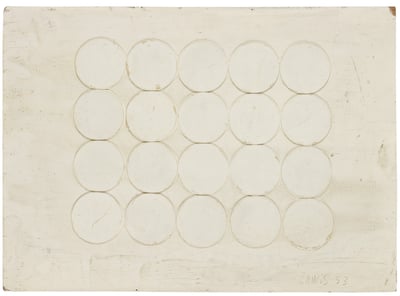
Herbert Zangs
Collage Bierdeckel auf Karton, 1953
Painting
Collage
EUR 22,500
No sold works to show.
A post-war Minimalist, Herbert Zangs can be readily recognized by his miniature monochromatic works. Influenced by his Paris visit, Zangs was drawn to abstract art early on. Eventually, he mastered his own style, and adhered to the "Whitenings" movement in art, where monochromatic art is exhibited with nature's play of light and shade. Art connoisseurs would label him as a follower of Group Zero, founded by fellow German artists Heinz Mack and Otto Piene. A prime example of his work resembling that of Zero is Vibrations Relief-Paintings series, where art is left to the nature for spontaneous expression. An avid traveler, Zhangs was influenced by the works of other avant-garde artists like Wols, Jackson Pollock, and Lothar Quinte. Fascinated by German Art Informel, he incorporated found objects such as paper, cardboard, and fabric in his works. Labeled as "enfant terrible", Herbert Zangs often worked impromptu, but he was only a product of his own time where post-war Germany sought much needed optimism in the face of scarcity. His works served exactly that by bringing beauty with minimal components.
Related Artists
Related Articles
News, Popular, Collecting, Artists - August 12, 2026
In Minor Keys: Finding Intimacy and Identity at the 61st Venice Biennale — and in Your Collection
Explore how Koyo Kouoh’s 61st Venice Biennale vision, In Minor Keys, is shifting contemporary collecting toward quiet introspection, memory, and personal identi…Read More
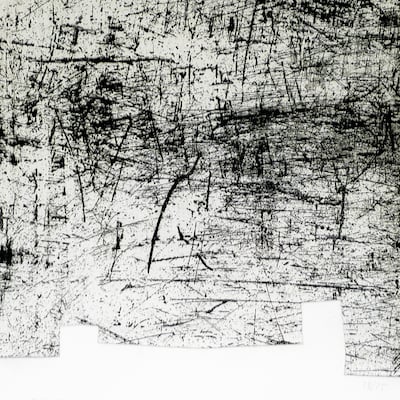 Artwork by Eduardo Chillida
What is abstract art?
Abstract art uses form, shape, line, and color to create a visual experience without attempting to represent external reality. The composition exists independently of the world's visual references, focusing on expressing ideas and emotions through non-representational means.
Explore »

