

Nobuo Sekine
Nobuo Sekine (Japan, 1942–2019) was a pivotal figure in the Mono-ha movement, renowned for his minimalist sculptures that explored the relationship between natural and industrial materials. His seminal work, 'Phase—Mother Earth' (1968), featured a cylindrical hole and its corresponding earth mound, challenging perceptions of space and matter. Sekine's art is featured in major institutions, including the National Museum of Art in Osaka and the Louisiana Museum of Modern Art in Denmark.
© Nobuo Sekine. All rights reserved.
- Recently Added
- Price (Low-High)
- Price (High-Low)
- Year (Low-High)
- Year (High-Low)
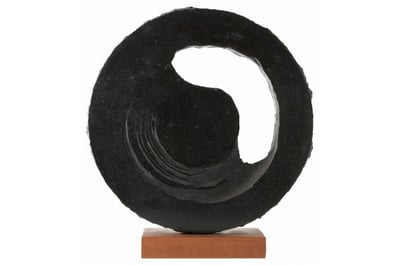
Nobuo Sekine
One Stroke Circle, 1974
Sculpture / Object
Acrylic sculpture
Currently Not Available
No sold works to show.
Even in the simplest structures, multiple landscapes or thoughts can be expressed.
- Nobuo Sekine
- Nobuo Sekine
A founding member of the Mono-ha (School of Things) movement, Nobuo Sekine is a contemporary Japanese artist, renowned for his exploration of the relationship between natural and man-made materials, pertaining to the spaces that they inhabit. Working across sculpture and multi-media wall pieces, Sekine has explained: “I believe that my job is to convey the richness of nature to viewers” - one of his most important works, Phase – Mother Earth, evokes the idea of a utopian society and the aura of mythology through his bare, yet well-constructed placement of stone and earth. A fellow artist and one of Sekine’s influences, Lee Ufan, was a co-founder of the Mono-ha movement; with Ufan’s philosophical input regarding self-awareness and natural phenomena, Sekine found the catalyst and the channel through which he could project his own love of nature and the values that it represents. (Artist website)
Related Artists

Related Articles

Artists, Art Movements - October 5, 2023
Superflat: A Modern Mirror to Traditional Japanese Art
Explore the Superflat art movement and its blend of traditional Japanese aesthetics with modern culture. Discover Murakami’s iconic works and their impact.Read More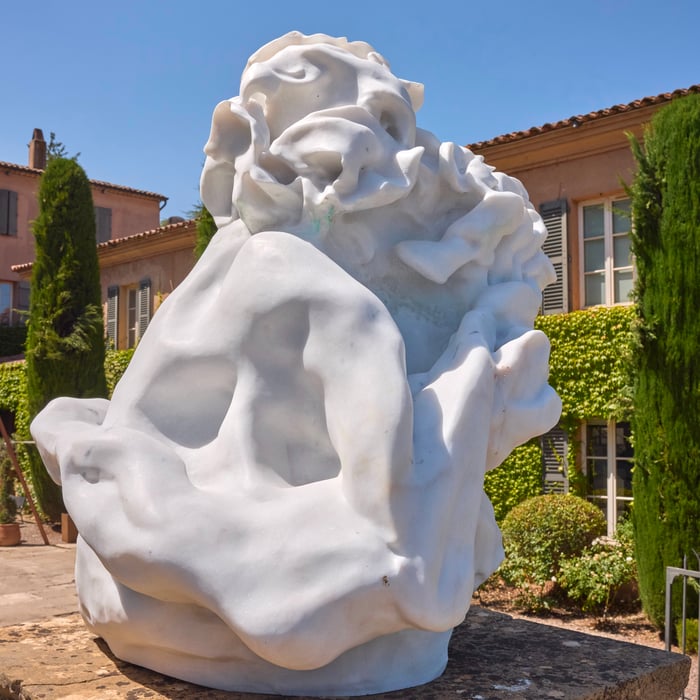
News, Popular, Collecting, Artists - August 12, 2026
In Minor Keys: Finding Intimacy and Identity at the 61st Venice Biennale — and in Your Collection
Explore how Koyo Kouoh’s 61st Venice Biennale vision, In Minor Keys, is shifting contemporary collecting toward quiet introspection, memory, and personal identi…Read More
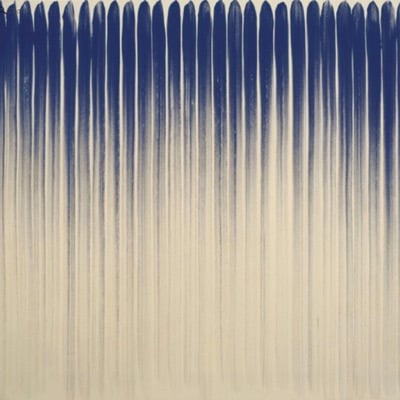 Artwork by Lee Ufan
What is Mono-Ha?
Meaning School of Things, Mono-ha originated in Tokyo in the mid-1960s. Instead of creating traditional artwork, the artists of Mono-ha used different materials and their natural properties to express dismay at the industrialization taking place in Japan at the time. The movement gained international attention and is now a widely respected form of art, known…
Explore »

