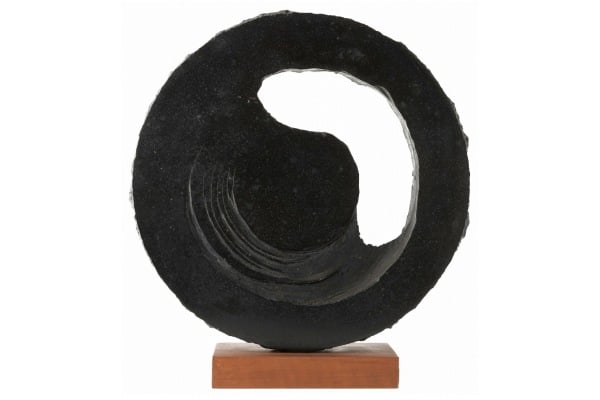
Black granite on wooden pedestal
One Stroke Circle by Nobuo Sekine, created in 1974, is a sculptural piece that embodies the artist’s meditative approach to form and material. Crafted from black granite and set on a wooden pedestal, the circular shape features an abstract, yin-yang-like void within, suggesting balance and duality. The textured surface and carved lines within the circle add depth and invite contemplation of its minimalist beauty. Sekine, a key figure in the Mono-ha movement, often emphasizes natural materials and simple forms to evoke a connection between the physical and the conceptual. This work resonates with themes of harmony, space, and the fluidity of perception.
Artwork Copyright © Nobuo SekineNobuo Sekine (Japan, 1942–2019) was a pivotal figure in the Mono-ha movement, renowned for his minimalist sculptures that explored the relationship between natural and industrial materials. His seminal work, 'Phase—Mother Earth' (1968), featured a cylindrical hole and its corresponding earth mound, challenging perceptions of space and matter. Sekine's art is featured in major institutions, including the National Museum of Art in Osaka and the Louisiana Museum of Modern Art in Denmark.
Artwork Copyright © Nobuo SekineOne Stroke Circle, 1974
Form
Medium
Size
- Inches
- Centimeters
Edition
Price
Available works →
- Authenticity Guaranteed
- Insured Shipping
- Online Since 2005
●
●Inventory 3510
●Signed
●Comes with gallery invoice and certificate
●Sell Us a Similar Artwork. Learn more.
Black granite on wooden pedestal
One Stroke Circle by Nobuo Sekine, created in 1974, is a sculptural piece that embodies the artist’s meditative approach to form and material. Crafted from black granite and set on a wooden pedestal, the circular shape features an abstract, yin-yang-like void within, suggesting balance and duality. The textured surface and carved lines within the circle add depth and invite contemplation of its minimalist beauty. Sekine, a key figure in the Mono-ha movement, often emphasizes natural materials and simple forms to evoke a connection between the physical and the conceptual. This work resonates with themes of harmony, space, and the fluidity of perception.
Artwork Copyright © Nobuo SekineNobuo Sekine (Japan, 1942–2019) was a pivotal figure in the Mono-ha movement, renowned for his minimalist sculptures that explored the relationship between natural and industrial materials. His seminal work, 'Phase—Mother Earth' (1968), featured a cylindrical hole and its corresponding earth mound, challenging perceptions of space and matter. Sekine's art is featured in major institutions, including the National Museum of Art in Osaka and the Louisiana Museum of Modern Art in Denmark.
Artwork Copyright © Nobuo Sekine- Recently Added
- Price (Low-High)
- Price (High-Low)
- Year (Low-High)
- Year (High-Low)
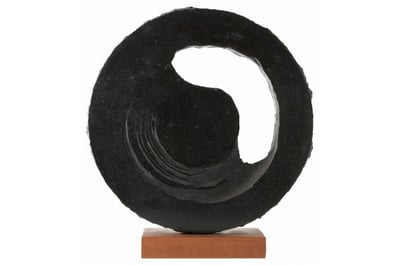
Nobuo Sekine
One Stroke Circle, 1974
Sculpture / Object
Acrylic sculpture
Currently Not Available
Related Artists
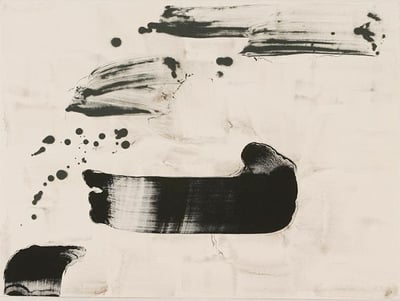

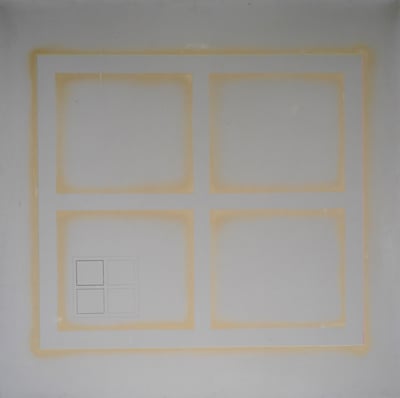
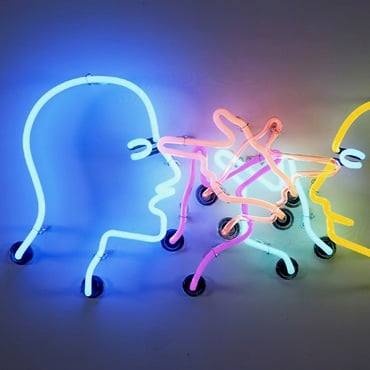
Artwork by Bruce Nauman
What is Process Art?
Process Art is an artistic movement and creative approach where the focus is on the act of creation rather than the final product. The term process in this context refers to the various stages of art-making, including gathering, sorting, associating, and organizing materials and actions. This movement emphasizes the artistic journey and the human expression involved in creating art, rather than the finished piece itself. Process Art is driven by inherent motivation, intentionality, and the rationale behind the actions, viewing the creative process as the true artwork.