
Richard Artschwager
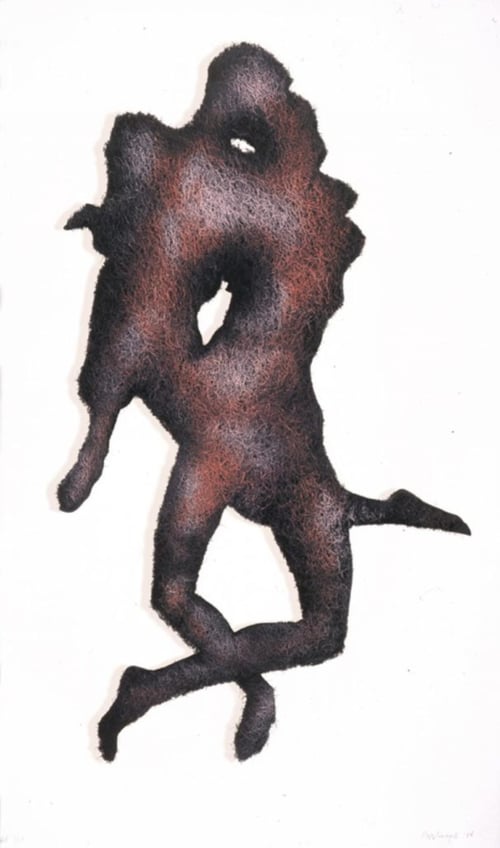
Richard Artschwager (USA, 1923–2013) was a boundary-defying artist whose work spanned painting, sculpture, and furniture design. Known for his use of industrial materials like Formica and Celotex, he explored themes of perception and space. Artschwager’s distinctive style merged Minimalism, Pop Art, and Conceptualism, earning him a unique place in 20th-century art.
© Richard Artschwager. All rights reserved.
- Recently Added
- Price (Low-High)
- Price (High-Low)
- Year (Low-High)
- Year (High-Low)
Richard Artschwager
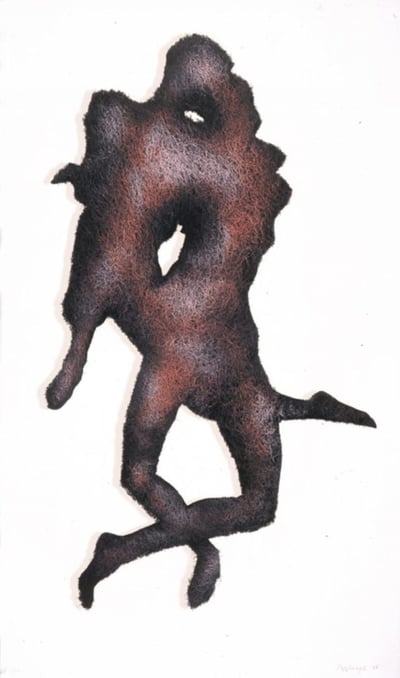
Liebespaar (Lovers), 2005
Limited Edition Print
Serigraph
USD 1,650
No sold works to show.
There isn't any art until some creature sees and consumes it. And has a reaction.
- Richard Artschwager
- Richard Artschwager
Richard Artschwager was a painter and sculptor with a reputation for being a creative individualist. He earned a B.A. in Physics from Cornell University, studying before and after his military service in World War II. But his passion for the arts continued throughout his life, and he studied art in Paris for one year following the war. He developed a business as a furniture designer and manufacturer, building modern and simple pieces to support his family. He was able to merge his artistic expression with his work as a skilled craftsman, and often used construction materials, such as Celotex, Formica, and wood in combination with his painting. He is famous for creating “blps”, which were punctuation marks enlarged and made of wood, horsehair and paint and placed in spaces, becoming linguistic references. Richard Artschwager is noted for his work with architectural themes exploring the processes of fragmentation and expansion. He created his art using his own photographs, three-dimensional furniture, mirrors and reflections, painted woods, “blps” as commentary, inventive combinations of items, unexpected locations and inversions of scale. His Table with Pink Tablecloth is one highly regarded example of his preference for domesticity and subjects related to interior design. His work is included in museums around the world.
Related Artists



Related Articles
News, Popular, Collecting, Artists - August 12, 2026
In Minor Keys: Finding Intimacy and Identity at the 61st Venice Biennale — and in Your Collection
Explore how Koyo Kouoh’s 61st Venice Biennale vision, In Minor Keys, is shifting contemporary collecting toward quiet introspection, memory, and personal identi…Read More

 Artwork by Agnes Martin
What is minimalism?
Minimalism is a style in music and visual arts characterized by pared-down designs and simplicity. It began in Western art after World War II, gaining prominence particularly in American visual arts. Minimalism draws heavily on aspects of modernism and is often viewed as a reaction against Abstract Expressionism, as well as a precursor to post-minimal art pr…
Explore »

