

What is Carborundum?
Carborundum is the trademark name for silicon carbide crystals, an abrasive material commonly used in sandpaper, cutting tools, and grinding wheels. Originally, artists used carborundum for grinding lithography stones. In collagraph printmaking, it is applied to plates to create texture and tone gradients, adding depth and contrast to the prints.
Show All
- Show All
- Established
- Discoveries
Show All
- Show All
Artworks Related to Carborundum

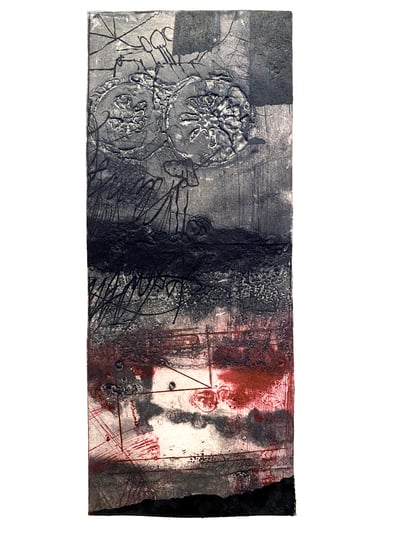
Georg Jiri Dokoupil
Goldblau, 2018
Limited Edition Print
Carborundum
Currently Not Available
Antoni Clave
La Gloire Des Rols I, 1975
Limited Edition Print
Carborundum
EUR 1,250

Otto Piene
Zyklop Gelb, 1984
Limited Edition Print
Carborundum
EUR 2,400

Antoni Clave
Untitled (Textured Remnants), 1970
Limited Edition Print
Carborundum
EUR 1,130
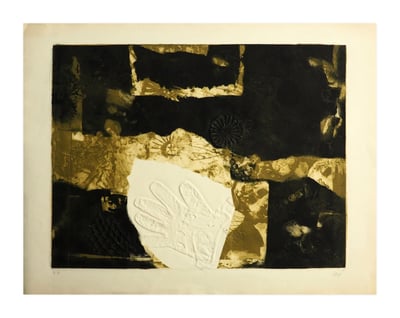
Antoni Clave
El guant, 1971
Limited Edition Print
Carborundum
Currently Not Available

Jasper Johns
Untitled (Faces on purple), 1988
Limited Edition Print
Carborundum
USD 21,000 - 30,000
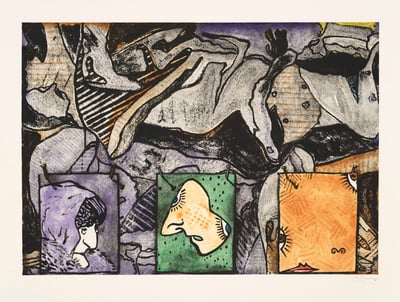
Jasper Johns
Untitled - Faces (ULAE 243), 1988
Limited Edition Print
Carborundum
USD 41,000 - 45,000
Related Articles
Arte Nucleare was the name of an artist group founded in Milan in 1951. The group aimed to create art that responded to the dangers and technologies of the nuclear age. Their works often utilized automatic techniques and depicted devastated landscapes and mushroom clouds, reflecting the anxieties of a world on the brink of nuclear catastrophe.

New Topographics is a term coined in 1975 by curator William Jenkins to describe a group of photographers whose work focused on formal black-and-white images of urban and industrial landscapes. Jenkins initially described their aesthetic as banal, but the photographers themselves argued that their compositions were as significant as those of natural landscapes, emphasizing the beauty in everyday, man-made environments.
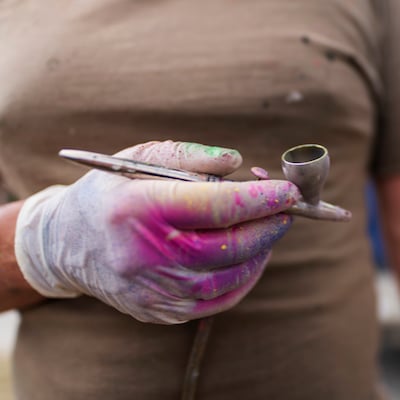
An airbrush is a device that sprays various media, including paint and ink, using compressed air. Artists use airbrushes to create a smooth, even application of color, often achieving effects that are not possible with traditional brushes. James Rosenquist, an American Pop artist, regularly used an airbrush in his work. Before gaining fame with pieces like the iconic F-111 (1965), he worked as a commercial and industrial painter, where he honed his airbrush skills.
Can't find your Answer?
Thank you! Your question has been sent — we'll get back to you shortly.
