
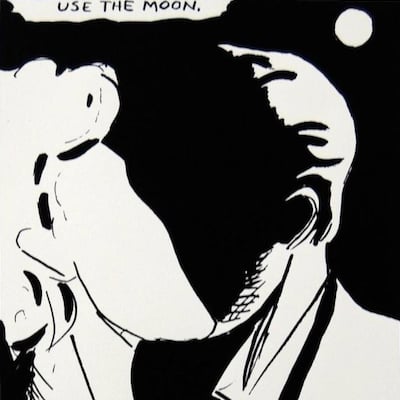
What is Comic Strip Art?
- Show All
- Established
- Discoveries
- Show All
Artworks Related to Comic Strip art

Andy Warhol
In The Bottom of my Garden IV.104A, CA. 1956
Limited Edition Print
Lithograph
USD 4,800

Andy Warhol
In The Bottom of my Garden IV.97A, CA.1956
Limited Edition Print
Lithograph
Inquire For Price

Andy Warhol
In The Bottom of my Garden IV.99A, CA. 1956
Limited Edition Print
Lithograph
Inquire For Price

Andy Warhol
Wild Raspberries IV.135A, 1959
Limited Edition Print
Offset Print
Inquire For Price

Andy Warhol
Wild Raspberries IV.138A, 1959
Limited Edition Print
Offset Print
USD 4,850

Andy Warhol
Wild Raspberries IV.139A, 1959
Limited Edition Print
Offset Print
USD 8,400

Andy Warhol
In The Bottom of my Garden IV.93A, CA. 1956
Limited Edition Print
Lithograph
Inquire For Price

Andy Warhol
In The Bottom of my Garden IV.96A, CA. 1956
Limited Edition Print
Lithograph
Inquire For Price

Andy Warhol
In The Bottom of my Garden IV.105A, CA. 1956
Limited Edition Print
Lithograph
USD 4,850

Andy Warhol
In The Bottom of my Garden IV.103A, CA. 1956
Limited Edition Print
Lithograph
Inquire For Price
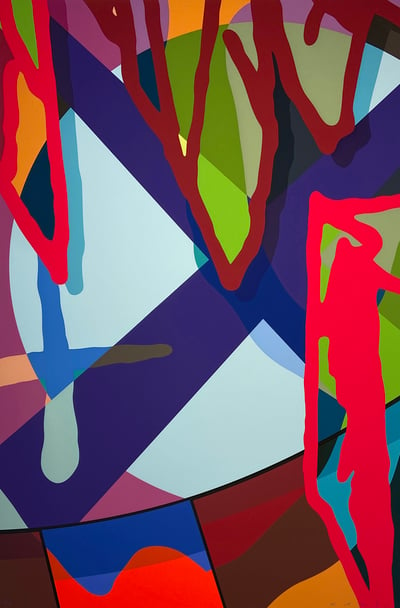
KAWS
Tension #3, 2019
Limited Edition Print
Serigraph
USD 15,500

Takashi Murakami
Homage to Francis Bacon (Study of Isabel Rawsthorne), 2011
Limited Edition Print
Screen-print
USD 17,800
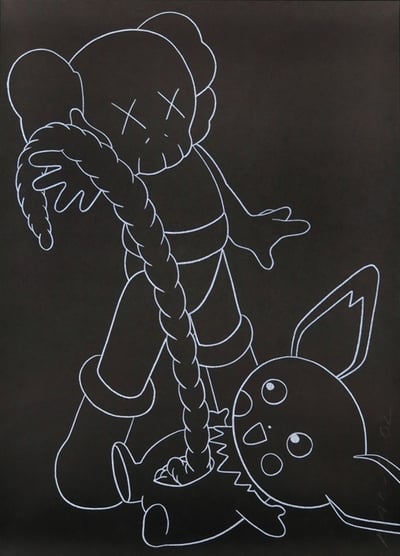
KAWS
Companion vs Pikachu, 2002
Limited Edition Print
Screen-print
USD 11,350
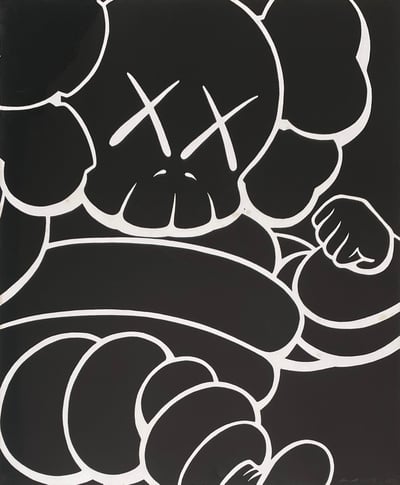
KAWS
Running Chum #1, 2000
Limited Edition Print
Silkscreen
Inquire For Price

Takashi Murakami
Flower Ball (Lots of Colors), 2013
Limited Edition Print
Lithograph
USD 4,250

Takashi Murakami
Flower Ball (3-D) Autumn 2004, 2013
Limited Edition Print
Offset Print
USD 3,800
Related Articles


Screen printing is a technique where ink is transferred through a mesh onto a substrate, with areas blocked by a stencil to prevent ink from passing through. This method, also known as serigraphy or silkscreen printing, is commonly used to produce prints on posters, T-shirts, vinyl, stickers, wood, and other materials. The process is a type of stencil printing, allowing for vibrant, detailed designs on various surfaces.
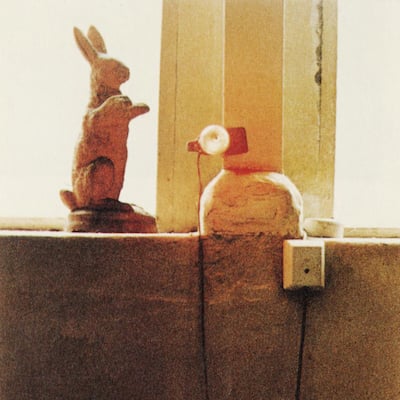
Derived from the Latin word meaning flow, Fluxus is an international movement of designers, composers, and artists known for blending various artistic disciplines and media during the 1960s. The movement remains active in visual art, performance, design, architecture, urban planning, and other creative fields. Fluxus is sometimes referred to as nter-media and continues to play a pivotal role in expanding the definitions of what art can be.

Known as Neo-Geo for short, this movement uses geometric objects and shapes to create abstract artwork as a metaphor for society. Inspired by various 20th-century art styles, including minimalism and pop art, Neo-Geo emerged in the 1980s as a response to the industrialization and commercialization of the modern world. The movement reflects on the impact of mass production, consumerism, and technology, often critiquing the superficiality of contemporary culture through its abstract, geometric compositions.
Can't find your Answer?
Thank you! Your question has been sent — we'll get back to you shortly.
