

What is Graphite?
Graphite is a form of carbon commonly used as the core material in pencils. It can be compressed to various levels of hardness, allowing for different shading effects in drawing. In powdered form, graphite can be applied with a brush for broader, softer applications. Graphite erases easily and was first discovered in the 1500s in England's Lake District.
Show All
- Show All
- Established
- Discoveries
Show All
- Show All
Artworks Related to Graphite

Nicolas Party
Untitled (Teapot), 2010
Drawing / Watercolor
Graphite
Inquire For Price

Andy Warhol
Lobster, 1979
Drawing / Watercolor
Graphite
Inquire For Price

Antoni Tapies
Untitled (Calligraphic Loop Form), 1992
Drawing / Watercolor
Graphite
EUR 4,950
Andy Warhol
Private Listing
Drawing / Watercolor
Andy Warhol
Private Listing
Drawing / Watercolor
Tom Wesselmann
Private Listing
Drawing / Watercolor
Robert Longo
Private Listing
Drawing / Watercolor

Andy Warhol
Mammy (drawing), 1981
Drawing / Watercolor
Graphite
USD 37,800
Tom Wesselmann
Private Listing
Drawing / Watercolor
Related Articles
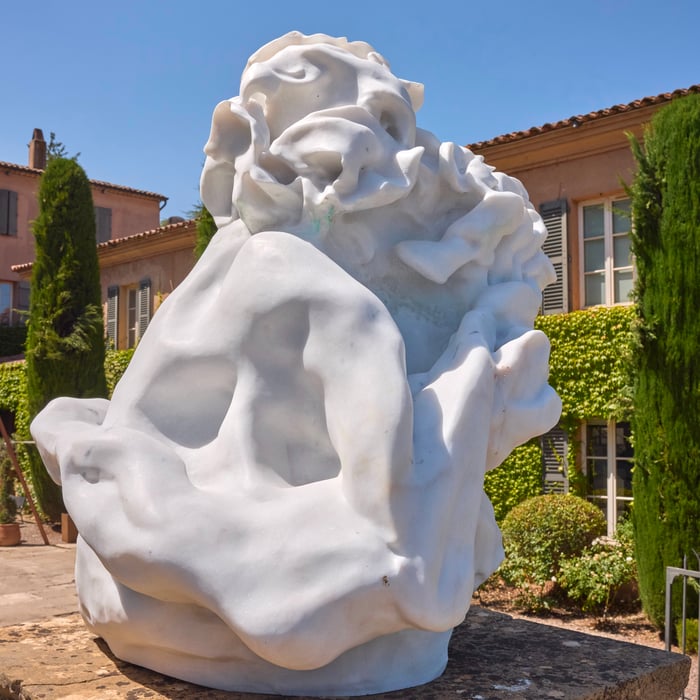
Environmental art is a collective term that refers to a wide range of artistic practices and works that engage with historical and ecological themes. The term often encompasses ecological concerns, although it is not exclusively defined by them. Environmental art acknowledges and appreciates the early history of the environmental art movement, including works with activist themes and those celebrating the connection between nature and the artist through the use of natural materials.

Perspective refers to the techniques artists use to represent three-dimensional objects on a two-dimensional surface. These techniques create the illusion of depth and space, making objects appear as they do in the real world, despite the limitations of a flat surface. Common types of perspective include linear and atmospheric perspective.
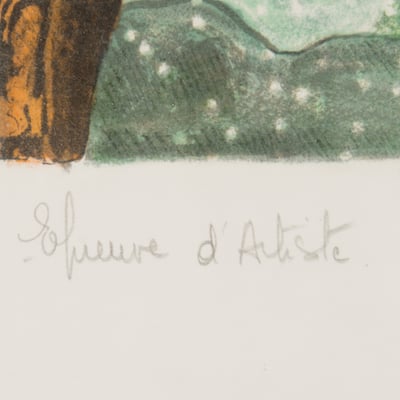
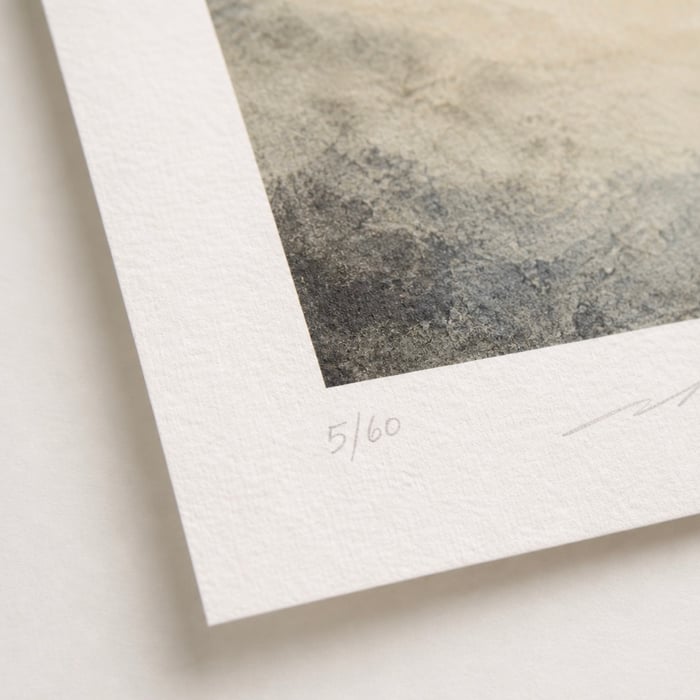
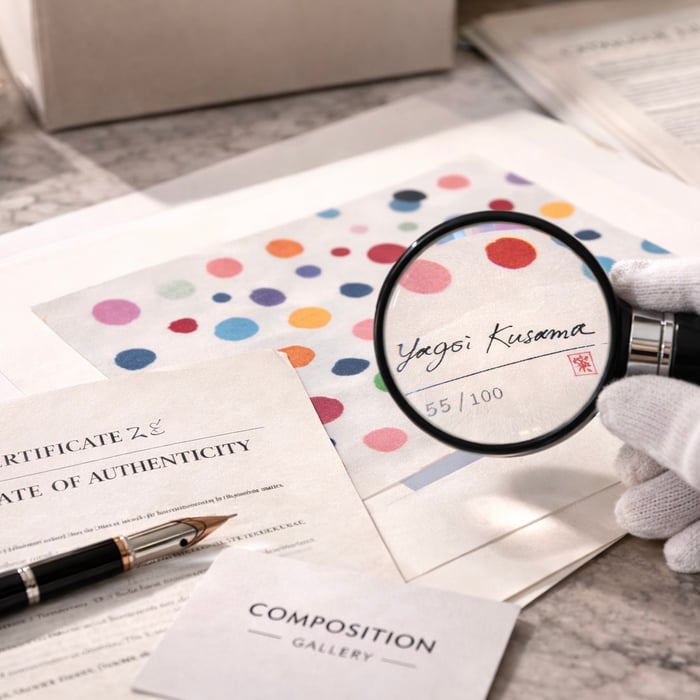
Épreuve d'Artist refers to the artist's proofs in a limited edition of prints. These are a small number of prints reserved by the artist for personal use and are typically marked with the abbreviation E.A. (épreuve d'artist) or AP (artist's proof). Artist’s proofs are usually identical to the regular edition but are often considered more valuable due to their limited quantity.
Can't find your Answer?
Thank you! Your question has been sent — we'll get back to you shortly.
