

What is Shock Art?
- Show All
- Established
- Discoveries
- Show All
Artworks Related to Shock Art

Damien Hirst
Untitled (spin butterfly), 2009
Painting
Acrylic on paper
GBP 15,000 - 20,000
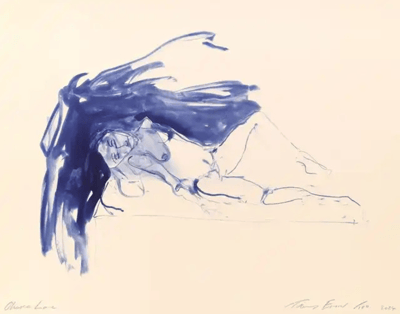
Tracey Emin
Choose Love, 2024
Limited Edition Print
Lithograph
GBP 9,600

Damien Hirst
Untitled B (Spot Drawing), 2025
Limited Edition Print
Pigment print
GBP 10,000 - 12,000

Tracey Emin
Self-Portrait - 12.11.2001, 2001
Photography
Photograph
Inquire For Price
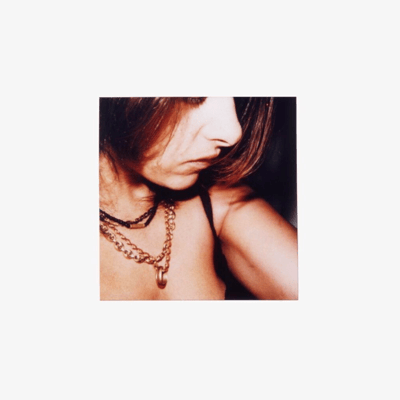
Tracey Emin
Self-Portrait - 12.11.2001, 2001
Photography
Photograph
Inquire For Price

Tracey Emin
The Stain, 2007
Limited Edition Print
Mixed Media
GBP 2,950

Damien Hirst
Spin Painting, Requiem at the Pinchuk Art Centre, Ukraine, 2009
Limited Edition Print
Acrylic on paper
USD 4,690

Damien Hirst
Savoy H5-8, 2018
Limited Edition Print
Giclée printing
Currently Not Available

Weiwei Ai
The Odyssey, 2017
Limited Edition Print
Offset Print
EUR 1,550

Weiwei Ai
Freud Banner, 2018
Limited Edition Print
Mixed Media
EUR 1,350

Damien Hirst
Circle Spin, 2009
Painting
Acrylic on paper
EUR 5,000

Tracey Emin
It's a Crime to Live with The Person You don’t Love, 2021
Limited Edition Print
Giclée printing
GBP 2,200
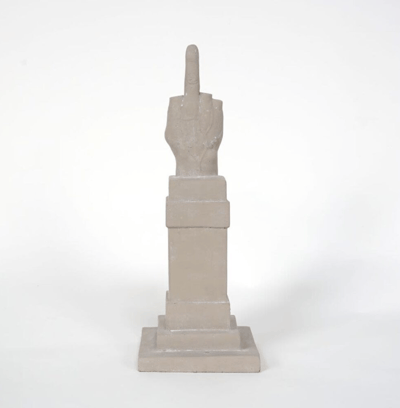
Maurizio Cattelan
L.O.V.E., 2015
Sculpture / Object
Mixed Media
GBP 3,500
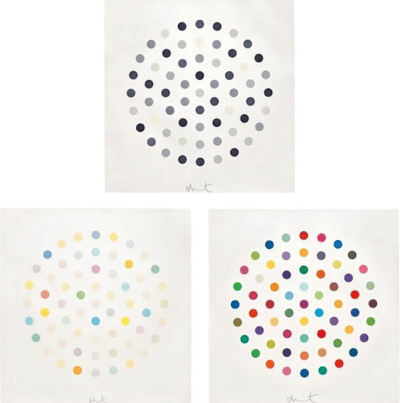
Damien Hirst
Cinchonidine, Ciclopirox Olamine and Cineole, 2004
Limited Edition Print
Etching
Inquire For Price
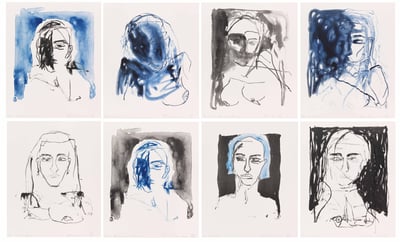
Tracey Emin
These Feelings Were True (Set of 8), 2020
Limited Edition Print
Lithograph
EUR 80,000 - 90,000

Weiwei Ai
Vase (Blue), 2024
Sculpture / Object
Glass
EUR 4,500
Related Articles



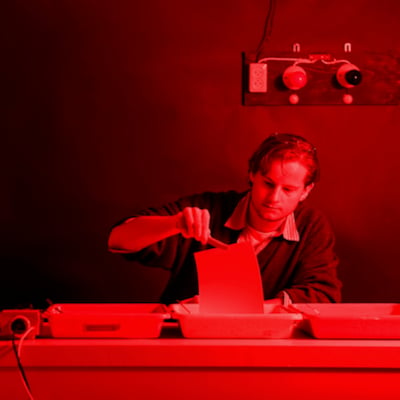
A silver gelatin print is a type of photographic print made using the silver process. In this process, photographic materials such as black and white films and printing papers are coated with a light-sensitive emulsion of silver salts suspended in gelatin. This emulsion is applied to a support, which could be flexible plastic, glass, resin-coated paper, or baryta paper. The materials are light-sensitive and remain stable under normal storage conditions, making them ideal for long-term preservation.
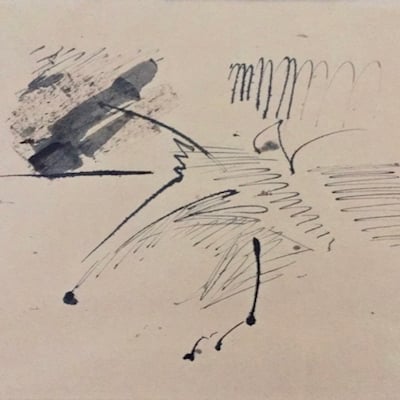
Art Informel is a French term referring to the gestural and improvisational techniques common in abstract painting during the 1940s and 50s. It encompasses various styles that dominated these decades, characterized by informal, spontaneous methods. Artists used this term to describe approaches that moved away from traditional structures and embraced more expressive, unstructured techniques.

A print is an image or text reproduced using a template or master form. Prints are typically created by transferring ink from a prepared matrix to another material, often paper. Common matrices include copper or zinc plates for etching and engraving, aluminum or stone for lithography, wood blocks for woodcuts, and linoleum for linocuts. The term print can also refer to a single impression made from the matrix.
Can't find your Answer?
Thank you! Your question has been sent — we'll get back to you shortly.
