

What is the CoBrA movement?
- Show All
- Established
- Discoveries
- Show All
Artworks Related to CoBrA

Enrico Baj
The golden Roll-Dragster, 1986
Sculpture / Object
Mixed Media
EUR 5,200

Enrico Baj
Untitled (Wooden Figure), 1980
Limited Edition Print
Mixed Media
EUR 2,100

Enrico Baj
Mic-Mac, danseus mecanique, 2001
Limited Edition Print
Collage
EUR 1,650

Enrico Baj
Maternità, 1974
Sculpture / Object
Mixed Media
EUR 4,850

Enrico Baj
Busto, 1969
Sculpture / Object
Acrylic sculpture
EUR 3,900

Enrico Baj
Testa d’uomo, 1969
Sculpture / Object
Acrylic sculpture
EUR 3,900

Enrico Baj
Figura in ginocchio, 1969
Sculpture / Object
Acrylic sculpture
EUR 3,900

Enrico Baj
Personaggio allo specchio, 1971
Limited Edition Print
Mixed Media
EUR 9,500

Enrico Baj
Cravatte, 1967
Limited Edition Print
Mixed Media
EUR 3,450

Enrico Baj
Folla, 1985
Limited Edition Print
Aquatint
EUR 2,500

Enrico Baj
Incontri ravvicinati, 1986
Limited Edition Print
Etching
EUR 4,250

Enrico Baj
Ermengarda, 1975
Limited Edition Print
Mixed Media
EUR 3,350
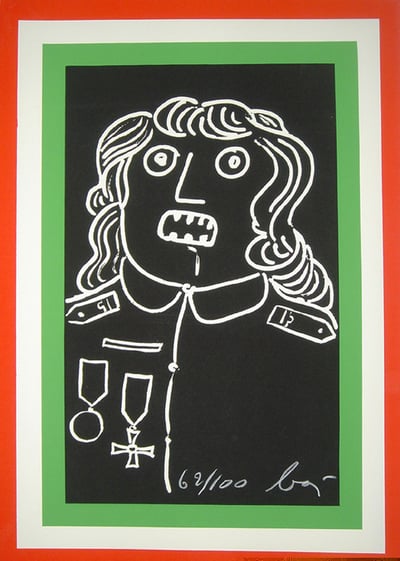
Enrico Baj
Manifesto per la mostra Enrico Baj, Palazzo dei Diamanti, Ferrara, 1977
Limited Edition Print
Silkscreen
EUR 1,500
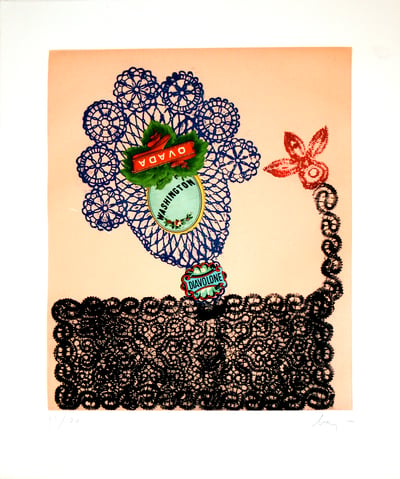
Enrico Baj
Diavolone, 1973
Limited Edition Print
Mixed Media
EUR 950

Enrico Baj
Personaggio, 1968
Limited Edition Print
Silkscreen
EUR 1,150

Enrico Baj
Generale con la sua favorita, 1978
Limited Edition Print
Etching
EUR 1,250
Related Articles
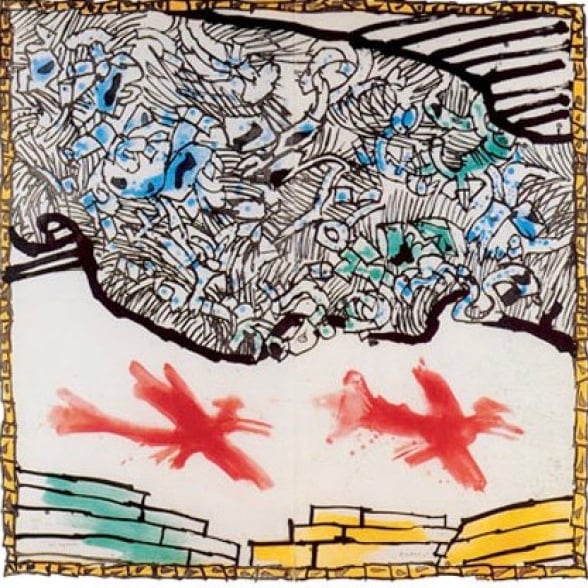


ZERO was an art movement founded by Otto Piene and Heinz Mack, aiming to develop into a large international and cross-border movement. The name ZERO originated from a magazine founded by Heinz Mack in 1957, which became a platform for the group's ideas. The magazine was published for several years before ceasing in 1967. The ZERO movement sought to create a new beginning in art, emphasizing light, space, and movement, and became influential in post-war European art.
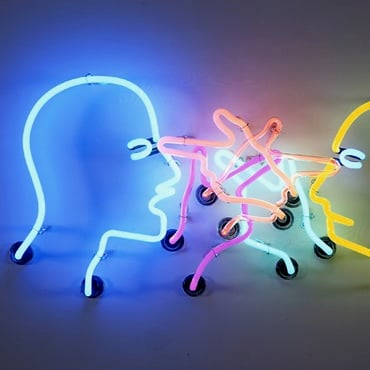
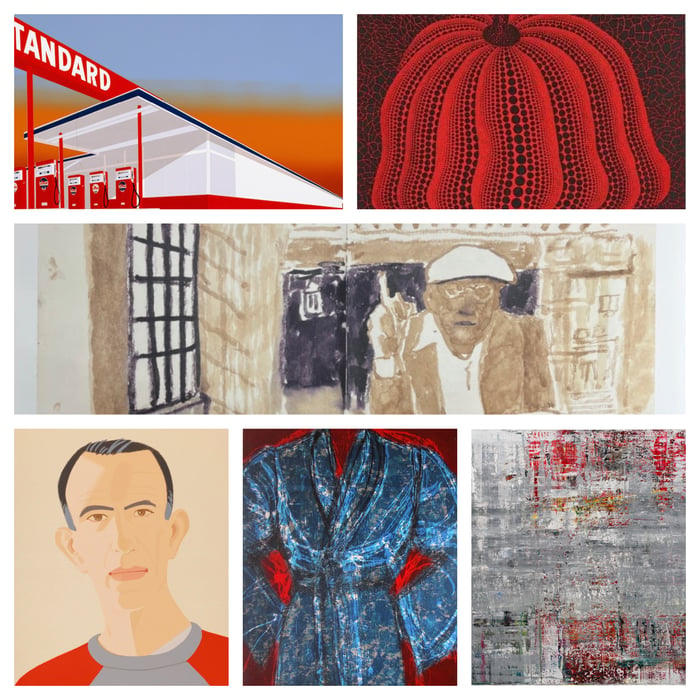
Process Art is an artistic movement and creative approach where the focus is on the act of creation rather than the final product. The term process in this context refers to the various stages of art-making, including gathering, sorting, associating, and organizing materials and actions. This movement emphasizes the artistic journey and the human expression involved in creating art, rather than the finished piece itself. Process Art is driven by inherent motivation, intentionality, and the rationale behind the actions, viewing the creative process as the true artwork.

De Stijl, meaning The Style, was a group of Dutch artists who created abstract art based on strict adherence to vertical and horizontal geometry. The group was founded by Piet Mondrian and Theo van Doesburg in 1917. Mondrian eventually left De Stijl when Van Doesburg began incorporating diagonal geometry into his work, which Mondrian felt deviated from the group's principles.
Can't find your Answer?
Thank you! Your question has been sent — we'll get back to you shortly.
