
The Rise of Glass Art: Transparency, Reflection, and Contemporary Design

By Emilia Novak
In the ever-evolving landscape of contemporary art, glass—once relegated to the realm of craft or design—has risen to the forefront as a powerful medium of conceptual expression. No longer limited to the ornamental or utilitarian, glass is now shaping critical dialogues around transparency, fragility, reflection, and form. The works of artists like Ai Weiwei, Günther Uecker, and Javier Calleja exemplify this shift, each using glass in distinct, innovative ways that bridge the material’s historical significance with the language of contemporary art.
Glass as Concept: Ai Weiwei’s Transparent Politics

Chinese artist Ai Weiwei is renowned for his fearless critique of political systems and his provocative engagement with materials. In his series Study of Perspective in Glass (Set of 6), Weiwei reimagines his iconic photographs—where he flips the middle finger at global monuments—in a minimalist, transparent glass form. These works are not only visually striking, but they also invite the viewer to reflect—literally and metaphorically—on the shifting boundaries between protest, history, and visibility.
Similarly, his Glass Vase plays with traditional vessel forms, embedding them with tension between permanence and fragility. The clarity of the glass renders the object both present and ephemeral, challenging notions of cultural preservation. “Glass, like truth, is delicate,” Ai Weiwei has remarked in interviews, highlighting his deliberate choice of the medium.
The Tactile Surface: Günther Uecker’s Jahresteller

Uecker’s practice has long been associated with themes of healing and the spiritual potential of art. In glass, this becomes amplified: the shadows cast by the textured forms evoke a sense of quiet contemplation, inviting viewers to look not just at the surface, but through it.
Pop Meets Transparency: Javier Calleja’s Glass Heads

Calleja’s work resonates with the Neo-Pop movement, echoing the legacy of artists like Takashi Murakami and KAWS. But his use of glass adds a new dimension—one of delicacy and purity, imbuing his characters with an almost ghostlike presence. The transparency makes them feel both hyperreal and barely there.
The Medium’s Message: Why Glass, Why Now?

Moreover, advances in glassmaking techniques have empowered artists to push the boundaries of what is possible, leading to increasingly ambitious and refined works. The studio glass movement, which gained momentum in the 20th century, laid the groundwork for this new generation of artists who see no barrier between "fine art" and "craft."
Contemporary glass art is no longer a niche—it is a site of conceptual exploration that responds to the anxieties and aesthetics of our time.
Conclusion: Seeing Through Glass, Clearly

Related Articles
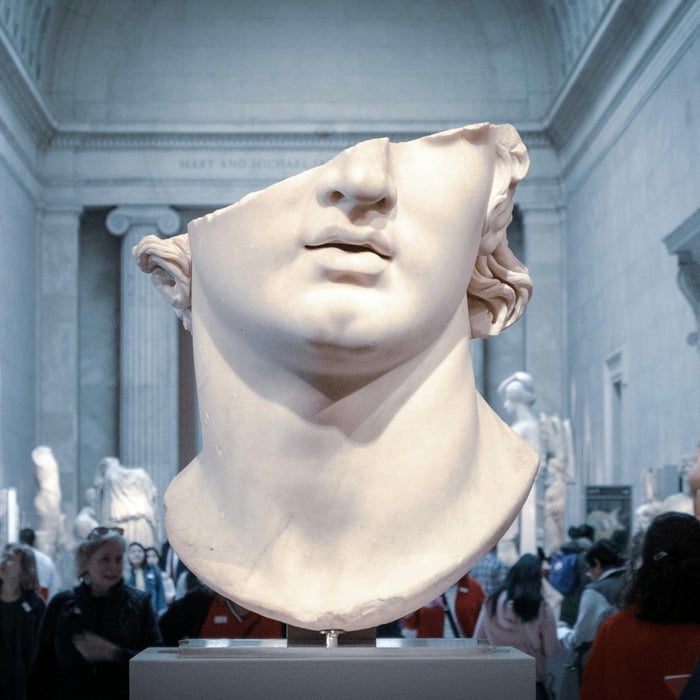
Collecting, Popular - July 23, 2025
Sculpture Care and Display: From Plinths to Pedestals in Your Home
Learn how to display and care for sculpture at home—from lighting tips to material care—so your art can truly shine in any space.Read More
Related Artworks You Might Like

Alex Katz
Late July 2, 1971
Limited Edition Print
Lithograph
EUR 9,600

Antonio Asis
Asistype 18 – boule sur cercle, 2016
Sculpture / Object
Monotype
EUR 3,000

Weiwei Ai
Study of Perspective in Glass (set of 6), 2020
Sculpture / Object
Glass
EUR 60,000
