

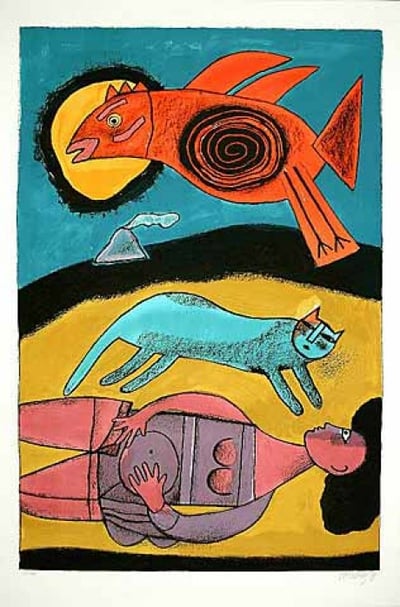
riviere #362, 1980
Form
Medium
Size
- Inches
- Centimeters
Edition
Price
- Authenticity Guaranteed
- Insured Shipping
- Online Since 2005
- Recently Added
- Price (Low-High)
- Price (High-Low)
- Year (Low-High)
- Year (High-Low)
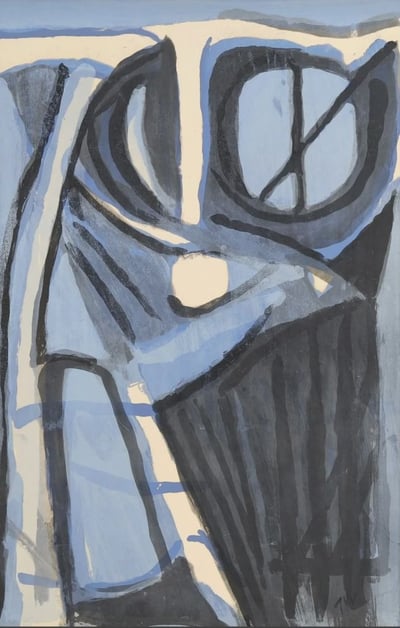
Bram Van Velde
MP 166, 1975
Limited Edition Print
Lithograph
EUR 2,350
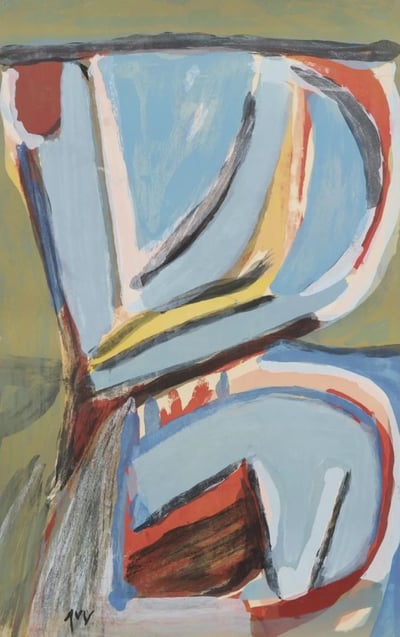
Bram Van Velde
MP 167, 1975
Limited Edition Print
Lithograph
EUR 2,350

Bram Van Velde
Déchirure, 1977
Limited Edition Print
Lithograph
EUR 1,875
Available works by Bram Van Velde
See all →Bram Van Velde
MP 166, 1975
Limited Edition Print
Lithograph
EUR 2,350
Bram Van Velde
MP 167, 1975
Limited Edition Print
Lithograph
EUR 2,350
Bram Van Velde
Déchirure, 1977
Limited Edition Print
Lithograph
EUR 1,875
Related Artists

What is Tachisme?
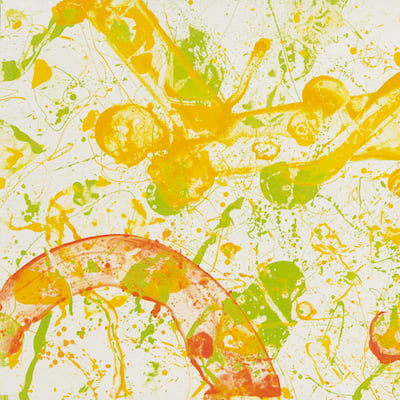
Tachisme is a French abstract painting style that gained popularity between 1940 and 1950, often seen as the European counterpart to Abstract Expressionism. However, there are stylistic differences between the two. Tachisme, which emerged from Art Informel, rejected geometric abstraction in favor of more intuitive and spontaneous expression. It was a reaction against the structured forms of Cubism and is closely related to Informalism. Tachisme emphasizes gestural brushwork, irregular forms, and a focus on the process of painting itself.


