
lithograph and screenprint, 1973, on Arjomari paper, signed and dated in pencil, numbered 41/50, published by Gemini G.E.L., Los Angeles, with their blindstamps, apparently generally in very good condition, not examined out of the frame. Image: 33½ x 46¼ in. (851 x 1175 mm.) Sheet: 35 7/8 x 48¾ in. (911 x 1238 mm.)
Artwork Copyright © Bruce NaumanBruce Nauman (USA, 1941) is a pioneering contemporary artist whose work spans sculpture, video, performance, and installation. Known for his conceptual rigor and use of language, light, and sound, Nauman explores themes of identity, perception, and the human condition. His provocative art challenges boundaries and has profoundly influenced postmodern and contemporary practices.
Artwork Copyright © Bruce NaumanClean Vision, 1973
Form
Medium
Size
- Inches
- Centimeters
Edition
Price
Available works →
- Authenticity Guaranteed
- Insured Shipping
- Online Since 2005
●
●Inventory 4303
●Signed
●Comes with gallery invoice and certificate
●Sell Us a Similar Artwork. Learn more.
lithograph and screenprint, 1973, on Arjomari paper, signed and dated in pencil, numbered 41/50, published by Gemini G.E.L., Los Angeles, with their blindstamps, apparently generally in very good condition, not examined out of the frame. Image: 33½ x 46¼ in. (851 x 1175 mm.) Sheet: 35 7/8 x 48¾ in. (911 x 1238 mm.)
Artwork Copyright © Bruce NaumanBruce Nauman (USA, 1941) is a pioneering contemporary artist whose work spans sculpture, video, performance, and installation. Known for his conceptual rigor and use of language, light, and sound, Nauman explores themes of identity, perception, and the human condition. His provocative art challenges boundaries and has profoundly influenced postmodern and contemporary practices.
Artwork Copyright © Bruce Nauman- Recently Added
- Price (Low-High)
- Price (High-Low)
- Year (Low-High)
- Year (High-Low)
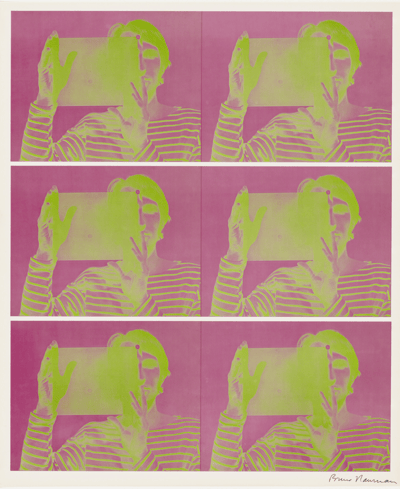
Bruce Nauman
Sequence, 1968
Limited Edition Print
Offset Print
EUR 2,700

Bruce Nauman
Life fly Lifes Flies from the portfolio of Leo Castelli's 90th Birthday, 1997
Limited Edition Print
Etching
USD 3,750
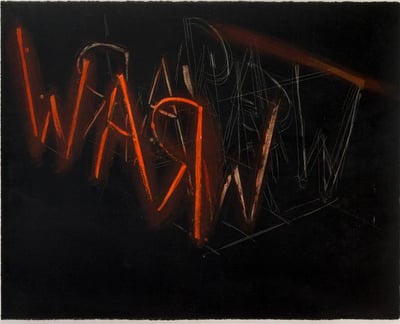
Bruce Nauman
Raw War, 1971
Limited Edition Print
Lithograph
Currently Not Available
Available works by Bruce Nauman
See all →Bruce Nauman
Sequence, 1968
Limited Edition Print
Offset Print
EUR 2,700
Bruce Nauman
Life fly Lifes Flies from the portfolio of Leo Castelli's 90th Birthday, 1997
Limited Edition Print
Etching
USD 3,750
Related Artists
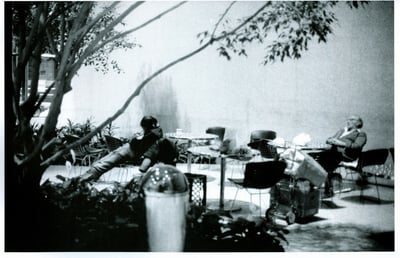

Artwork by Laure Prouvost
What is Lettrism?
Lettrism is an art form that uses letters, words, and symbols to create artwork. The movement was established in Paris in the 1940s and later gained popularity in the 1950s in America. Lettrisme is the French spelling of the movement's name, derived from the French word for letter.


