

Colour offset lithograph on Kromekote. From an edition of original posters published by Leo Castelli Gallery, New York Signed 'Bruce Nauman' on the lower right; not numbered.
This striking offset lithograph by Bruce Nauman presents a grid of six near-identical images rendered in vibrant hot pink and acid green, showing the artist in a striped shirt making subtle hand gestures near his face. Published by the Leo Castelli Gallery in New York as part of an edition of original posters, the work exemplifies Nauman's early conceptual investigation into the body as both subject and medium. The repetitive grid format and saturated duotone palette recall the serial strategies of Pop Art while subverting them with an introspective focus on performative gesture and self-examination.
Artwork Copyright © Bruce NaumanBruce Nauman (USA, 1941) is a pioneering contemporary artist whose work spans sculpture, video, performance, and installation. Known for his conceptual rigor and use of language, light, and sound, Nauman explores themes of identity, perception, and the human condition. His provocative art challenges boundaries and has profoundly influenced postmodern and contemporary practices.
Artwork Copyright © Bruce NaumanSequence, 1968
Form
Medium
Size
- Inches
- Centimeters
Edition
Price
- USD
- EUR
- GBP
- CHF
- Authenticity Guaranteed
- Insured Shipping
- Online Since 2005
●Inventory 17283
●Signed
●Comes with gallery invoice and certificate
●Sell Us a Similar Artwork. Learn more.
Colour offset lithograph on Kromekote. From an edition of original posters published by Leo Castelli Gallery, New York Signed 'Bruce Nauman' on the lower right; not numbered.
This striking offset lithograph by Bruce Nauman presents a grid of six near-identical images rendered in vibrant hot pink and acid green, showing the artist in a striped shirt making subtle hand gestures near his face. Published by the Leo Castelli Gallery in New York as part of an edition of original posters, the work exemplifies Nauman's early conceptual investigation into the body as both subject and medium. The repetitive grid format and saturated duotone palette recall the serial strategies of Pop Art while subverting them with an introspective focus on performative gesture and self-examination.
Artwork Copyright © Bruce NaumanBruce Nauman (USA, 1941) is a pioneering contemporary artist whose work spans sculpture, video, performance, and installation. Known for his conceptual rigor and use of language, light, and sound, Nauman explores themes of identity, perception, and the human condition. His provocative art challenges boundaries and has profoundly influenced postmodern and contemporary practices.
Artwork Copyright © Bruce Nauman- Recently Added
- Price (Low-High)
- Price (High-Low)
- Year (Low-High)
- Year (High-Low)
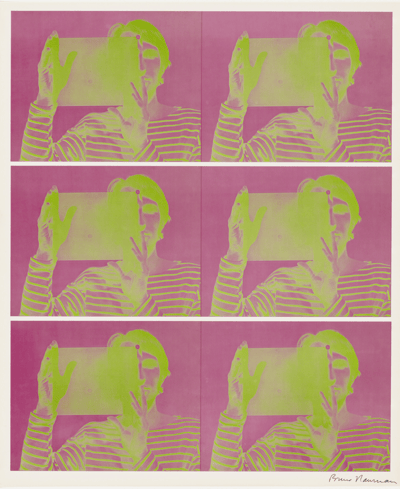
Bruce Nauman
Sequence, 1968
Limited Edition Print
Offset Print
EUR 2,700

Bruce Nauman
Life fly Lifes Flies from the portfolio of Leo Castelli's 90th Birthday, 1997
Limited Edition Print
Etching
USD 3,750
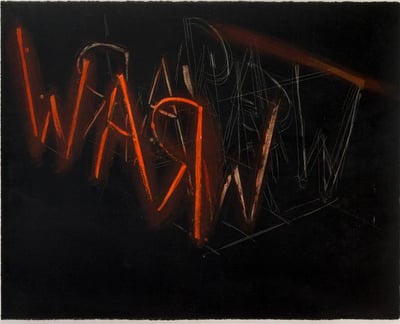
Bruce Nauman
Raw War, 1971
Limited Edition Print
Lithograph
Currently Not Available
Related Artists
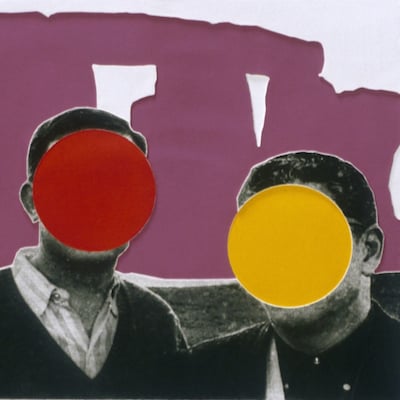
Artwork by John Baldessari
What is conceptual art?
Sometimes referred to as Conceptualism, this is an art form where the idea(s) or concept(s) behind the work take precedence over material concerns and traditional aesthetics. Many conceptual artworks can be created by anyone simply by following written instructions. The concept or idea is the most essential aspect of the artwork.


Bruce Nauman
Sequence, 1968
60 x 50 cm


