

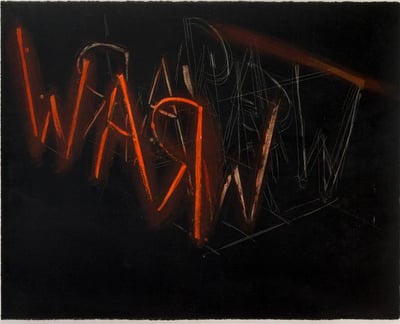
// Raw War by Bruce Nauman is a lithograph created in 1971 that starkly presents a bold commentary on conflict and violence. This artwork features the words RAW and WAR in intense, glowing red-orange letters, almost like neon signs, against a dark, shadowy background. The letters are layered and mirrored, creating an effect of disorientation and ambiguity, as if reflecting the cyclical and chaotic nature of war. Nauman’s choice of stark colors and contrasting light emphasizes the visceral impact of these words, inviting viewers to reflect on the brutal simplicity and tragic repetitiveness of war. Limited to an edition of 100, this print encapsulates Nauman's provocative style and his ability to convey powerful messages through minimalistic yet impactful design.
Artwork Copyright © Bruce NaumanBruce Nauman (USA, 1941) is a pioneering contemporary artist whose work spans sculpture, video, performance, and installation. Known for his conceptual rigor and use of language, light, and sound, Nauman explores themes of identity, perception, and the human condition. His provocative art challenges boundaries and has profoundly influenced postmodern and contemporary practices.
Artwork Copyright © Bruce NaumanRaw War, 1971
Form
Medium
Size
- Inches
- Centimeters
Edition
Price
Available works →
- Authenticity Guaranteed
- Insured Shipping
- Online Since 2005
●
●Inventory 5750
●Signed
●Comes with gallery invoice and certificate
●Sell Us a Similar Artwork. Learn more.
// Raw War by Bruce Nauman is a lithograph created in 1971 that starkly presents a bold commentary on conflict and violence. This artwork features the words RAW and WAR in intense, glowing red-orange letters, almost like neon signs, against a dark, shadowy background. The letters are layered and mirrored, creating an effect of disorientation and ambiguity, as if reflecting the cyclical and chaotic nature of war. Nauman’s choice of stark colors and contrasting light emphasizes the visceral impact of these words, inviting viewers to reflect on the brutal simplicity and tragic repetitiveness of war. Limited to an edition of 100, this print encapsulates Nauman's provocative style and his ability to convey powerful messages through minimalistic yet impactful design.
Artwork Copyright © Bruce NaumanBruce Nauman (USA, 1941) is a pioneering contemporary artist whose work spans sculpture, video, performance, and installation. Known for his conceptual rigor and use of language, light, and sound, Nauman explores themes of identity, perception, and the human condition. His provocative art challenges boundaries and has profoundly influenced postmodern and contemporary practices.
Artwork Copyright © Bruce Nauman- Recently Added
- Price (Low-High)
- Price (High-Low)
- Year (Low-High)
- Year (High-Low)
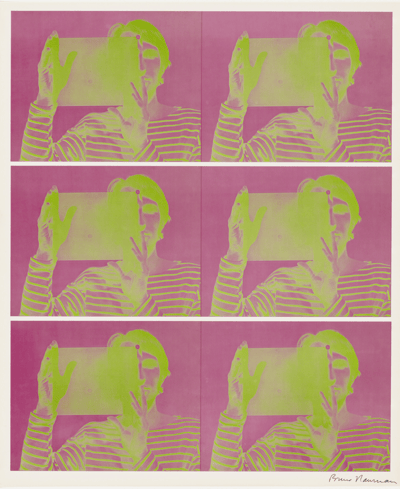
Bruce Nauman
Sequence, 1968
Limited Edition Print
Offset Print
EUR 2,700

Bruce Nauman
Life fly Lifes Flies from the portfolio of Leo Castelli's 90th Birthday, 1997
Limited Edition Print
Etching
USD 3,750
Bruce Nauman
Raw War, 1971
Limited Edition Print
Lithograph
Currently Not Available
Available works by Bruce Nauman
See all →Bruce Nauman
Sequence, 1968
Limited Edition Print
Offset Print
EUR 2,700
Bruce Nauman
Life fly Lifes Flies from the portfolio of Leo Castelli's 90th Birthday, 1997
Limited Edition Print
Etching
USD 3,750
Related Artists
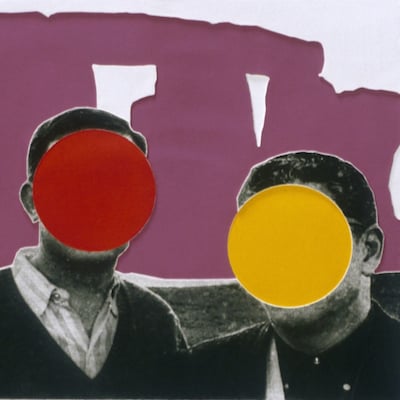
Artwork by John Baldessari
What is conceptual art?
Sometimes referred to as Conceptualism, this is an art form where the idea(s) or concept(s) behind the work take precedence over material concerns and traditional aesthetics. Many conceptual artworks can be created by anyone simply by following written instructions. The concept or idea is the most essential aspect of the artwork.


Bruce Nauman
Raw War, 1971
56.7 x 71.7 cm


