

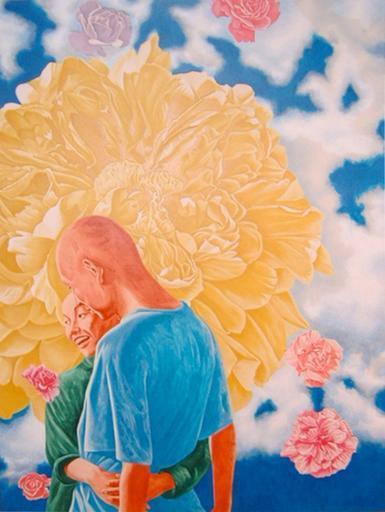
// Flower by Fang Lijun, created in 2005, is a screen print that brings together surreal elements with soft, vibrant colors, creating a scene filled with emotion and introspection. The artwork depicts two figures in an embrace against a sky filled with clouds and large, blooming flowers in shades of yellow and pink. A dominant yellow flower occupies the center background, casting a gentle glow over the composition. The figures, rendered with sensitivity, appear to share a moment of quiet connection, contrasting with the expansive and dreamlike sky around them. Lijun’s use of floral and cloud motifs conveys a sense of serenity and contemplation, while the vibrant colors evoke warmth and depth. This limited edition print, part of an edition of 99, measures 74.2 x 55.1 cm, capturing both intimacy and grandeur in a single frame.
Artwork Copyright © Fang LijunFang Lijun (China, 1963) is a leading figure in the Cynical Realism movement, reflecting the disillusionment of China's youth post-Tiananmen Square. His works often feature bald, aggressive-looking figures, incorporating imagery from pop culture, folk art, and traditional Chinese painting.
Artwork Copyright © Fang LijunFlower, 2005
Form
Medium
Size
- Inches
- Centimeters
Edition
Price
Available works →
- Authenticity Guaranteed
- Insured Shipping
- Online Since 2005
●
●Inventory 2394
●Signed
●Comes with gallery invoice and certificate
●Sell Us a Similar Artwork. Learn more.
// Flower by Fang Lijun, created in 2005, is a screen print that brings together surreal elements with soft, vibrant colors, creating a scene filled with emotion and introspection. The artwork depicts two figures in an embrace against a sky filled with clouds and large, blooming flowers in shades of yellow and pink. A dominant yellow flower occupies the center background, casting a gentle glow over the composition. The figures, rendered with sensitivity, appear to share a moment of quiet connection, contrasting with the expansive and dreamlike sky around them. Lijun’s use of floral and cloud motifs conveys a sense of serenity and contemplation, while the vibrant colors evoke warmth and depth. This limited edition print, part of an edition of 99, measures 74.2 x 55.1 cm, capturing both intimacy and grandeur in a single frame.
Artwork Copyright © Fang LijunFang Lijun (China, 1963) is a leading figure in the Cynical Realism movement, reflecting the disillusionment of China's youth post-Tiananmen Square. His works often feature bald, aggressive-looking figures, incorporating imagery from pop culture, folk art, and traditional Chinese painting.
Artwork Copyright © Fang Lijun- Recently Added
- Price (Low-High)
- Price (High-Low)
- Year (Low-High)
- Year (High-Low)
Fang Lijun
Flower, 2005
Limited Edition Print
Screen-print
Currently Not Available
Related Artists

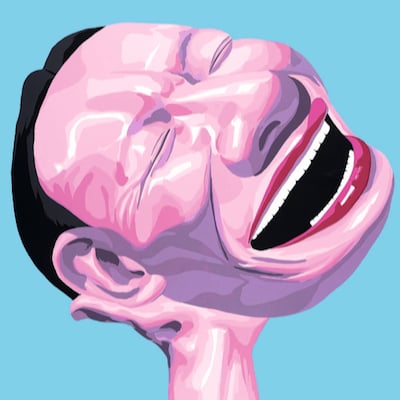
Artwork by Yue Minjun
What is Cynical Realism?
Cynical Realism is a term first used in 1992 by art critic Li Xianting to describe a group of Beijing artists who created satirical social realist paintings. The group aimed to depict the psychological turmoil experienced in China as the country grappled with new political ideologies.

Fang Lijun
Flower, 2005
74.2 x 55.1 cm


