Wielded iron, electrical fittings
- Designed in 1989 and manufactured in Italy by Meta-Memphis.
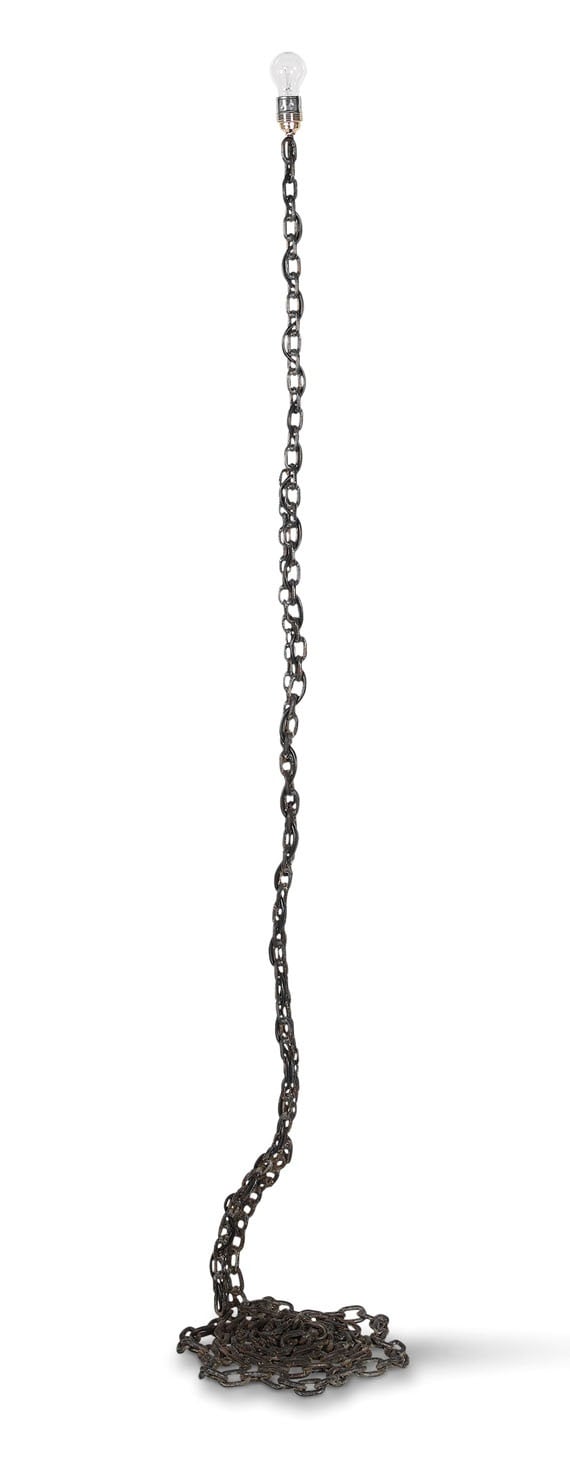
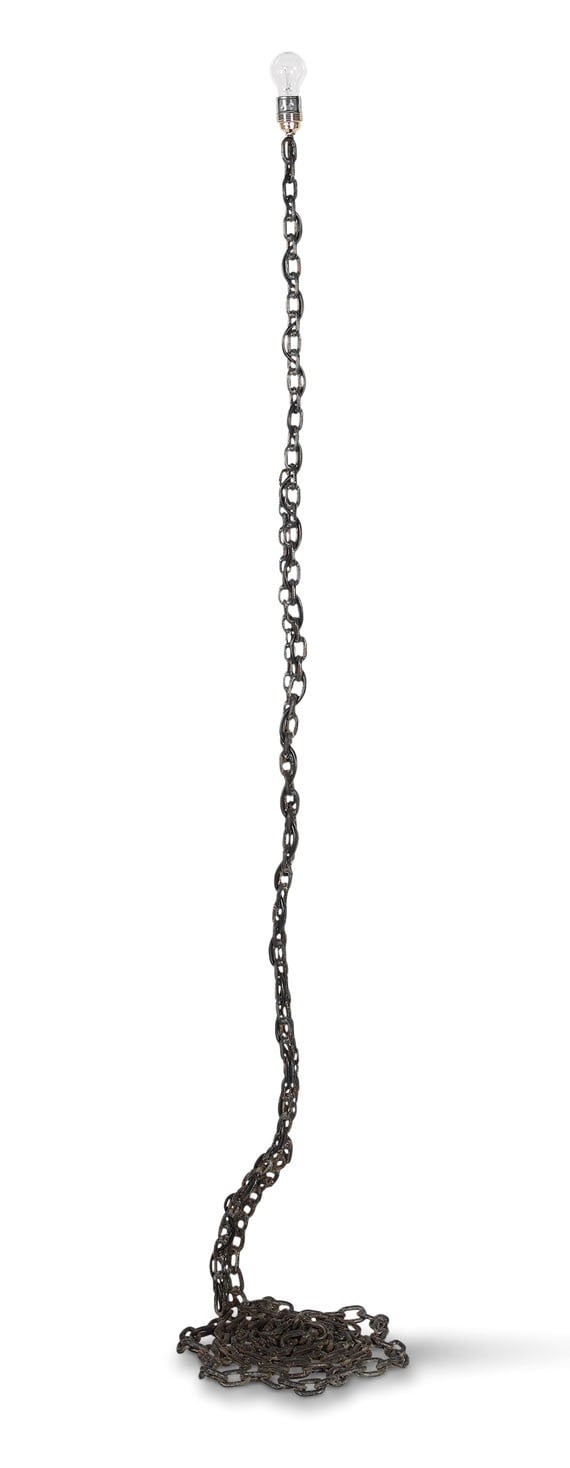
Privat-Lampe des Künstlers II by Franz West is a 1989 sculptural lamp that exemplifies West's playful and unconventional approach to functional objects. Crafted from welded iron, the lamp’s design features a tall, slender chain that extends upwards in an irregular, almost organic form, ultimately holding a lightbulb at its peak. The base of the sculpture is a tangled, coiled foundation that seems both chaotic and stable, providing a grounding counterbalance to the lamp’s tall, sinuous line. This piece, produced in collaboration with Meta-Memphis, blurs the boundaries between art and utility, transforming a simple lamp into an expressive, sculptural form. The minimalist yet rugged aesthetic invites viewers to rethink everyday objects, challenging traditional ideas of beauty and function in design.
Artwork Copyright © Franz WestFranz West (Austria, 1947–2012) was a pioneering contemporary artist known for his playful, interactive sculptures and installations. Combining humor and everyday materials, his works challenged traditional notions of art and viewer engagement. Notable creations include his 'Adaptives,' which invited audiences to participate physically.
Artwork Copyright © Franz WestPrivat-Lampe des Künstlers II, 1989
Form
Medium
Size
- Inches
- Centimeters
Price
- USD
- EUR
- GBP
- CHF
- Authenticity Guaranteed
- Insured Shipping
- Online Since 2005
●Inventory 3949
●Foundry Stamp
●Comes with gallery invoice and certificate
●Sell Us a Similar Artwork. Learn more.
Wielded iron, electrical fittings
- Designed in 1989 and manufactured in Italy by Meta-Memphis.
Privat-Lampe des Künstlers II by Franz West is a 1989 sculptural lamp that exemplifies West's playful and unconventional approach to functional objects. Crafted from welded iron, the lamp’s design features a tall, slender chain that extends upwards in an irregular, almost organic form, ultimately holding a lightbulb at its peak. The base of the sculpture is a tangled, coiled foundation that seems both chaotic and stable, providing a grounding counterbalance to the lamp’s tall, sinuous line. This piece, produced in collaboration with Meta-Memphis, blurs the boundaries between art and utility, transforming a simple lamp into an expressive, sculptural form. The minimalist yet rugged aesthetic invites viewers to rethink everyday objects, challenging traditional ideas of beauty and function in design.
Artwork Copyright © Franz WestFranz West (Austria, 1947–2012) was a pioneering contemporary artist known for his playful, interactive sculptures and installations. Combining humor and everyday materials, his works challenged traditional notions of art and viewer engagement. Notable creations include his 'Adaptives,' which invited audiences to participate physically.
Artwork Copyright © Franz West- Recently Added
- Price (Low-High)
- Price (High-Low)
- Year (Low-High)
- Year (High-Low)

Franz West
Platonic Moon, 2003
Limited Edition Print
C-Print
EUR 1,500
Franz West
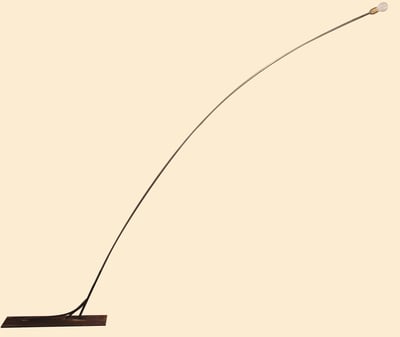
Privatlampe des Künstlers I, 1989
Sculpture / Object
Metal
EUR 5,400

Franz West
Privat-Lampe des Künstlers II, 1989
Sculpture / Object
Metal
EUR 6,600

Franz West
Suspension Lamp, 1991
Sculpture / Object
Metal
EUR 3,990
Related Artists


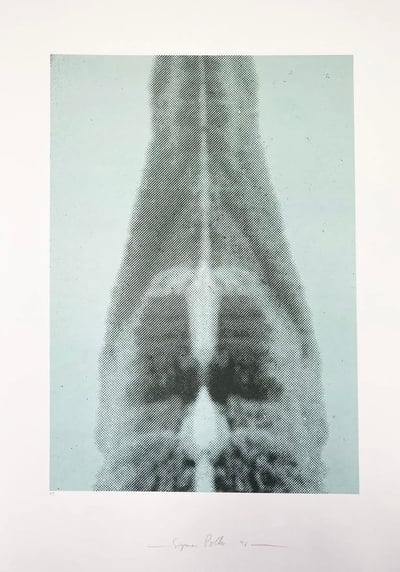

Artwork by Miles Aldridge
What is contemporary art?
Contemporary art refers to avant-garde or innovative art created in the recent past or present day. The exact starting point of contemporary art varies depending on the institution, often tied to the founding year of museums or galleries that showcase the style. Contemporary art is characterized by its focus on current ideas, diverse media, and the exploration of new concepts and techniques.