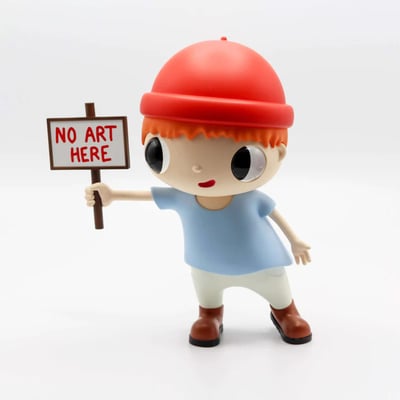
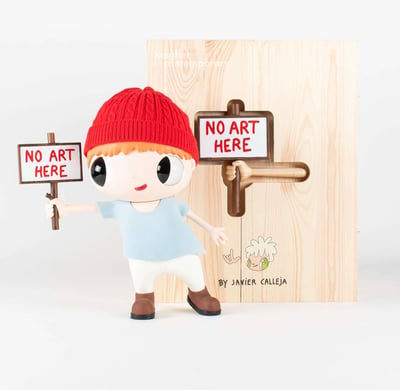
Mixed media, vinyl and crystal glass.
Printed signature and numbered under feet.
No Wings to Fly by Javier Calleja, created in 2023, is a mixed-media sculpture crafted from vinyl and crystal glass, measuring 27 × 25.7 × 18.2 cm. This edition of 888 features one of Calleja’s signature wide-eyed characters frozen in mid-motion, arms extended as if ready to take off. With exaggerated feet and a charmingly innocent expression, the figure captures a moment of playful anticipation and quiet hope. The title hints at a paradox—desiring flight without the means—underscoring themes of vulnerability, aspiration, and the tender limitations of childhood imagination.
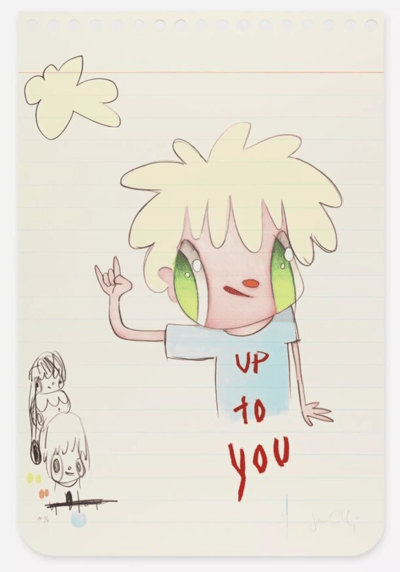
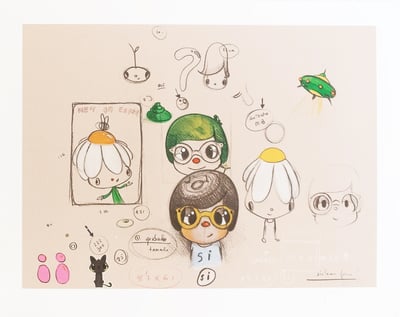
Javier Calleja (Spain, 1971) is a contemporary artist celebrated for his whimsical paintings and sculptures featuring wide-eyed characters. Blending humor and innocence, his works often incorporate text, creating playful interactions between image and word. Calleja’s distinctive style has earned him international acclaim, with exhibitions in leading galleries worldwide.
Mixed MediaMixed media refers to artwork that incorporates more than one medium within a single piece. Unlike multimedia art, which combines distinct forms of visual art and often includes elements like sound, video, or digital media, mixed media focuses on combining traditional art materials, such as paint, ink, and collage. Mixed media art allows artists to achieve a wide range of effects and textures by layering and blending different materials.
Mixed media, vinyl and crystal glass.
Printed signature and numbered under feet.
No Wings to Fly by Javier Calleja, created in 2023, is a mixed-media sculpture crafted from vinyl and crystal glass, measuring 27 × 25.7 × 18.2 cm. This edition of 888 features one of Calleja’s signature wide-eyed characters frozen in mid-motion, arms extended as if ready to take off. With exaggerated feet and a charmingly innocent expression, the figure captures a moment of playful anticipation and quiet hope. The title hints at a paradox—desiring flight without the means—underscoring themes of vulnerability, aspiration, and the tender limitations of childhood imagination.
Javier Calleja (Spain, 1971) is a contemporary artist celebrated for his whimsical paintings and sculptures featuring wide-eyed characters. Blending humor and innocence, his works often incorporate text, creating playful interactions between image and word. Calleja’s distinctive style has earned him international acclaim, with exhibitions in leading galleries worldwide.
I like simple things. Simple, but not easy.
- Javier Calleja
Javier Calleja, born in 1971 in Málaga, Spain, is a contemporary artist renowned for his distinct visual language that often combines playful innocence with complex themes. He studied Fine Arts at the Polytechnic University of Valencia, where he honed his skills under mentors like Juan Carlos Eguillor and Manolo Valdés. Over time, Calleja has diversified his artistic mediums, transitioning from traditional painting to including drawings, sculptures, and installations in his repertoire.
His work is characterized by whimsical characters with oversized heads and diminutive bodies, situated in dreamlike environments. Despite their seemingly simplistic appearance, these characters explore multifaceted themes ranging from identity and the human psyche to the intricacies of daily life. Calleja uses irony and humor as effective tools to delve into deeper, more existential issues, making his art accessible yet profound.
Calleja’s works are a fusion of various art movements such as Surrealism, Cubism, and Pop Art, but they maintain a unique flair that sets him apart. His art has garnered international attention, captivating audiences across continents. With an expanding portfolio and a continually growing following, Calleja remains a significant figure in contemporary art, continuously challenging and engaging viewers with his emotive and intellectually stimulating creations.
Cubism is an art movement that aimed to depict multiple perspectives of objects or figures within a single picture. Artists Georges Braque and Pablo Picasso pioneered this style around 1907. The name Cubism emerged from their use of geometric shapes and outlines that often resembled cubes, breaking objects down into abstracted forms.