

Mixed Media Collage
- Signed on reverse
- Artist Estate Inventory #2c-50D (UC13.1)
The Smile in the Giftshop by Joseph Cornell is a mixed-media collage created around 1960. This piece is characteristic of Cornell’s enigmatic and surreal style, combining elements of drawing, watercolor, and collage on a small scale. The composition centers on a whimsical figure with a face hovering in a circular form, reminiscent of a celestial body, supported by a delicate, swirling shape that appears to merge with the background. The upper section features the text Hôtel des Voyageurs, suggesting an ethereal or otherworldly journey. Cornell’s work evokes nostalgia and mystery, drawing viewers into an imaginary, dreamlike realm.
Artwork Copyright © Joseph CornellJoseph Cornell (USA, 1903–1972) was a pioneering artist known for his assemblage works, particularly his shadow boxes. Combining found objects, vintage prints, and poetic themes, Cornell’s works evoke nostalgia, wonder, and surrealist dreamscapes. His meticulous creations have left a lasting impact on modern art and inspired countless contemporary artists.
Artwork Copyright © Joseph CornellThe Smile in the Giftshop, c. 1960
Form
Medium
Size
- Inches
- Centimeters
Edition
Price
Available works →
- Authenticity Guaranteed
- Insured Shipping
- Online Since 2005
●
●Inventory 4614
●Signed
●Comes with gallery invoice and certificate
●Sell Us a Similar Artwork. Learn more.
Mixed Media Collage
- Signed on reverse
- Artist Estate Inventory #2c-50D (UC13.1)
The Smile in the Giftshop by Joseph Cornell is a mixed-media collage created around 1960. This piece is characteristic of Cornell’s enigmatic and surreal style, combining elements of drawing, watercolor, and collage on a small scale. The composition centers on a whimsical figure with a face hovering in a circular form, reminiscent of a celestial body, supported by a delicate, swirling shape that appears to merge with the background. The upper section features the text Hôtel des Voyageurs, suggesting an ethereal or otherworldly journey. Cornell’s work evokes nostalgia and mystery, drawing viewers into an imaginary, dreamlike realm.
Artwork Copyright © Joseph CornellJoseph Cornell (USA, 1903–1972) was a pioneering artist known for his assemblage works, particularly his shadow boxes. Combining found objects, vintage prints, and poetic themes, Cornell’s works evoke nostalgia, wonder, and surrealist dreamscapes. His meticulous creations have left a lasting impact on modern art and inspired countless contemporary artists.
Artwork Copyright © Joseph Cornell- Recently Added
- Price (Low-High)
- Price (High-Low)
- Year (Low-High)
- Year (High-Low)

Joseph Cornell
Untitled, c. 960s
Drawing / Watercolor
Collage
Inquire For Price
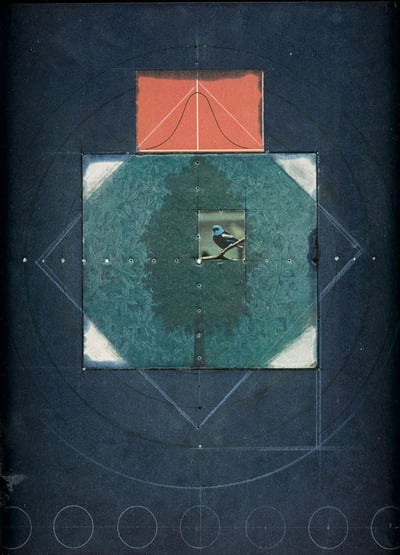
Joseph Cornell
Untitled (2C-38E), 1969
Drawing / Watercolor
Collage
Inquire For Price
Available works by Joseph Cornell
See all →Joseph Cornell
Untitled, c. 960s
Drawing / Watercolor
Collage
Inquire For Price
Joseph Cornell
Untitled (2C-38E), 1969
Drawing / Watercolor
Collage
Inquire For Price
Related Artists


Artwork by Shepard Fairey
What is appropriation?
Appropriation in art involves using pre-existing images or objects with little or no modification. This technique has played a significant role across various art forms, including visual arts, music, performance, and literature. In visual arts, appropriation refers to the practice of adopting, sampling, recycling, or borrowing elements—or even entire forms—of existing visual culture, integrating them into new works to create meaning or critique.


