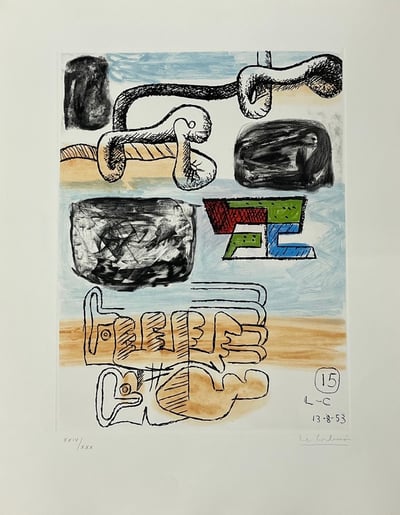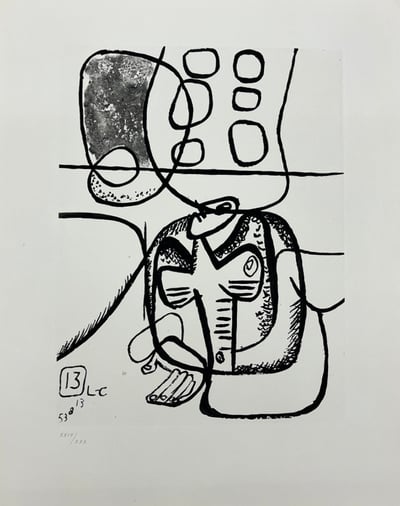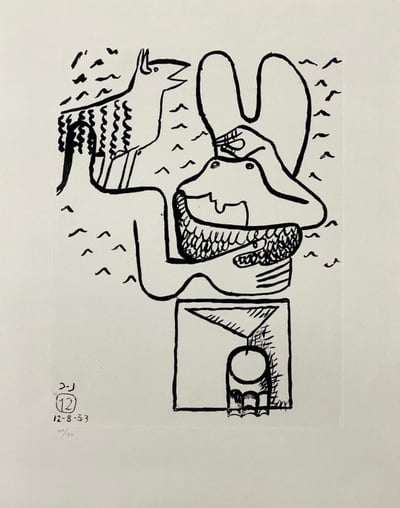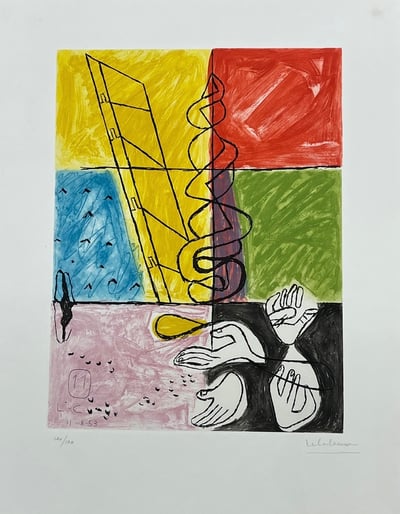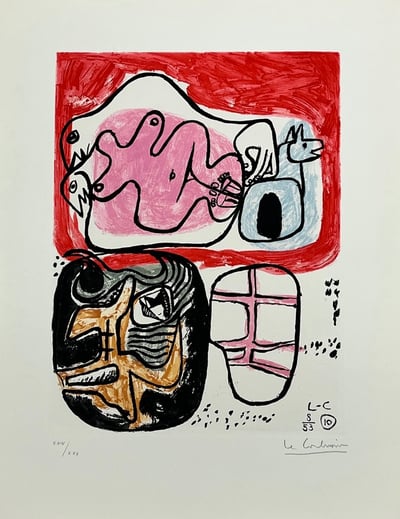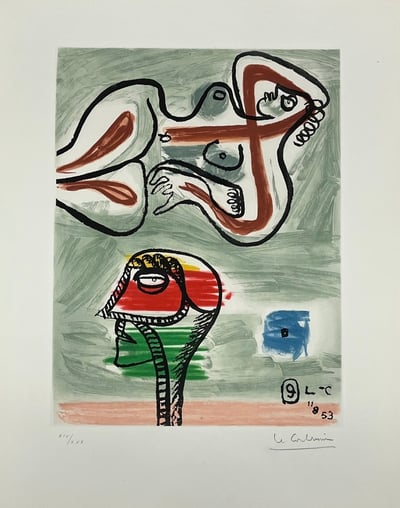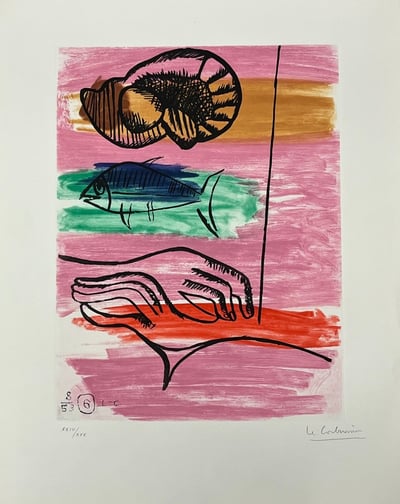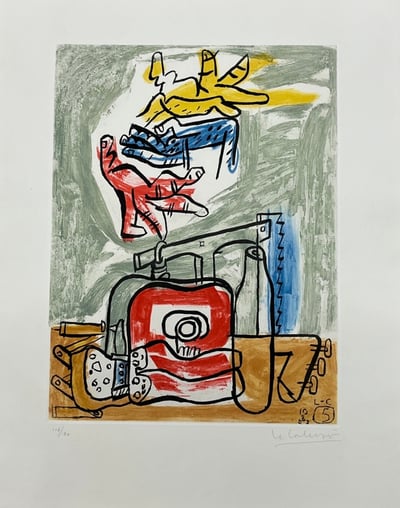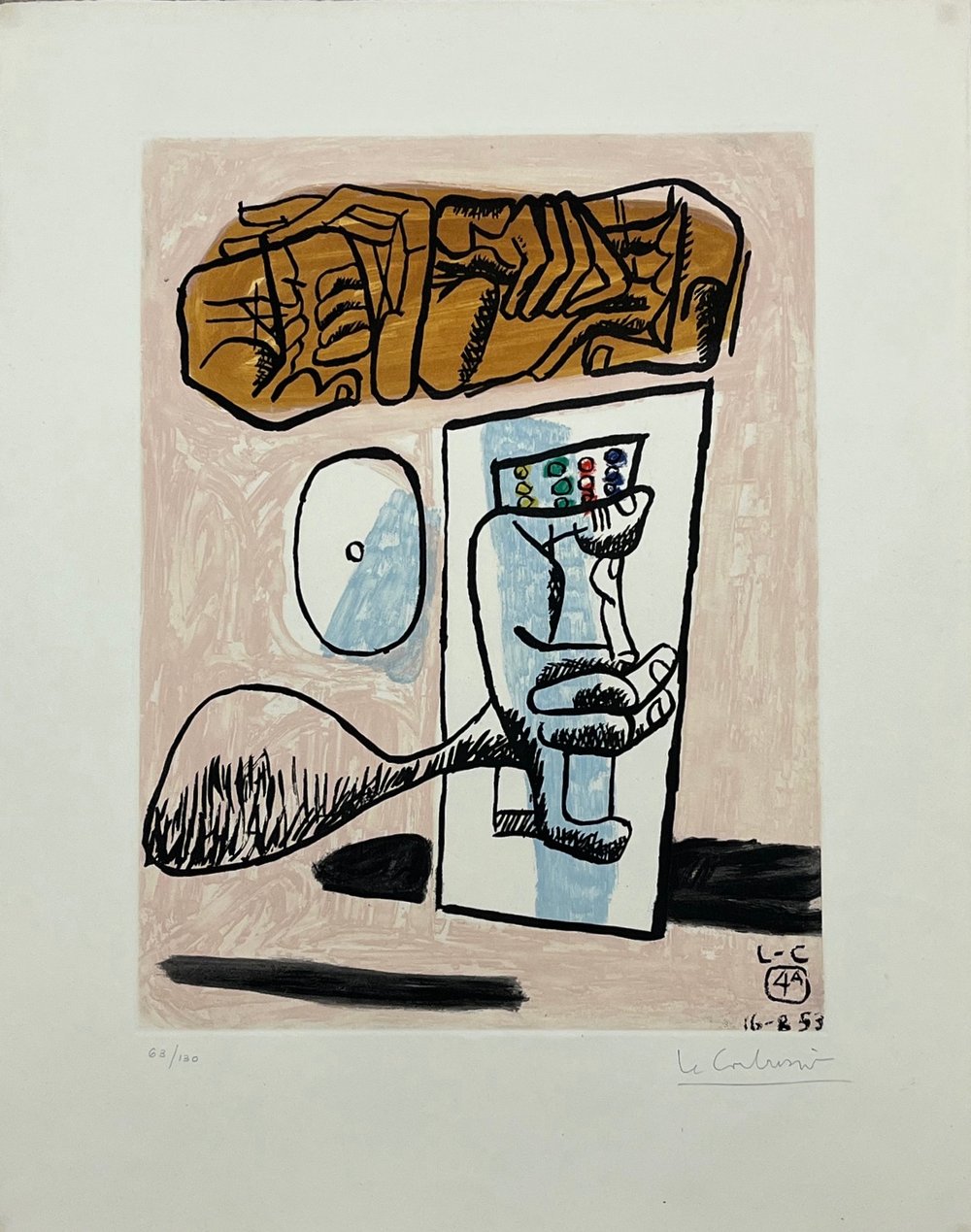
Etching and aquatint in colours, on BFK Rives paper, with full margins.
- This work is from the UNITÉ book, which began to be printed in 1963 and ended on October 15, 1965 in Paris.
- I. 41.5 x 31.5 cm (16 3/8 x 12 3/8 in.)
- S. 57 x 45.2 cm (22 1/2 x 17 3/4 in.)
- Signed and numbered in pencil, from the edition of 130 pc + 30 in Roman numerals, published by Atelier Crommelynck, Paris
- Edition number 63/130
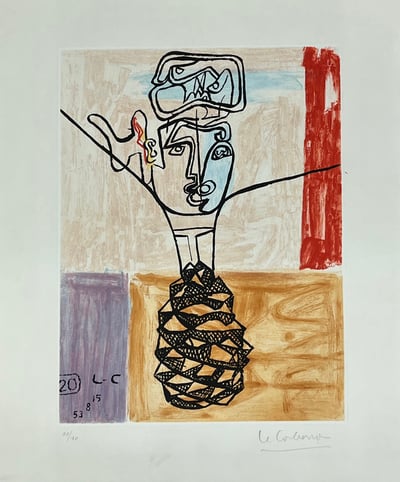
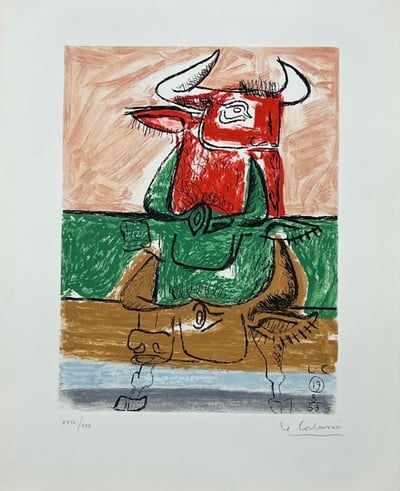
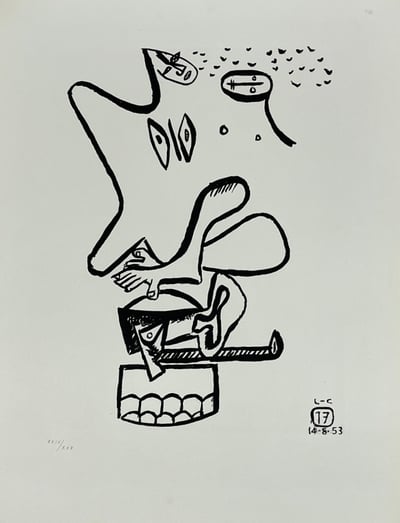
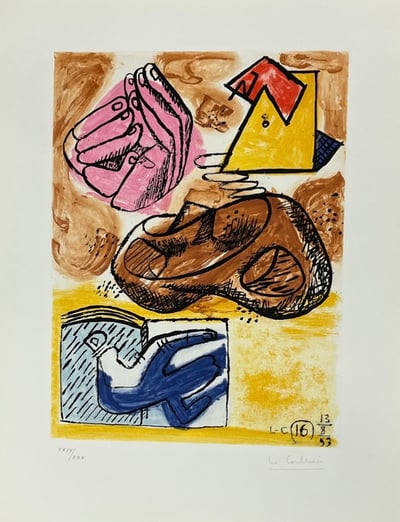
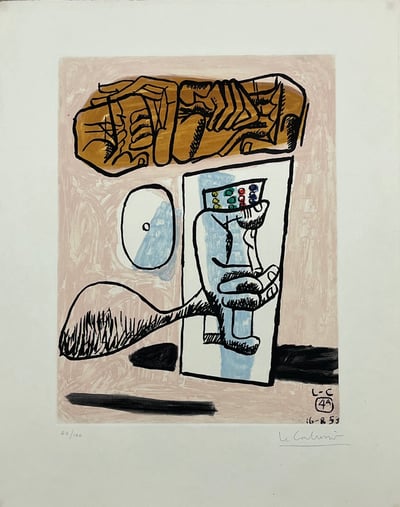
Le Corbusier’s Unité 4 (1963-1965) is a limited-edition etching and aquatint in colors, printed on BFK Rives paper. The composition features abstract and figurative elements, such as a large hand-like form holding an object, alongside geometric shapes. The upper portion includes a pattern of interlocking shapes resembling layered hands or tools in a brown hue. The central figure is framed within a rectangular panel, lending a sense of structure to the otherwise fluid and organic forms. The use of earthy tones, such as brown and beige, contrasts with bright accents, creating a balanced yet dynamic visual experience. This piece reflects Le Corbusier's exploration of human form in relation to space and object.
Le Corbusier (Switzerland, 1887–1965) was a pioneering architect and designer, a key figure in modern architecture. Known for his innovative use of concrete, urban planning theories, and functionalist designs, he created iconic structures like the Villa Savoye and the Unité d'Habitation, reshaping 20th-century architectural aesthetics and practices.
Etching and AquatintEtching and aquatint are printmaking techniques. In aquatint, the printing plate is etched with a pattern of tiny pits and cracks to create a wide range of tonal gradations. This technique allows artists to replicate the broad, flat tones found in watercolor paintings and ink washes.
Etching and aquatint in colours, on BFK Rives paper, with full margins.
- This work is from the UNITÉ book, which began to be printed in 1963 and ended on October 15, 1965 in Paris.
- I. 41.5 x 31.5 cm (16 3/8 x 12 3/8 in.)
- S. 57 x 45.2 cm (22 1/2 x 17 3/4 in.)
- Signed and numbered in pencil, from the edition of 130 pc + 30 in Roman numerals, published by Atelier Crommelynck, Paris
- Edition number 63/130
Le Corbusier’s Unité 4 (1963-1965) is a limited-edition etching and aquatint in colors, printed on BFK Rives paper. The composition features abstract and figurative elements, such as a large hand-like form holding an object, alongside geometric shapes. The upper portion includes a pattern of interlocking shapes resembling layered hands or tools in a brown hue. The central figure is framed within a rectangular panel, lending a sense of structure to the otherwise fluid and organic forms. The use of earthy tones, such as brown and beige, contrasts with bright accents, creating a balanced yet dynamic visual experience. This piece reflects Le Corbusier's exploration of human form in relation to space and object.
Le Corbusier (Switzerland, 1887–1965) was a pioneering architect and designer, a key figure in modern architecture. Known for his innovative use of concrete, urban planning theories, and functionalist designs, he created iconic structures like the Villa Savoye and the Unité d'Habitation, reshaping 20th-century architectural aesthetics and practices.
Le Corbusier, born Charles-Édouard Jeanneret-Gris in 1887 in La Chaux-de-Fonds, Switzerland, is renowned not only as a groundbreaking architect but also as a significant artist. His artistic contributions, especially in painting and printmaking, enrich the narrative of modernism, revealing his deep engagement with spatial, formal, and chromatic explorations.
From an early age, Le Corbusier was encouraged to pursue painting alongside architecture, shaping a career that straddled both disciplines seamlessly. Influenced by his travels and encounters with the Cubists and the Purism movement, he developed a distinct style that emphasized geometric simplicity, reflecting his architectural ethos of clarity and functionality.
In the 1920s, Le Corbusier and Amédée Ozenfant founded Purism, advocating for the simplification of Cubist forms into clear geometric shapes. His art from this era, such as "Still Life" (1920), embodies this pursuit of order and harmony, paralleling his architectural vision.
Le Corbusier's artistry extended over five decades, producing a vast body of paintings, drawings, and engravings characterized by vibrant colors and geometric abstraction. These works often incorporated architectural motifs, blending art and architecture into a unified vision. His series "Unité" exemplifies this integration, echoing the principles of his architectural designs.
Believing in art's societal value, Le Corbusier saw his artistic work as part of a holistic approach to design, aimed at enhancing human well-being. His legacy, preserved by institutions like the Fondation Le Corbusier in Paris, showcases his innovative contributions to modernist art and architecture.
Le Corbusier died in 1965 in France, leaving behind a legacy celebrated for its influence on modern design. His artistic endeavors, though perhaps overshadowed by his architectural achievements, remain crucial for understanding his comprehensive vision of beauty and functionality.
Cubism is an art movement that aimed to depict multiple perspectives of objects or figures within a single picture. Artists Georges Braque and Pablo Picasso pioneered this style around 1907. The name Cubism emerged from their use of geometric shapes and outlines that often resembled cubes, breaking objects down into abstracted forms.