

Letterpress printing dipthych on Japanese paper, cut-out, collage on laid paper, each sheet hand signed, numbered and dated by the artist.
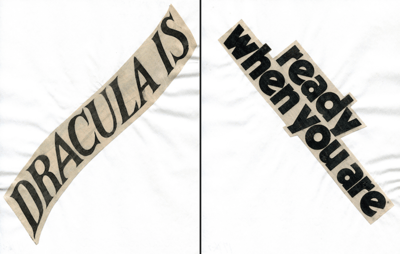
Cutting Out CONYT 3 by Lorraine O'Grady is a thought-provoking diptych collage created between 1977 and 2017. This limited edition piece (12+1) uses letterpress text on Japanese paper, with cut-out words arranged across two panels. The phrases “DRACULA IS” and “ready when you are” juxtapose gothic intrigue with a sense of anticipation or readiness. The use of bold typography and the careful placement of text against the simplicity of white space draw the viewer's focus to the words, creating an open-ended narrative that invites various interpretations. O'Grady’s work often explores identity and language, and this collage exemplifies her ability to blend humor, mystery, and cultural critique in a minimalist format.
Artwork Copyright © Lorraine O'GradyLorraine O'Grady (United States, 1934) is a conceptual and performance artist whose work examines Black female identity and cultural hybridity. Notable for her performance persona Mlle Bourgeoise Noire, she critiques racial and gender exclusion in the art world. O'Grady's influential pieces have been featured in major exhibitions, including a 2021 retrospective at the Brooklyn Museum.
Artwork Copyright © Lorraine O'GradyCutting Out CONYT 3, 1977 - 2017
Form
Medium
Size
- Inches
- Centimeters
Edition
Price
- USD
- EUR
- GBP
- CHF
- Authenticity Guaranteed
- Insured Shipping
- Online Since 2005
●Inventory 5158
●Signed
●Comes with gallery invoice and certificate
●Sell Us a Similar Artwork. Learn more.
Letterpress printing dipthych on Japanese paper, cut-out, collage on laid paper, each sheet hand signed, numbered and dated by the artist.
Cutting Out CONYT 3 by Lorraine O'Grady is a thought-provoking diptych collage created between 1977 and 2017. This limited edition piece (12+1) uses letterpress text on Japanese paper, with cut-out words arranged across two panels. The phrases “DRACULA IS” and “ready when you are” juxtapose gothic intrigue with a sense of anticipation or readiness. The use of bold typography and the careful placement of text against the simplicity of white space draw the viewer's focus to the words, creating an open-ended narrative that invites various interpretations. O'Grady’s work often explores identity and language, and this collage exemplifies her ability to blend humor, mystery, and cultural critique in a minimalist format.
Artwork Copyright © Lorraine O'GradyLorraine O'Grady (United States, 1934) is a conceptual and performance artist whose work examines Black female identity and cultural hybridity. Notable for her performance persona Mlle Bourgeoise Noire, she critiques racial and gender exclusion in the art world. O'Grady's influential pieces have been featured in major exhibitions, including a 2021 retrospective at the Brooklyn Museum.
Artwork Copyright © Lorraine O'GradyAvailability
SORT BY
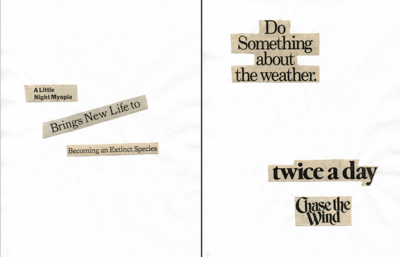
Lorraine O'Grady
Cutting Out CONYT 7, 1977 - 2017
Limited Edition Print
Mixed Media
USD 20,000
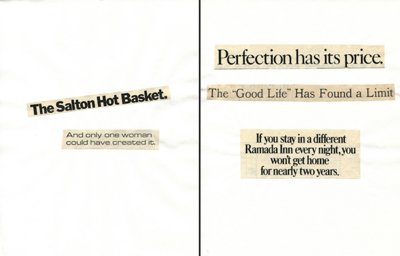
Lorraine O'Grady
Cutting Out CONYT 6, 1977 - 2017
Limited Edition Print
Mixed Media
USD 20,000
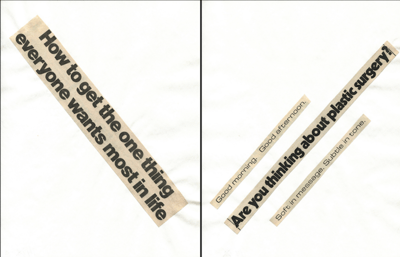
Lorraine O'Grady
Cutting Out CONYT 5, 1977 - 2017
Limited Edition Print
Mixed Media
USD 20,000
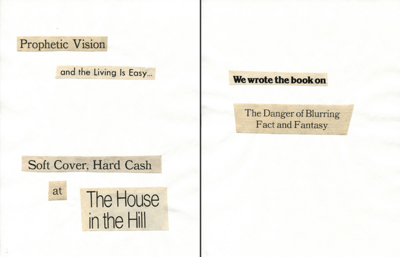
Lorraine O'Grady
Cutting Out CONYT 4, 1977 - 2017
Limited Edition Print
Mixed Media
USD 20,000
Lorraine O'Grady
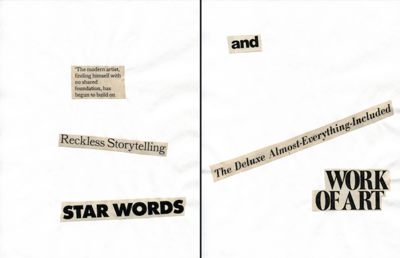
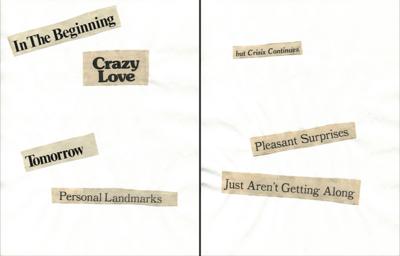
Cutting Out CONYT 3, 1977 - 2017
Limited Edition Print
Mixed Media
USD 20,000
Lorraine O'Grady
Cutting Out CONYT 2, 1977 - 2017
Limited Edition Print
Mixed Media
USD 20,000
Lorraine O'Grady
Cutting Out CONYT 1, 1977 - 2017
Limited Edition Print
Mixed Media
USD 20,000
Related Artists
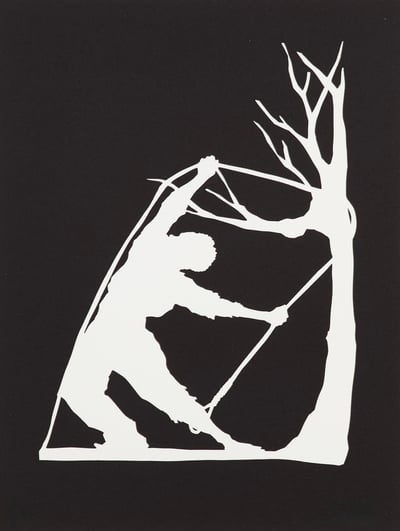



Artwork by Laure Prouvost
What is Lettrism?
Lettrism is an art form that uses letters, words, and symbols to create artwork. The movement was established in Paris in the 1940s and later gained popularity in the 1950s in America. Lettrisme is the French spelling of the movement's name, derived from the French word for letter.


Lorraine O'Grady
Cutting Out CONYT 3, 1977 - 2017
106 x 76 cm


