

Letterpress printing dipthych on Japanese paper, cut-out, collage on laid paper, each sheet hand signed, numbered and dated by the artist.
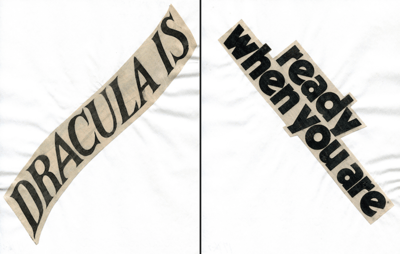
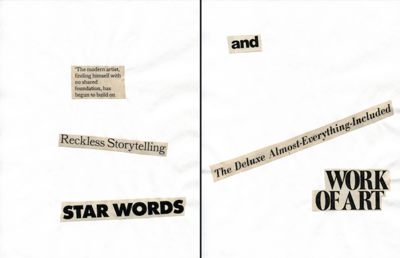
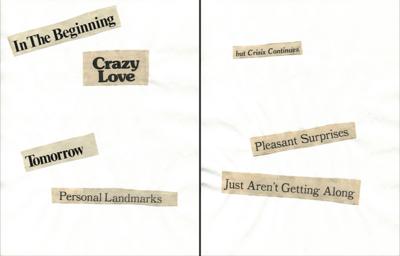
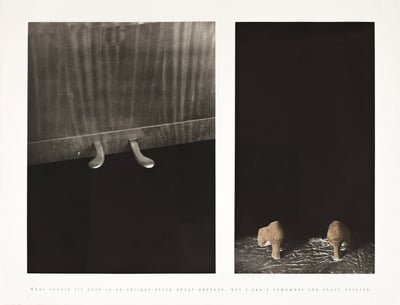
Cutting Out CONYT 4 by Lorraine O'Grady is a mixed media diptych that combines collage and letterpress printing on delicate Japanese paper. The composition includes cut-out phrases from The New York Times, assembled into poetic and thought-provoking statements. Phrases like Prophetic Vision and The Danger of Blurring Fact and Fantasy highlight O'Grady's exploration of media, identity, and cultural narratives. This piece reflects the artist's critical engagement with language and media representation, examining how fragmented phrases evoke layered meanings. Each sheet in this limited edition (12 + 1) is hand-signed, numbered, and dated, underscoring the personal touch in O'Grady's conceptual approach.
Artwork Copyright © Lorraine O'GradyLorraine O'Grady (United States, 1934) is a conceptual and performance artist whose work examines Black female identity and cultural hybridity. Notable for her performance persona Mlle Bourgeoise Noire, she critiques racial and gender exclusion in the art world. O'Grady's influential pieces have been featured in major exhibitions, including a 2021 retrospective at the Brooklyn Museum.
Artwork Copyright © Lorraine O'GradyCutting Out CONYT 4, 1977 - 2017
Form
Medium
Size
- Inches
- Centimeters
Edition
Price
- USD
- EUR
- GBP
- CHF
- Authenticity Guaranteed
- Insured Shipping
- Online Since 2005
●Inventory 5159
●Signed
●Comes with gallery invoice and certificate
●Sell Us a Similar Artwork. Learn more.
Letterpress printing dipthych on Japanese paper, cut-out, collage on laid paper, each sheet hand signed, numbered and dated by the artist.
Cutting Out CONYT 4 by Lorraine O'Grady is a mixed media diptych that combines collage and letterpress printing on delicate Japanese paper. The composition includes cut-out phrases from The New York Times, assembled into poetic and thought-provoking statements. Phrases like Prophetic Vision and The Danger of Blurring Fact and Fantasy highlight O'Grady's exploration of media, identity, and cultural narratives. This piece reflects the artist's critical engagement with language and media representation, examining how fragmented phrases evoke layered meanings. Each sheet in this limited edition (12 + 1) is hand-signed, numbered, and dated, underscoring the personal touch in O'Grady's conceptual approach.
Artwork Copyright © Lorraine O'GradyLorraine O'Grady (United States, 1934) is a conceptual and performance artist whose work examines Black female identity and cultural hybridity. Notable for her performance persona Mlle Bourgeoise Noire, she critiques racial and gender exclusion in the art world. O'Grady's influential pieces have been featured in major exhibitions, including a 2021 retrospective at the Brooklyn Museum.
Artwork Copyright © Lorraine O'GradyAvailability
SORT BY
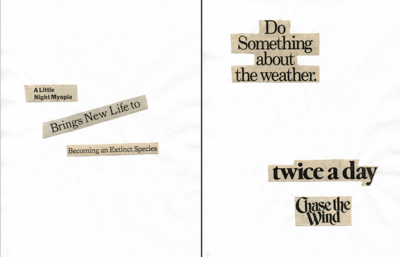
Lorraine O'Grady
Cutting Out CONYT 7, 1977 - 2017
Limited Edition Print
Mixed Media
USD 20,000
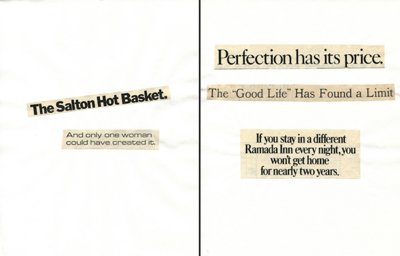
Lorraine O'Grady
Cutting Out CONYT 6, 1977 - 2017
Limited Edition Print
Mixed Media
USD 20,000
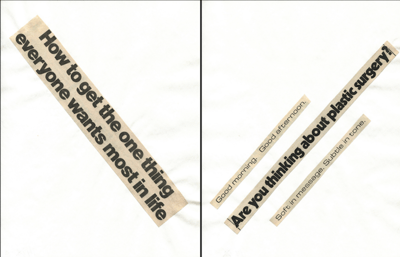
Lorraine O'Grady
Cutting Out CONYT 5, 1977 - 2017
Limited Edition Print
Mixed Media
USD 20,000
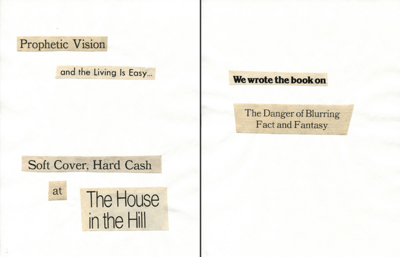
Lorraine O'Grady
Cutting Out CONYT 4, 1977 - 2017
Limited Edition Print
Mixed Media
USD 20,000
Lorraine O'Grady
Cutting Out CONYT 3, 1977 - 2017
Limited Edition Print
Mixed Media
USD 20,000
Lorraine O'Grady
Cutting Out CONYT 2, 1977 - 2017
Limited Edition Print
Mixed Media
USD 20,000
Lorraine O'Grady
Cutting Out CONYT 1, 1977 - 2017
Limited Edition Print
Mixed Media
USD 20,000
Related Artists



Artwork by Laure Prouvost
What is Lettrism?
Lettrism is an art form that uses letters, words, and symbols to create artwork. The movement was established in Paris in the 1940s and later gained popularity in the 1950s in America. Lettrisme is the French spelling of the movement's name, derived from the French word for letter.


Lorraine O'Grady
Cutting Out CONYT 4, 1977 - 2017
106 x 76 cm


