

Pigment print on paper, signed and numbered verso
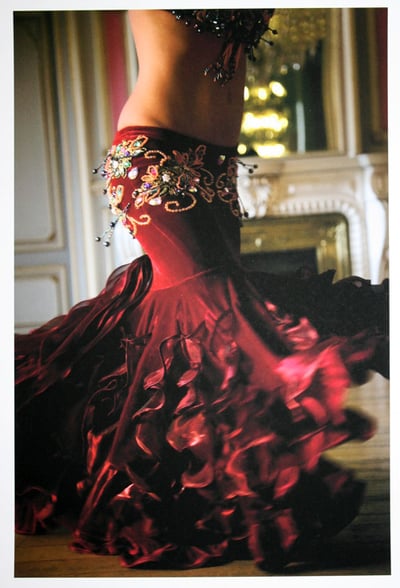
Dance the World 1 by Marie-Jo Lafontaine, created in 2010, is a vivid pigment print capturing the dynamic movement of a dancer adorned in a vibrant red, intricately embroidered skirt. The close-up perspective focuses on the swirling fabric, capturing the flowing ruffles and fine details of the embroidery, which add a sense of texture and richness. The dancer's torso is partially visible, emphasizing the rhythm and passion conveyed through the movement of the skirt. The opulent background hints at an elegant, possibly historic interior, adding depth and contrast to the image. This limited edition print, part of a series of 100, is signed and numbered on the reverse and measures 30 x 26 cm.
Artwork Copyright © Marie-Jo LafontaineMarie-Jo Lafontaine (Belgium, 1950–2026) was a contemporary artist celebrated for her multimedia installations, video sculptures, and monochromatic artworks. Best known for Les Larmes d'Acier (1986), her works explored emotion, memory, and societal issues. Lafontaine's innovative fusion of video and photography left a profound mark on contemporary art.
Artwork Copyright © Marie-Jo LafontaineDance the world 1, 2010
Form
Medium
Size
- Inches
- Centimeters
Edition
Price
- USD
- EUR
- GBP
- CHF
- Authenticity Guaranteed
- Insured Shipping
- Online Since 2005
●Inventory 2214
●Signed
●Comes with gallery invoice and certificate
●Sell Us a Similar Artwork. Learn more.
Pigment print on paper, signed and numbered verso
Dance the World 1 by Marie-Jo Lafontaine, created in 2010, is a vivid pigment print capturing the dynamic movement of a dancer adorned in a vibrant red, intricately embroidered skirt. The close-up perspective focuses on the swirling fabric, capturing the flowing ruffles and fine details of the embroidery, which add a sense of texture and richness. The dancer's torso is partially visible, emphasizing the rhythm and passion conveyed through the movement of the skirt. The opulent background hints at an elegant, possibly historic interior, adding depth and contrast to the image. This limited edition print, part of a series of 100, is signed and numbered on the reverse and measures 30 x 26 cm.
Artwork Copyright © Marie-Jo LafontaineMarie-Jo Lafontaine (Belgium, 1950–2026) was a contemporary artist celebrated for her multimedia installations, video sculptures, and monochromatic artworks. Best known for Les Larmes d'Acier (1986), her works explored emotion, memory, and societal issues. Lafontaine's innovative fusion of video and photography left a profound mark on contemporary art.
Artwork Copyright © Marie-Jo Lafontaine- Recently Added
- Price (Low-High)
- Price (High-Low)
- Year (Low-High)
- Year (High-Low)
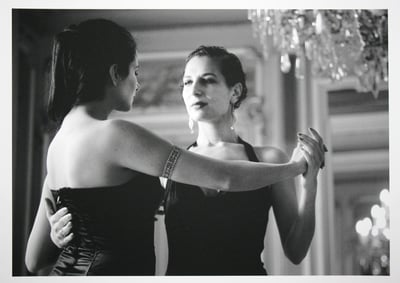
Marie-Jo Lafontaine
Dance the world 2, 2010
Limited Edition Print
Pigment print
EUR 300
Marie-Jo Lafontaine
Dance the world 1, 2010
Limited Edition Print
Pigment print
EUR 300
Related Artists



Artwork by Eduardo Kac
What is New Media Art?
New Media Art is a genre that includes all artworks created using new technologies, such as computer graphics, digital art, virtual art, internet art, computer animation, video games, 3D printing, and robotics. This genre often explores themes related to mass media, telecommunications, and digital electronics. The methods for presenting New Media Art range from installations and performances to virtual and conceptual art


Marie-Jo Lafontaine
Dance the world 1, 2010
30 x 26 cm


