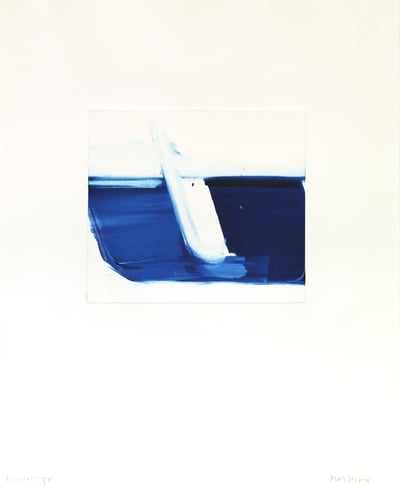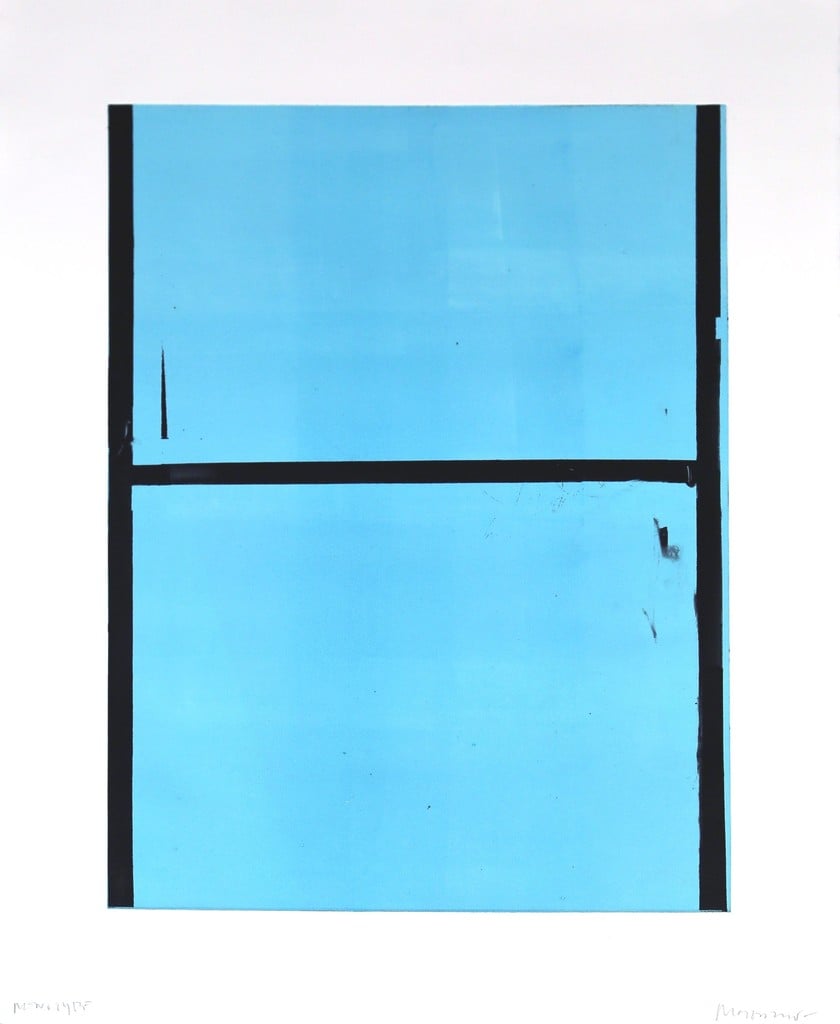
Hilux Variations 7 by Matias Faldbakken is a 2014 monotype, presented as a lithograph on Biblos paper, which uniquely captures the artist’s minimalist and conceptual approach. With a simple composition dominated by a vivid blue field interrupted by black lines and subtle imperfections, the piece explores themes of industrial aesthetics and the tension between structure and spontaneity. The black horizontal and vertical lines, which almost evoke a grid, divide the blue expanse, lending a sense of containment that contrasts with the organic marks and slight irregularities within the frame. As a monotype with an edition size of only one, this work emphasizes the individuality of each printed piece, reinforcing the transient nature of its creation.
Matias Faldbakken (Norway, 1973) is a contemporary artist and author blending conceptual art with raw aesthetics. Known for his provocative installations and sculptures, he critiques consumerism, media, and cultural norms, often recontextualizing everyday objects into thought-provoking works.
MonotypeMonotype is a printmaking technique where an image is painted or drawn on a nonabsorbent, smooth surface, traditionally an etching plate of copper, but now also acrylic, zinc, or glass. The image is then transferred to paper using a printing press, creating a unique print. The first pressing removes most of the ink, making it difficult to produce additional prints with the same richness, resulting in a one-of-a-kind artwork.
Size
Inches
Centimeters
76 X 54.5 cm
Edition
Edition of 1
Price
USD
EUR
GBP
CHF
7,000EUR
?
+ VAT/import Duties (if applicable)
Authenticity Guaranteed
Insured Shipping
Online Since 2005
Share
●Inventory 2954
●Signed
●Comes with gallery invoice and certificate
●Any questions?
lLithograph on Biblos paper
Hilux Variations 7 by Matias Faldbakken is a 2014 monotype, presented as a lithograph on Biblos paper, which uniquely captures the artist’s minimalist and conceptual approach. With a simple composition dominated by a vivid blue field interrupted by black lines and subtle imperfections, the piece explores themes of industrial aesthetics and the tension between structure and spontaneity. The black horizontal and vertical lines, which almost evoke a grid, divide the blue expanse, lending a sense of containment that contrasts with the organic marks and slight irregularities within the frame. As a monotype with an edition size of only one, this work emphasizes the individuality of each printed piece, reinforcing the transient nature of its creation.
Matias Faldbakken (Norway, 1973) is a contemporary artist and author blending conceptual art with raw aesthetics. Known for his provocative installations and sculptures, he critiques consumerism, media, and cultural norms, often recontextualizing everyday objects into thought-provoking works.
I hate the fact that everything—any damn thing, any action, any protest, any obscenity—sooner or later turns into design.
- Matias Faldbakken
Matias Faldbakken (b. 1973 Denmark) is a Norwegian artist and writer known for his provocative and subversive approach to contemporary art and literature. Faldbakken’s work often explores themes of cultural disruption, social critique, and the breakdown of traditional norms. As an artist, he works across various media, including sculpture, installation, and painting, frequently incorporating found objects and everyday materials in ways that challenge their usual meanings and functions. His art is characterized by a raw, sometimes anarchic energy that confronts viewers with the contradictions and tensions of modern society. Faldbakken is also an accomplished novelist, writing under his own name and the pseudonym Abo Rasul. His novels, much like his visual art, are known for their dark humor, cynicism, and exploration of societal collapse. Faldbakken’s work has earned him a significant place in the international contemporary art scene, where he continues to push boundaries and provoke thought.
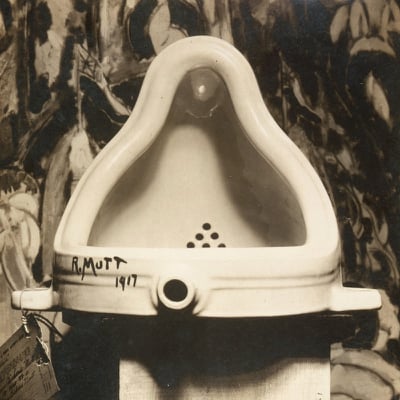
A found object is a term used to describe a man-made or natural object, or a fragment of one, that an artist discovers or purchases and keeps for inspiration or as a work of art. The artist may also modify the object or incorporate it into a collage or assemblage, transforming it into a new piece of art.