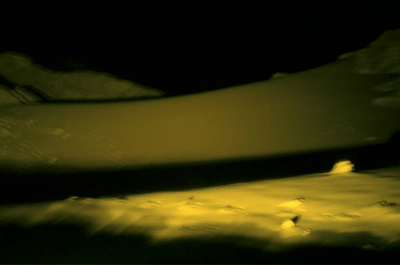
Nan Goldin's "Desert at Night, Aswan, Egypt" from 2003 is a C-print photograph capturing the Egyptian desert landscape enveloped in darkness, with golden-amber light illuminating undulating sand and rock formations. This atmospheric image represents a departure from Goldin's celebrated intimate portraiture, extending her deeply personal visual diary into the realm of landscape and travel. The nocturnal setting evokes mystery and solitude, while the warm artificial light creates dramatic contrasts that transform the desert terrain into an otherworldly stage, reflecting Goldin's instinctive sensitivity to the emotional resonance of illumination.
Nan Goldin (United States, 1953) is an American photographer renowned for her raw, intimate portraits that explore themes of identity, love, addiction, and LGBTQ+ culture. Best known for her series The Ballad of Sexual Dependency, Goldin's work offers a vivid chronicle of subcultures and personal relationships, often blurring the line between art and autobiography.
C-PrintA C-type print, also known as a chromogenic print, is a photographic print made from a color negative or slide. The print is created on chromogenic paper, which contains three emulsion layers, each sensitized to a different primary color. After exposure, the paper is processed in a series of chemical baths, where each layer reacts to the chemicals to produce the final image. C-type prints are known for their rich color depth and are widely used in fine art and commercial photography.
Nan Goldin's "Desert at Night, Aswan, Egypt" from 2003 is a C-print photograph capturing the Egyptian desert landscape enveloped in darkness, with golden-amber light illuminating undulating sand and rock formations. This atmospheric image represents a departure from Goldin's celebrated intimate portraiture, extending her deeply personal visual diary into the realm of landscape and travel. The nocturnal setting evokes mystery and solitude, while the warm artificial light creates dramatic contrasts that transform the desert terrain into an otherworldly stage, reflecting Goldin's instinctive sensitivity to the emotional resonance of illumination.
Nan Goldin (United States, 1953) is an American photographer renowned for her raw, intimate portraits that explore themes of identity, love, addiction, and LGBTQ+ culture. Best known for her series The Ballad of Sexual Dependency, Goldin's work offers a vivid chronicle of subcultures and personal relationships, often blurring the line between art and autobiography.
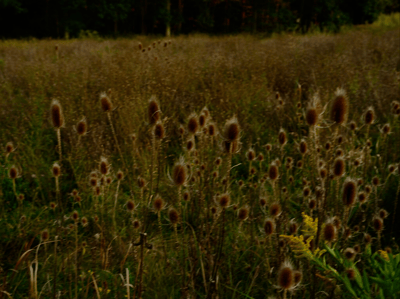
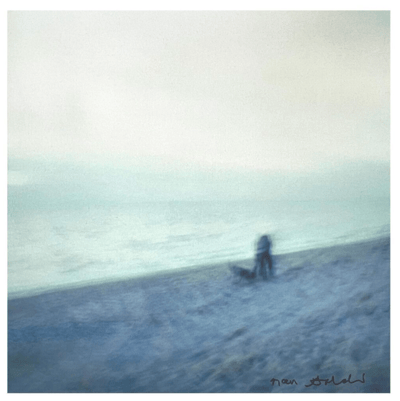
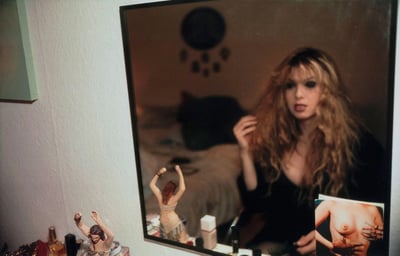
Highly acclaimed for her deeply personal and honest portraiture, Nan Golding is a photographer whose work was often controversial, intimate and universally human. Her most notable work is arguably The Ballad of Sexual Dependency – this series features snapshots of the NYC No Wave art and music scene, heroin dependency, the post-Stonewall gay subculture of the late 70’s, as well as Goldin’s own personal life; the series has been cited as an influence for a lot of confessional photography to follow and was initially created by Goldin as a slideshow for her friends. Among Goldin’s influences are Diane Arbus, Michelangelo Antonioni and Larry Clark – all of whom were also renowned for their unshrinking portrayal of sexuality, substance abuse and health epidemics such as AIDS. In the later stages of her career, Goldin’s array of subject matter has widened even further to include New York City skylines, landscapes and parenthood.
Contemporary art refers to avant-garde or innovative art created in the recent past or present day. The exact starting point of contemporary art varies depending on the institution, often tied to the founding year of museums or galleries that showcase the style. Contemporary art is characterized by its focus on current ideas, diverse media, and the exploration of new concepts and techniques.