

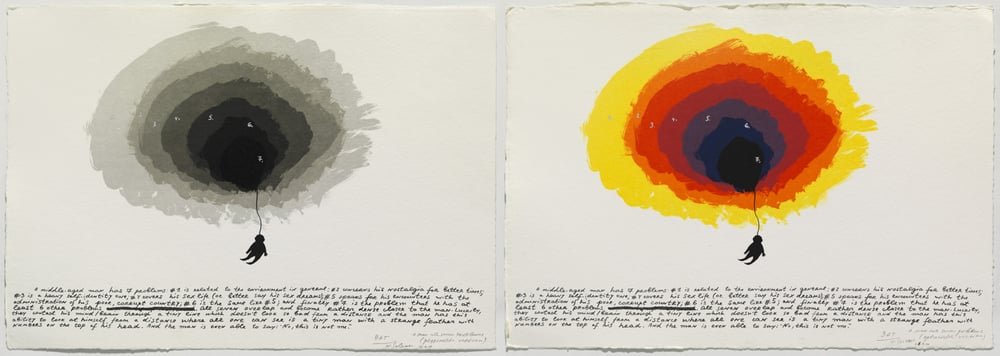
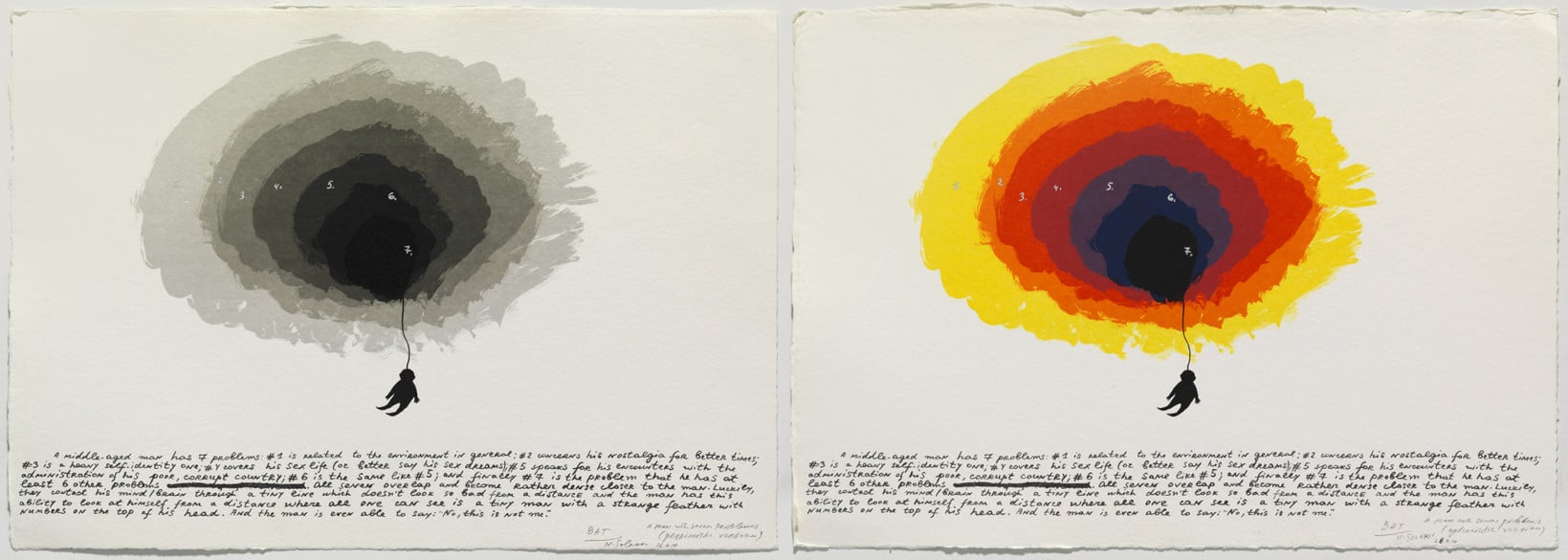
// A Man with Seven Problems by Nedko Solakov is a 2010 lithograph that uses humor and minimalism to explore themes of anxiety and the human condition. The composition features a small, isolated figure hanging from a rope beneath a cloud-like form. On the left, the cloud is depicted in grayscale tones, conveying a sense of heaviness or depression, while on the right, vibrant colors of red, orange, and yellow introduce a contrasting energy, suggesting inner turmoil or intensity. Below the illustrations, handwritten text provides additional insight, giving the piece a narrative quality. Solakov’s work often blends personal introspection with social commentary, and here, the layers of color metaphorically represent the emotional complexities individuals carry. This print invites viewers to reflect on the weight of personal struggles and the duality of emotion.
Artwork Copyright © Nedko SolakovNedko Solakov (Bulgaria, 1957) is a contemporary artist renowned for his narrative-driven works that blend traditional techniques with conceptual art. His diverse oeuvre includes drawings, paintings, performances, and installations, often infused with irony and metaphor to critique societal norms and the art world. Solakov's art has been exhibited globally, including at the Venice Biennale and documenta, and is featured in collections such as MoMA and Tate Modern.
Artwork Copyright © Nedko SolakovA man with seven problems , 2010
Form
Medium
Size
- Inches
- Centimeters
Edition
Price
- USD
- EUR
- GBP
- CHF
- Authenticity Guaranteed
- Insured Shipping
- Online Since 2005
●Inventory 3985
●Signed
●Comes with gallery invoice and certificate
●Sell Us a Similar Artwork. Learn more.
// A Man with Seven Problems by Nedko Solakov is a 2010 lithograph that uses humor and minimalism to explore themes of anxiety and the human condition. The composition features a small, isolated figure hanging from a rope beneath a cloud-like form. On the left, the cloud is depicted in grayscale tones, conveying a sense of heaviness or depression, while on the right, vibrant colors of red, orange, and yellow introduce a contrasting energy, suggesting inner turmoil or intensity. Below the illustrations, handwritten text provides additional insight, giving the piece a narrative quality. Solakov’s work often blends personal introspection with social commentary, and here, the layers of color metaphorically represent the emotional complexities individuals carry. This print invites viewers to reflect on the weight of personal struggles and the duality of emotion.
Artwork Copyright © Nedko SolakovNedko Solakov (Bulgaria, 1957) is a contemporary artist renowned for his narrative-driven works that blend traditional techniques with conceptual art. His diverse oeuvre includes drawings, paintings, performances, and installations, often infused with irony and metaphor to critique societal norms and the art world. Solakov's art has been exhibited globally, including at the Venice Biennale and documenta, and is featured in collections such as MoMA and Tate Modern.
Artwork Copyright © Nedko Solakov- Recently Added
- Price (Low-High)
- Price (High-Low)
- Year (Low-High)
- Year (High-Low)

Nedko Solakov
A man with seven problems , 2010
Limited Edition Print
Lithograph
EUR 2,500
Nedko Solakov
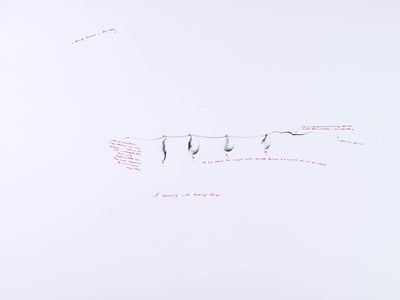
A Drawing with Lacking Things, 2004
Limited Edition Print
Silkscreen
Currently Not Available
Related Artists
Artwork by John Baldessari
What is conceptual art?
Sometimes referred to as Conceptualism, this is an art form where the idea(s) or concept(s) behind the work take precedence over material concerns and traditional aesthetics. Many conceptual artworks can be created by anyone simply by following written instructions. The concept or idea is the most essential aspect of the artwork.

Nedko Solakov
A man with seven problems , 2010
40 x 60 cm


