Acrylic paint on resin.
Stamped and numbered on the bottom
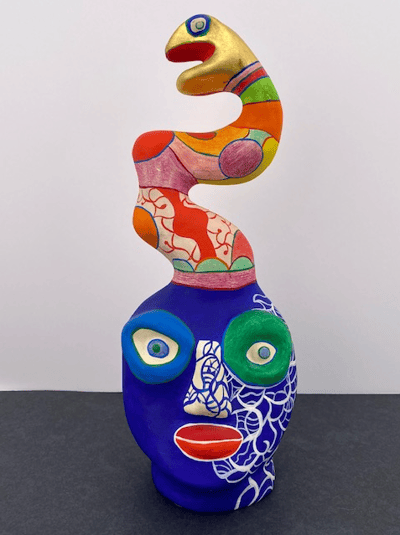
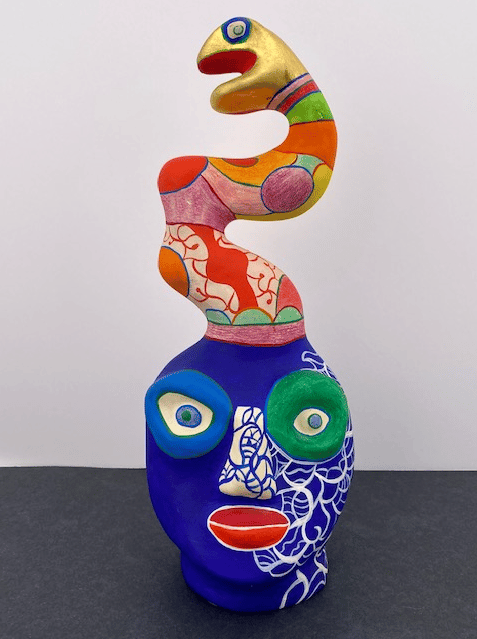
Niki de Saint Phalle’s Kundalini (1995) is a vibrant and whimsical resin sculpture painted with acrylics, embodying her signature playful and bold aesthetic. The piece is a fantastical representation of the energy associated with the concept of Kundalini, featuring a snake-like form that spirals upward from a bright blue, mask-like base. The sculpture’s vivid palette includes rich blues, reds, oranges, greens, and golds, which are decorated with intricate patterns and motifs that enhance the dynamic movement of the form. The expressive face on the base combines abstract and surreal elements, adding a sense of mystery and character. This piece exemplifies de Saint Phalle’s ability to transform symbolic and spiritual themes into joyful, colorful art that engages the viewer’s imagination.
Niki de Saint Phalle (France, 1930–2002) was a groundbreaking artist known for her vibrant, whimsical sculptures and feminist themes. A key figure in the Nouveau Réalisme movement, she is celebrated for her Nanas series—bold, colorful depictions of joyful, empowered women—and monumental public artworks like The Tarot Garden.
Resin Resin can be derived from both natural sources, such as pine sap, and synthetic processes. Natural resin comes from tree sap, while synthetic resin is a type of dense, easily molded plastic. Resin is commonly used in sculpture, and it can also enhance the vibrancy of paint colors.
Acrylic paint on resin.
Stamped and numbered on the bottom
Niki de Saint Phalle’s Kundalini (1995) is a vibrant and whimsical resin sculpture painted with acrylics, embodying her signature playful and bold aesthetic. The piece is a fantastical representation of the energy associated with the concept of Kundalini, featuring a snake-like form that spirals upward from a bright blue, mask-like base. The sculpture’s vivid palette includes rich blues, reds, oranges, greens, and golds, which are decorated with intricate patterns and motifs that enhance the dynamic movement of the form. The expressive face on the base combines abstract and surreal elements, adding a sense of mystery and character. This piece exemplifies de Saint Phalle’s ability to transform symbolic and spiritual themes into joyful, colorful art that engages the viewer’s imagination.
Niki de Saint Phalle (France, 1930–2002) was a groundbreaking artist known for her vibrant, whimsical sculptures and feminist themes. A key figure in the Nouveau Réalisme movement, she is celebrated for her Nanas series—bold, colorful depictions of joyful, empowered women—and monumental public artworks like The Tarot Garden.
Painting calmed the chaos that shook my soul.
- Niki De Saint Phalle
French artist Niki de Saint Phalle is best known for her large, colorful sculptures of curvaceous women. Her work was often made in collaboration with her husband, Jean Tinguely, who incorporated mechanical, moving elements into her pieces. Niki de Saint Phalle’s love of colour came through in her painting as well as her sculpture, but her most famous piece has to be a series of sculptures for the fountain in Place Igor Stravinsky, Paris. The sculptures, which include a bird, an elephant and a heart, rotate continually and many spurt water. The fountain has the perfect backdrop as it is along one side of Centre Georges Pompidou, Paris's modern art museum. Niki de Saint Phalle is associated with nouveau realismé, meaning 'new realism', which began as a counterpoint to pop art. The exuberance of de Saint Phalle also bears witness to the work of Gaudi, who she regularly drew inspiration from. Nowhere is this more evident than in the glorious Tarot Garden, a sculpture park in Tuscany filled with giant figures. Each sculpture can be walked around, in and through, and is covered in mosaic tiles. One even became a temporary house for de Niki Saint Phalle during the Garden's construction. After her death in 2002, the Garden remains as the peak point in Niki de Saint Phalle's career. (Artist website)
Art Brut, a French term meaning Raw Art, was coined by Jean Dubuffet to describe art created outside the conventional fine arts tradition. Dubuffet used the term to refer to works made by self-taught artists, including the mentally ill, prisoners, and others on the margins of society. He also called it Outsider Art. This art is characterized by its raw, unrefined nature, often created without concern for traditional presentation or imitation.