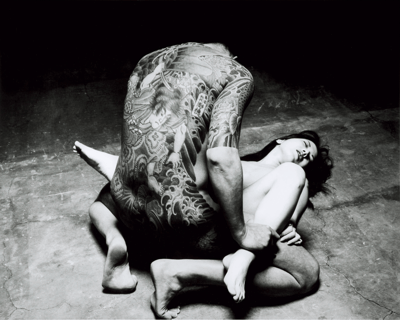
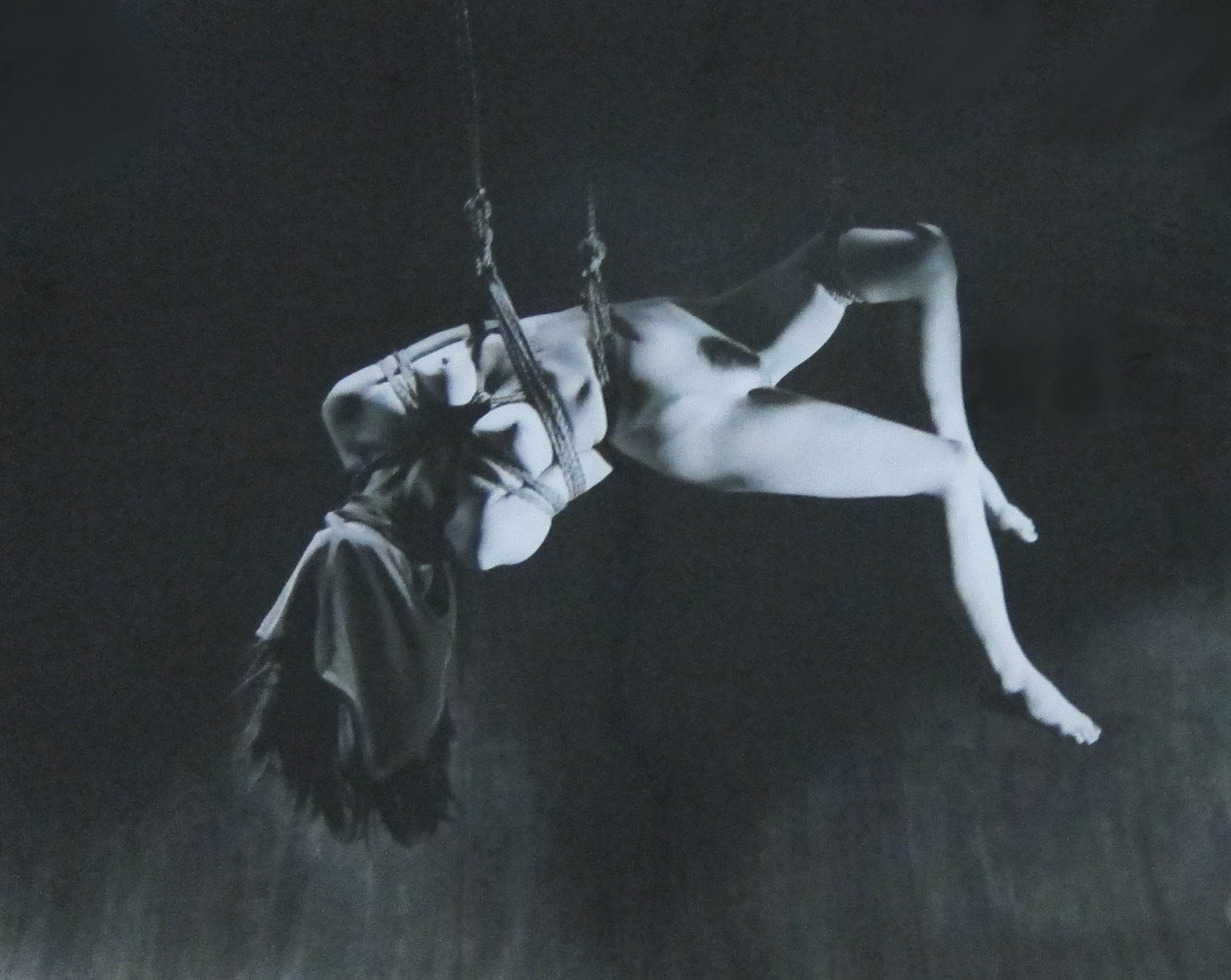
Personal Sentimentalism in Photography by Nobuyoshi Araki is a striking and intimate black-and-white photograph from 2000, capturing a bound, suspended figure in a state of vulnerability and tension. Known for his explorations of human intimacy and complex emotional states, Araki utilizes traditional Japanese bondage (kinbaku) techniques to evoke themes of desire, restraint, and power dynamics. The figure’s body, partially obscured with fabric and depicted in a suspended position, emphasizes the fragility and sensuality of the human form. The monochromatic tone intensifies the mood, creating a hauntingly beautiful, yet provocative atmosphere that speaks to Araki's ability to capture profound emotion through minimalist composition. Signed on the reverse, this piece is emblematic of Araki's approach to confronting taboos and exploring personal sentiment within his photography.
Nobuyoshi Araki (Japan, 1940) is a groundbreaking photographer known for his provocative and emotive exploration of themes like love, death, and eroticism. Famed for his series Sentimental Journey and Tokyo Lucky Hole, his work blends traditional Japanese aesthetics with raw, modern sensibilities. Araki’s innovative approach has made him one of Japan’s most influential contemporary artists.
PhotographA photograph is an image captured with a camera. Traditionally, photographs were made by exposing film and then developing the image on light-sensitive paper using chemicals. Today, photographs can also be captured digitally and printed or displayed electronically. The process requires a camera, whether film or digital, and a photographer.
Personal Sentimentalism in Photography by Nobuyoshi Araki is a striking and intimate black-and-white photograph from 2000, capturing a bound, suspended figure in a state of vulnerability and tension. Known for his explorations of human intimacy and complex emotional states, Araki utilizes traditional Japanese bondage (kinbaku) techniques to evoke themes of desire, restraint, and power dynamics. The figure’s body, partially obscured with fabric and depicted in a suspended position, emphasizes the fragility and sensuality of the human form. The monochromatic tone intensifies the mood, creating a hauntingly beautiful, yet provocative atmosphere that speaks to Araki's ability to capture profound emotion through minimalist composition. Signed on the reverse, this piece is emblematic of Araki's approach to confronting taboos and exploring personal sentiment within his photography.
Nobuyoshi Araki (Japan, 1940) is a groundbreaking photographer known for his provocative and emotive exploration of themes like love, death, and eroticism. Famed for his series Sentimental Journey and Tokyo Lucky Hole, his work blends traditional Japanese aesthetics with raw, modern sensibilities. Araki’s innovative approach has made him one of Japan’s most influential contemporary artists.
Art is all about doing what you shouldn't.
- Nobuyoshi Araki
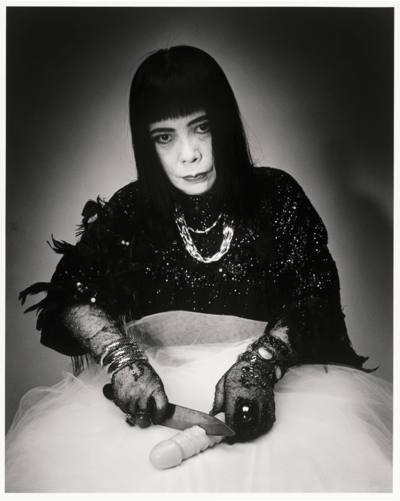
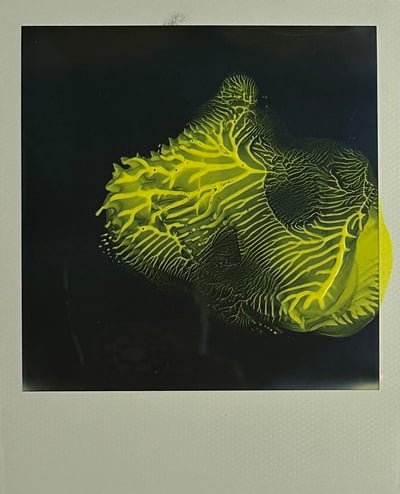
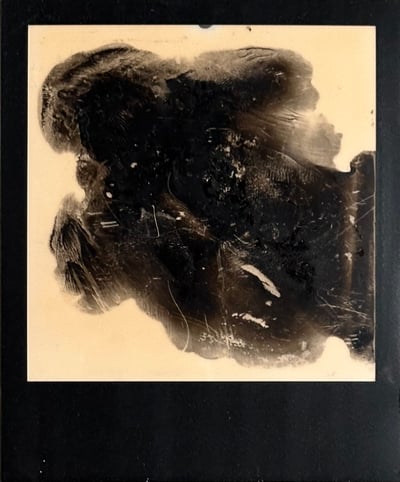
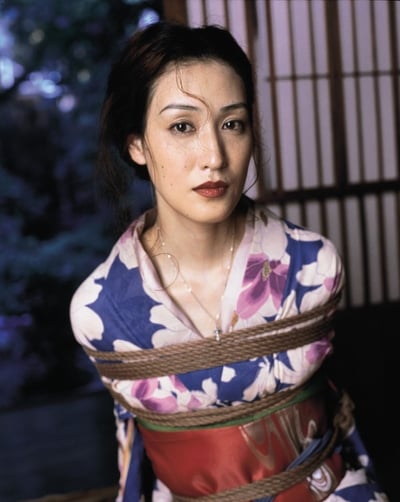
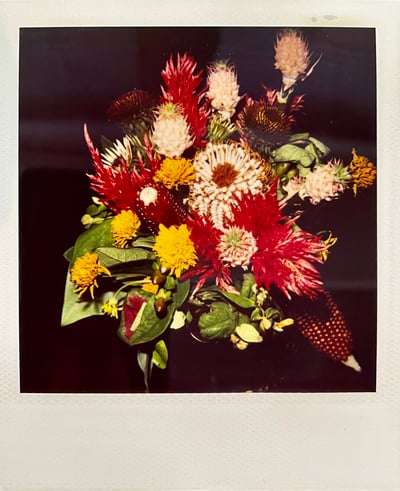
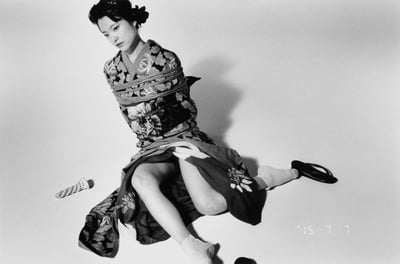
Nobuyoshi Araki has attracted a lot of attention around the world for his choice of photographic subjects and because of the artistic merits of his photography. His love of photography and Polaroids began when he was at infant school in Japan and he later studied film and photography at Chiba University. He became a leading Japanese artist after receiving the Taiyo Award in 1964 for his photography project about a boy called Satchin. His art has been heavily influenced by the rapid growth of commercialism and urbanization in Japan, which started in the decades following the end of World War Two. Many of his images also provide visual references to Japanese history and traditions. Street scenes, flowers, bondages, food, faces and Araki’s cat feature in much of his art, and the female body in Japanese bondage, representing sex and death, is a major theme in his work. More recently he has photographed female musicians such as Bjork and Lady Gaga. Nobuyoshi Araki has published many books of photography documenting his everyday life. He photographed his wife on their honeymoon and continued to use her image during their married life. Two of his published collections, Sentimental Journey (1971) and Winter Journey (1991), show images of his wife at the start of their marriage and in the final days before her death. Many of Araki’s photographs (Polaroids especially ) have been exhibited internationally in solo exhibitions and at contemporary art shows. His work is now included in major collections of modern photography and in permanent displays at a number of contemporary art museums. (Artist website)
Contemporary art refers to avant-garde or innovative art created in the recent past or present day. The exact starting point of contemporary art varies depending on the institution, often tied to the founding year of museums or galleries that showcase the style. Contemporary art is characterized by its focus on current ideas, diverse media, and the exploration of new concepts and techniques.