
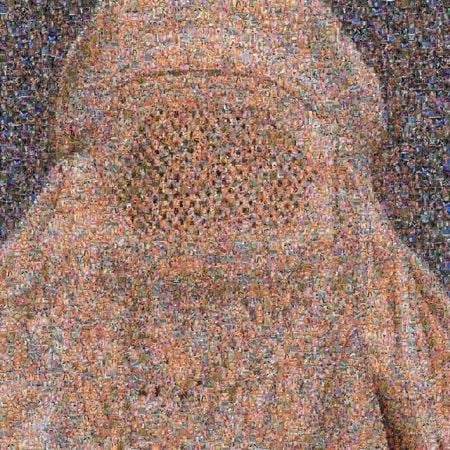
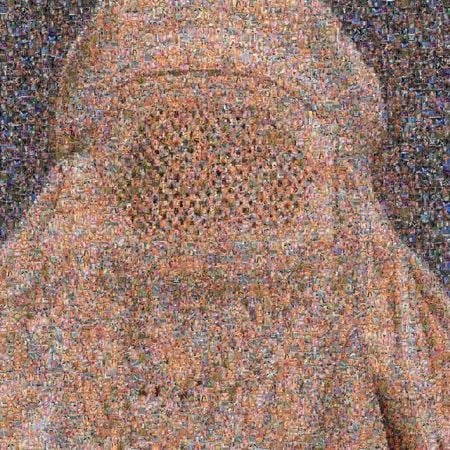
// Rashid Rana's Veil II (2004) is a thought-provoking photographic work that utilizes a mosaic technique to create a complex and layered visual narrative. From a distance, the image appears to depict a traditional veiled figure, emphasizing themes of identity, culture, and anonymity. However, upon closer inspection, the image is revealed to be composed of numerous smaller photographs that each tell their own story, often contrasting with the traditional motif of the veil. Rana’s approach confronts the viewer with the interplay between collective identity and individuality, examining how perceptions shift depending on perspective. This limited edition C-print of 20 copies demonstrates Rana's mastery in using digital montage to question and redefine cultural symbols.
Artwork Copyright © Rashid RanaRashid Rana (Pakistan, 1968) is a contemporary visual artist renowned for his innovative use of digital photomontage, video installations, and sculptures. His work often explores themes of urbanization, identity, and cultural dislocation. Rana's pieces are featured in prominent collections, including the British Museum and the Metropolitan Museum of Art. He serves as the Dean of the School of Visual Arts and Design at Beaconhouse National University in Lahore.
Artwork Copyright © Rashid RanaVeil II, 2004
Form
Medium
Size
- Inches
- Centimeters
Edition
Price
Available works →
- Authenticity Guaranteed
- Insured Shipping
- Online Since 2005
●
●Inventory 1663
●Signed
●Comes with gallery invoice and certificate
●Sell Us a Similar Artwork. Learn more.
// Rashid Rana's Veil II (2004) is a thought-provoking photographic work that utilizes a mosaic technique to create a complex and layered visual narrative. From a distance, the image appears to depict a traditional veiled figure, emphasizing themes of identity, culture, and anonymity. However, upon closer inspection, the image is revealed to be composed of numerous smaller photographs that each tell their own story, often contrasting with the traditional motif of the veil. Rana’s approach confronts the viewer with the interplay between collective identity and individuality, examining how perceptions shift depending on perspective. This limited edition C-print of 20 copies demonstrates Rana's mastery in using digital montage to question and redefine cultural symbols.
Artwork Copyright © Rashid RanaRashid Rana (Pakistan, 1968) is a contemporary visual artist renowned for his innovative use of digital photomontage, video installations, and sculptures. His work often explores themes of urbanization, identity, and cultural dislocation. Rana's pieces are featured in prominent collections, including the British Museum and the Metropolitan Museum of Art. He serves as the Dean of the School of Visual Arts and Design at Beaconhouse National University in Lahore.
Artwork Copyright © Rashid Rana- Recently Added
- Price (Low-High)
- Price (High-Low)
- Year (Low-High)
- Year (High-Low)
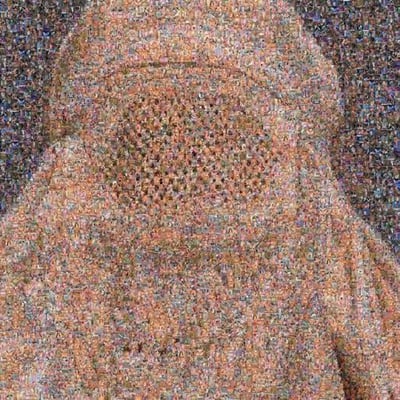
Rashid Rana
Veil II, 2004
Photography
C-Print
Currently Not Available
Related Artists




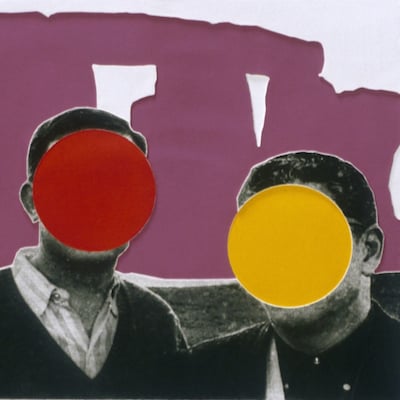
Artwork by John Baldessari
What is conceptual art?
Sometimes referred to as Conceptualism, this is an art form where the idea(s) or concept(s) behind the work take precedence over material concerns and traditional aesthetics. Many conceptual artworks can be created by anyone simply by following written instructions. The concept or idea is the most essential aspect of the artwork.
Rashid Rana
Veil II, 2004
51 x 51 cm


