

Linocut and Pochoir - Dimensions of the image: 6.4 × 7.6 cm - Signed and numbered on colophon
Pig by Richard Tuttle, created in 1990, is a small-scale linocut and pochoir print featuring minimalist, abstract shapes arranged on a textured red background. The composition centers on a jagged white form that cuts horizontally across the image, intersecting with a vertical black bar on the left. The simplicity and precision of these elements evoke a sense of tension and balance within the limited color palette. Known for his exploration of form and space, Tuttle’s work here reflects his signature style—an interplay of subtlety and abstraction that invites contemplation of line, shape, and negative space. This piece, part of an edition of 1000, is signed and numbered.
Artwork Copyright © Richard TuttleRichard Tuttle (USA, 1941) is an influential post-minimalist artist known for his delicate, unconventional works. Blending sculpture, drawing, and installation, he challenges traditional boundaries with subtle forms and materials like paper, wire, and fabric. Tuttle’s art invites contemplation, celebrating the beauty of the understated and ephemeral.
Artwork Copyright © Richard TuttlePig, 1990
Form
Medium
Size
- Inches
- Centimeters
Edition
Price
Available works →
- Authenticity Guaranteed
- Insured Shipping
- Online Since 2005
●
●Inventory 6051
●Signed
●Comes with gallery invoice and certificate
●Sell Us a Similar Artwork. Learn more.
Linocut and Pochoir - Dimensions of the image: 6.4 × 7.6 cm - Signed and numbered on colophon
Pig by Richard Tuttle, created in 1990, is a small-scale linocut and pochoir print featuring minimalist, abstract shapes arranged on a textured red background. The composition centers on a jagged white form that cuts horizontally across the image, intersecting with a vertical black bar on the left. The simplicity and precision of these elements evoke a sense of tension and balance within the limited color palette. Known for his exploration of form and space, Tuttle’s work here reflects his signature style—an interplay of subtlety and abstraction that invites contemplation of line, shape, and negative space. This piece, part of an edition of 1000, is signed and numbered.
Artwork Copyright © Richard TuttleRichard Tuttle (USA, 1941) is an influential post-minimalist artist known for his delicate, unconventional works. Blending sculpture, drawing, and installation, he challenges traditional boundaries with subtle forms and materials like paper, wire, and fabric. Tuttle’s art invites contemplation, celebrating the beauty of the understated and ephemeral.
Artwork Copyright © Richard Tuttle- Recently Added
- Price (Low-High)
- Price (High-Low)
- Year (Low-High)
- Year (High-Low)

Richard Tuttle
Word of Mouth from Artist for Obama, 2008
Limited Edition Print
Drypoint
USD 1,350

Richard Tuttle
Grouse, 1990
Limited Edition Print
Linocut
Currently Not Available
Available works by Richard Tuttle
See all →Richard Tuttle
Word of Mouth from Artist for Obama, 2008
Limited Edition Print
Drypoint
USD 1,350
Related Artists

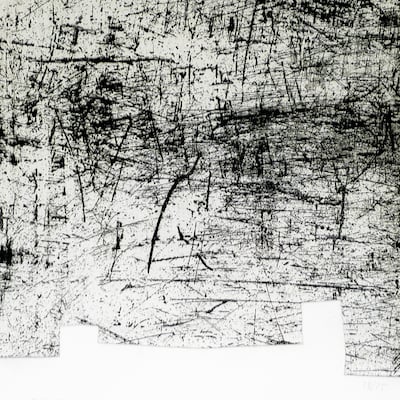
Artwork by Eduardo Chillida
What is abstract art?
Abstract art uses form, shape, line, and color to create a visual experience without attempting to represent external reality. The composition exists independently of the world's visual references, focusing on expressing ideas and emotions through non-representational means.


