

Artist's book with original screen print in slipcase.
- "Pierre Klossowski/Pierre Zucca: living money (1982)"
- Each print is overpainted with gold color - each work is therefore unique
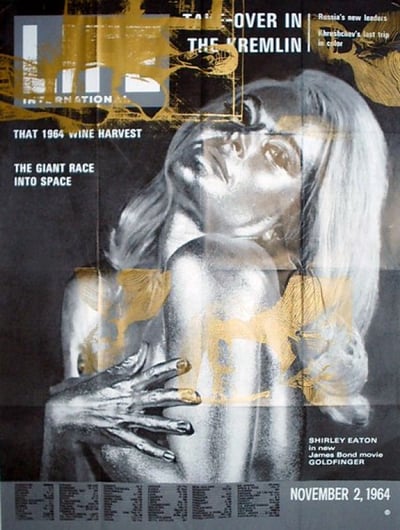
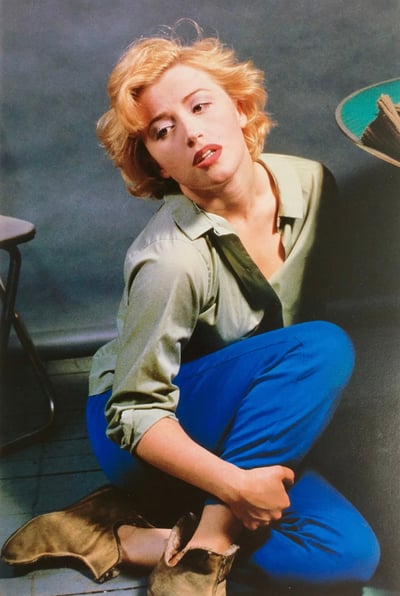
Life 1 by Rosemarie Trockel, created in 2005, is a silkscreen print that revisits and manipulates a famous Life magazine cover from November 2, 1964, featuring actress Shirley Eaton in her iconic gold-painted role from the James Bond film Goldfinger. Trockel’s work overlays the original imagery with gold paint, making each print in the limited edition series a unique piece. The deliberate use of metallic gold emphasizes the themes of glamour, commodification, and the objectification of women in popular culture. By altering this classic image, Trockel critiques the allure and fetishization present in media representations of femininity. The gold overlays transform the piece, merging nostalgia with contemporary commentary on identity and societal values.
Artwork Copyright © Rosemarie TrockelRosemarie Trockel (Germany, 1952) is a German conceptual artist known for her diverse body of work, including drawings, paintings, sculptures, videos, and installations. She gained prominence in the 1980s with her machine-knitted wool paintings that challenged traditional art forms and gender roles. Trockel's innovative approach often critiques societal norms and explores the intersection of art and feminism.
Artwork Copyright © Rosemarie TrockelLife 1, 2005
Form
Medium
Size
- Inches
- Centimeters
Edition
Price
Available works →
- Authenticity Guaranteed
- Insured Shipping
- Online Since 2005
●
●Inventory 14759
●Signed
●Comes with gallery invoice and certificate
●Sell Us a Similar Artwork. Learn more.
Artist's book with original screen print in slipcase.
- "Pierre Klossowski/Pierre Zucca: living money (1982)"
- Each print is overpainted with gold color - each work is therefore unique
Life 1 by Rosemarie Trockel, created in 2005, is a silkscreen print that revisits and manipulates a famous Life magazine cover from November 2, 1964, featuring actress Shirley Eaton in her iconic gold-painted role from the James Bond film Goldfinger. Trockel’s work overlays the original imagery with gold paint, making each print in the limited edition series a unique piece. The deliberate use of metallic gold emphasizes the themes of glamour, commodification, and the objectification of women in popular culture. By altering this classic image, Trockel critiques the allure and fetishization present in media representations of femininity. The gold overlays transform the piece, merging nostalgia with contemporary commentary on identity and societal values.
Artwork Copyright © Rosemarie TrockelRosemarie Trockel (Germany, 1952) is a German conceptual artist known for her diverse body of work, including drawings, paintings, sculptures, videos, and installations. She gained prominence in the 1980s with her machine-knitted wool paintings that challenged traditional art forms and gender roles. Trockel's innovative approach often critiques societal norms and explores the intersection of art and feminism.
Artwork Copyright © Rosemarie Trockel- Recently Added
- Price (Low-High)
- Price (High-Low)
- Year (Low-High)
- Year (High-Low)
Rosemarie Trockel
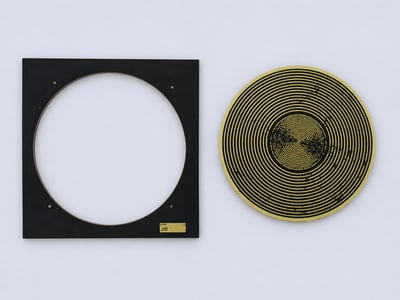
Ex voto Platte, 2000
Sculpture / Object
Mixed Media
EUR 900
Rosemarie Trockel
Life 1, 2005
Limited Edition Print
Silkscreen
Currently Not Available
Available works by Rosemarie Trockel
See all →Rosemarie Trockel
Ex voto Platte, 2000
Sculpture / Object
Mixed Media
EUR 900
Related Artists

Artwork by Willem de Kooning
What is Gestural?
Gestural art is a term that describes painting with freely sweeping brushstrokes. The primary goal of gestural art is to allow the artist to physically express emotional impulses. The varied, yet expressive paint marks are intended to convey the artist's inner thoughts and emotions, which viewers are believed to understand through the dynamic and spontaneous application of paint.


Rosemarie Trockel
Life 1, 2005
120 x 90 cm


