
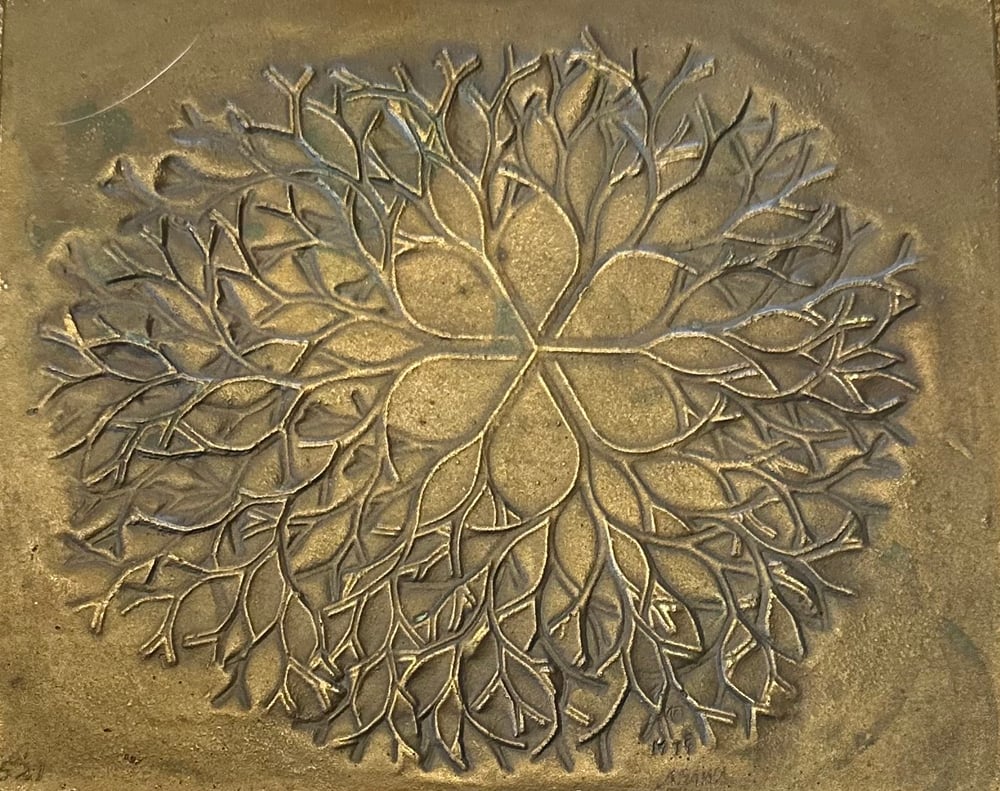
Hand-signed by artist, Inscribed and dated 'Asawa 1979' - Numbered; stamped - Cast by Berkeley Art Foundry
Bronze Flower, created by Ruth Asawa in 1979, is a small yet intricate bronze sculpture measuring 13.3 x 16.5 cm. This piece, cast by the Berkeley Art Foundry, reflects Asawa's distinctive approach to form and nature. The sculpture features a delicate, branching floral pattern, capturing the organic and rhythmic shapes that are characteristic of Asawa’s work. The detailed textures and interwoven lines evoke the resilience and beauty of natural growth, inviting viewers to explore its complex, meditative design. Signed, inscribed, and dated by the artist, this work showcases her expertise in transforming simple materials into evocative art.
Artwork Copyright © Ruth AsawaRuth Asawa (USA, 1926–2013) was a pioneering artist celebrated for her intricate wire sculptures, which blend organic forms with geometric precision. Drawing inspiration from nature and craft traditions, Asawa transformed everyday materials into ethereal, hanging artworks. A champion of arts education, her legacy includes both her innovative sculptures and her advocacy for community-based art programs.
Artwork Copyright © Ruth AsawaBronze Flower, 1979
Form
Medium
Size
- Inches
- Centimeters
Edition
Price
- USD
- EUR
- GBP
- CHF
- Authenticity Guaranteed
- Insured Shipping
- Online Since 2005
●Inventory 11722
●Signed
●Comes with gallery invoice and certificate
●Sell Us a Similar Artwork. Learn more.
Hand-signed by artist, Inscribed and dated 'Asawa 1979' - Numbered; stamped - Cast by Berkeley Art Foundry
Bronze Flower, created by Ruth Asawa in 1979, is a small yet intricate bronze sculpture measuring 13.3 x 16.5 cm. This piece, cast by the Berkeley Art Foundry, reflects Asawa's distinctive approach to form and nature. The sculpture features a delicate, branching floral pattern, capturing the organic and rhythmic shapes that are characteristic of Asawa’s work. The detailed textures and interwoven lines evoke the resilience and beauty of natural growth, inviting viewers to explore its complex, meditative design. Signed, inscribed, and dated by the artist, this work showcases her expertise in transforming simple materials into evocative art.
Artwork Copyright © Ruth AsawaRuth Asawa (USA, 1926–2013) was a pioneering artist celebrated for her intricate wire sculptures, which blend organic forms with geometric precision. Drawing inspiration from nature and craft traditions, Asawa transformed everyday materials into ethereal, hanging artworks. A champion of arts education, her legacy includes both her innovative sculptures and her advocacy for community-based art programs.
Artwork Copyright © Ruth Asawa- Recently Added
- Price (Low-High)
- Price (High-Low)
- Year (Low-High)
- Year (High-Low)

Ruth Asawa
Bronze Flower, 1979
Sculpture / Object
Bronze
USD 3,750
Related Artists


Artwork by Frank Stella
Who are the American Abstract Artists (AAA) ?
American Abstract Artists (AAA) is an organization founded in New York City in 1936 to promote abstract art and its appreciation in the United States. At a time when abstract art faced strong opposition from critics, the AAA provided crucial exhibition opportunities for abstract artists, helping to foster the growth and acceptance of the movement.

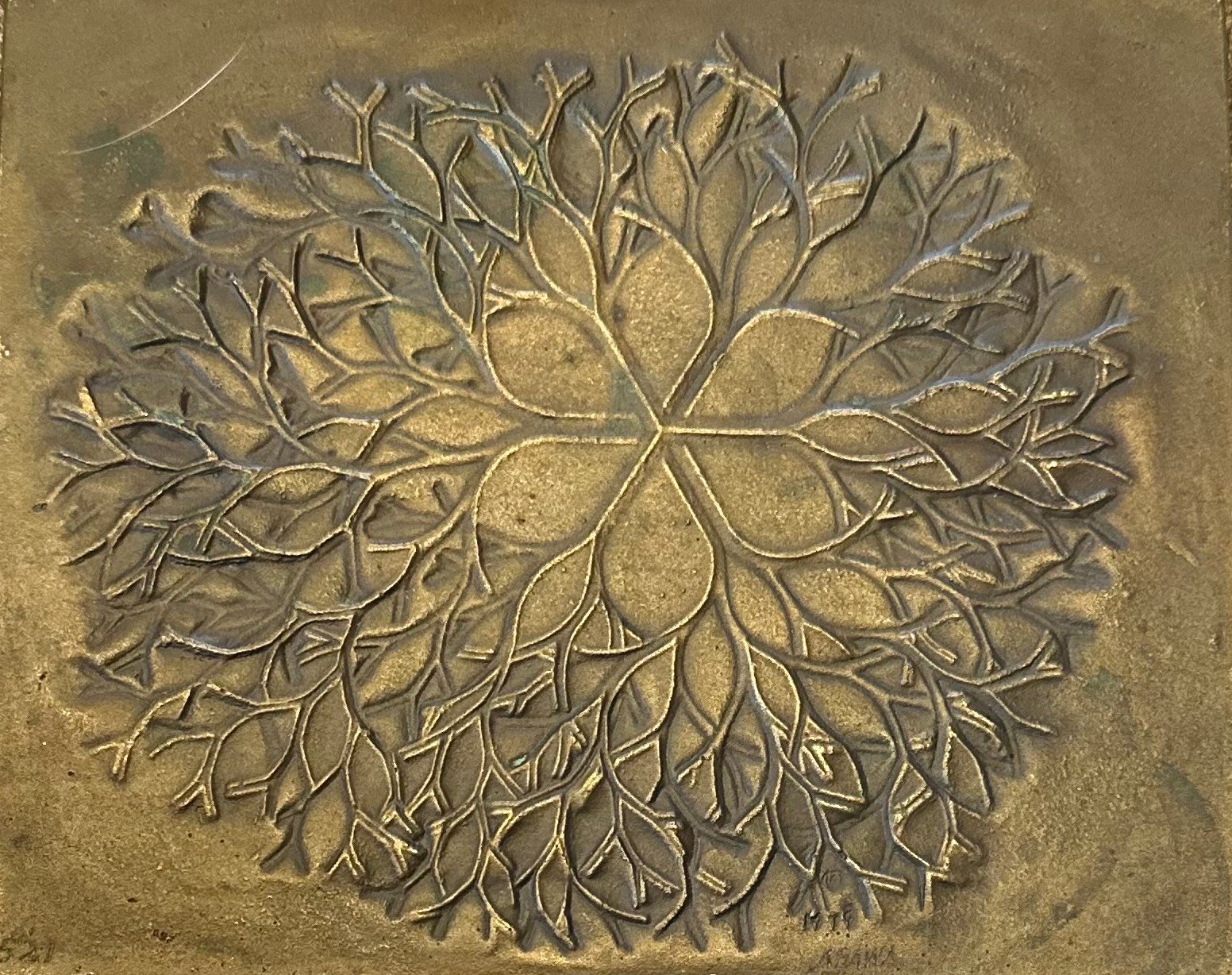
Ruth Asawa
Bronze Flower, 1979
13.3 x 16.5 cm


