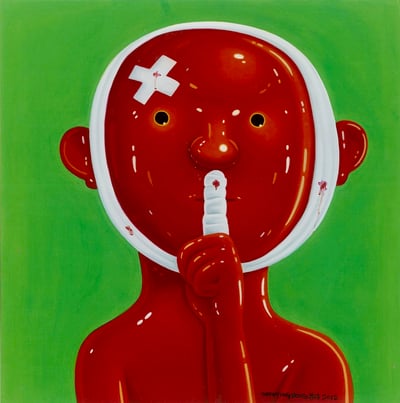
From the graphic potfolio Homage to Bertolt Brecht. Edition of 150 prints (numerated and EA). Paper: Fedrigoni 300, publisher Zbirka Politeo/Collection Politeo
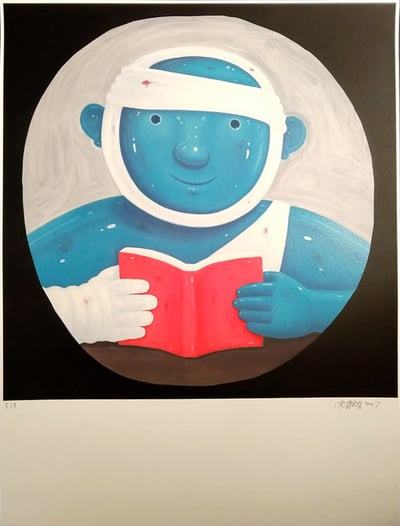
Shen Jingdong's Homage to Bertolt Brecht 1 (2017) is a vibrant silkscreen print that captures a whimsical portrayal of a blue-skinned figure absorbed in reading a red book. This limited edition print, part of a graphic portfolio honoring the influential playwright Bertolt Brecht, presents a character with a gentle smile and bandages, suggesting resilience and introspection. Jingdong's use of bold colors and simplified, rounded forms creates an inviting, almost cartoon-like quality that contrasts with the more profound theme of homage to Brecht. Printed on Fedrigoni 300 paper and published by Collection Politeo, the piece is part of an edition of 150, highlighting its collectible nature and Jingdong's unique approach to blending playfulness with subtle depth.
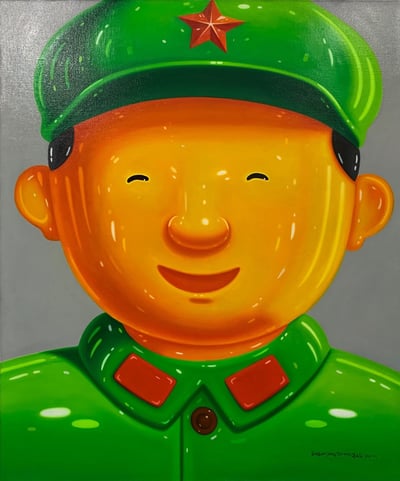
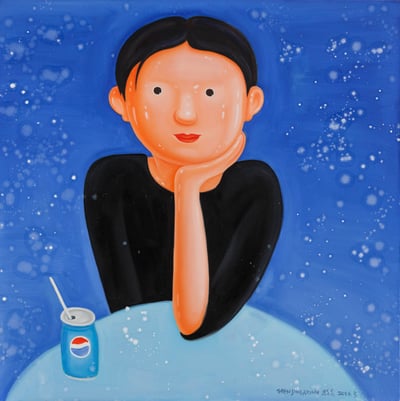
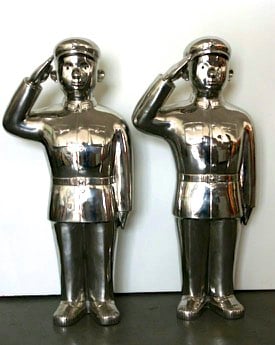
Shen Jingdong (China, 1965) is a contemporary Chinese artist renowned for his vibrant paintings and sculptures that reinterpret traditional Chinese iconography. Drawing from his 16-year experience in the military, Shen's work often features stylized depictions of soldiers and cultural symbols, blending pop art aesthetics with social commentary. His art challenges conventional narratives, offering a playful yet critical perspective on modern Chinese society.
Silkscreen Silkscreen is a printmaking method that uses a screen made of silk or other mesh fabric. The screen is treated with a substance that blocks ink in certain areas, allowing ink to pass through only in the desired sections. Each color in the print requires a separate screen.
From the graphic potfolio Homage to Bertolt Brecht. Edition of 150 prints (numerated and EA). Paper: Fedrigoni 300, publisher Zbirka Politeo/Collection Politeo
Shen Jingdong's Homage to Bertolt Brecht 1 (2017) is a vibrant silkscreen print that captures a whimsical portrayal of a blue-skinned figure absorbed in reading a red book. This limited edition print, part of a graphic portfolio honoring the influential playwright Bertolt Brecht, presents a character with a gentle smile and bandages, suggesting resilience and introspection. Jingdong's use of bold colors and simplified, rounded forms creates an inviting, almost cartoon-like quality that contrasts with the more profound theme of homage to Brecht. Printed on Fedrigoni 300 paper and published by Collection Politeo, the piece is part of an edition of 150, highlighting its collectible nature and Jingdong's unique approach to blending playfulness with subtle depth.
Shen Jingdong (China, 1965) is a contemporary Chinese artist renowned for his vibrant paintings and sculptures that reinterpret traditional Chinese iconography. Drawing from his 16-year experience in the military, Shen's work often features stylized depictions of soldiers and cultural symbols, blending pop art aesthetics with social commentary. His art challenges conventional narratives, offering a playful yet critical perspective on modern Chinese society.
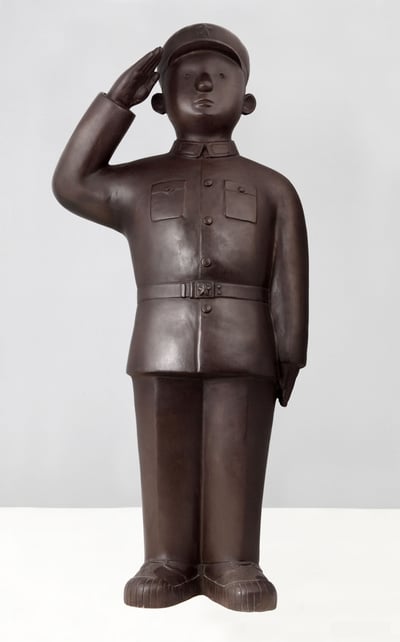
Shen Jingdong is a contemporary artist, renowned for drawing inspiration from his home nation, China, with paintings and sculptures denoting traditional iconography. Jingdong’s recognition was quickly accelerated in 2008 with the unveiling of his Hero series, in which he subverted the traditional image of the soldier and various other icons of Chinese tradition - sometimes depicted in a range of expressive colours such as blue, red and green. Jingdong served in the Chinese army for 16 years and has frequently drawn on this experience as a means of expression – his Eight Route Army piece displays soldiers in an unorthodox light; he moves away from the typical notion of soldiers (violent, unfeeling, almost mechanical) and instead paints them with iconic images in mind such as children’s toy soldiers and the Japanese comic interpretation of them. (Artist website)
Comic strip art refers to artwork that utilizes the subject matter and commercial printing techniques found in comic strips. In the 1960s, a group of artists began creating paintings that incorporated Ben-Day dots—commonly used in comics and advertising—to produce highly graphic designs in bright colors, using traditional art media.