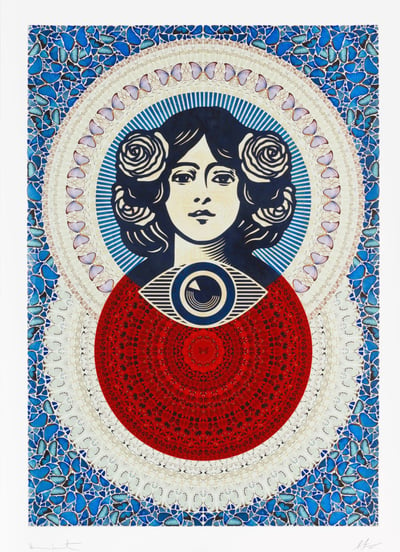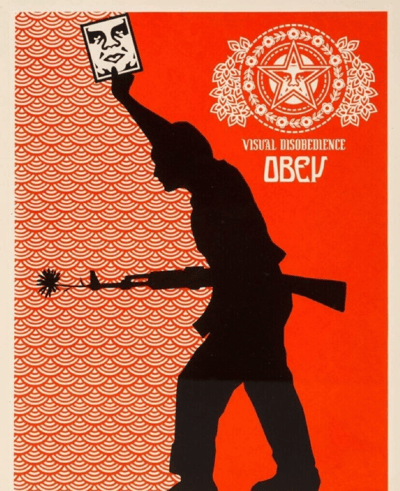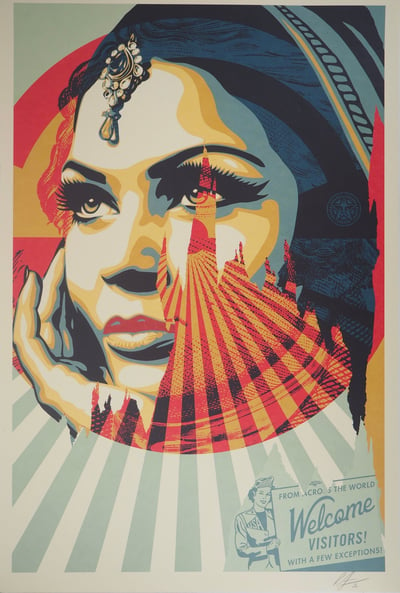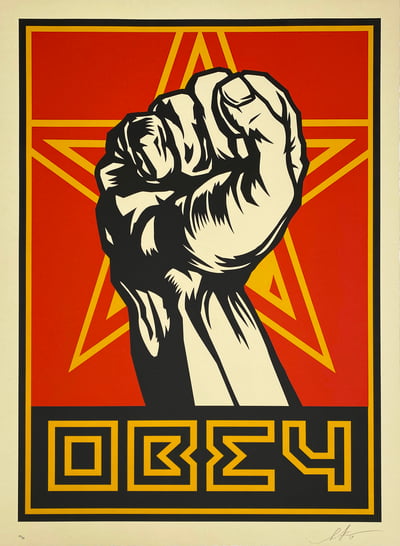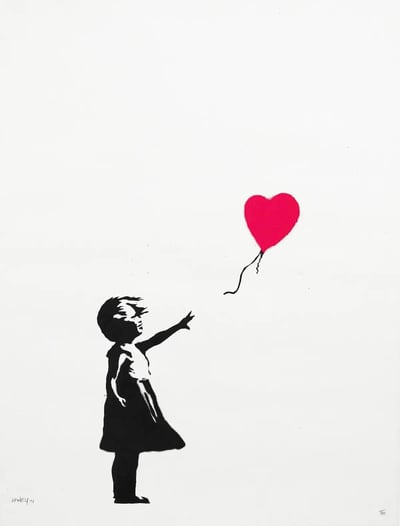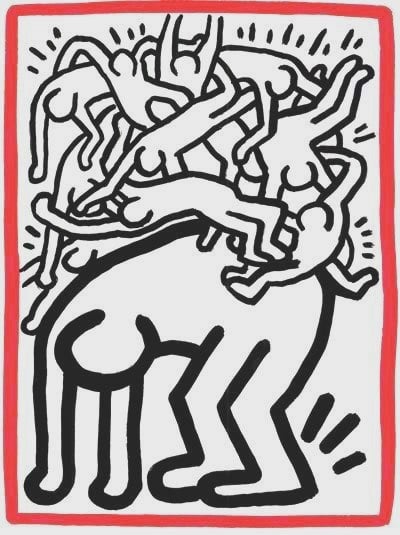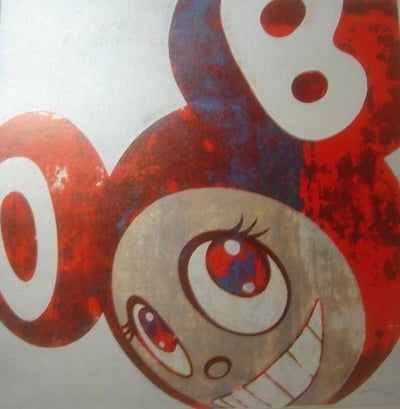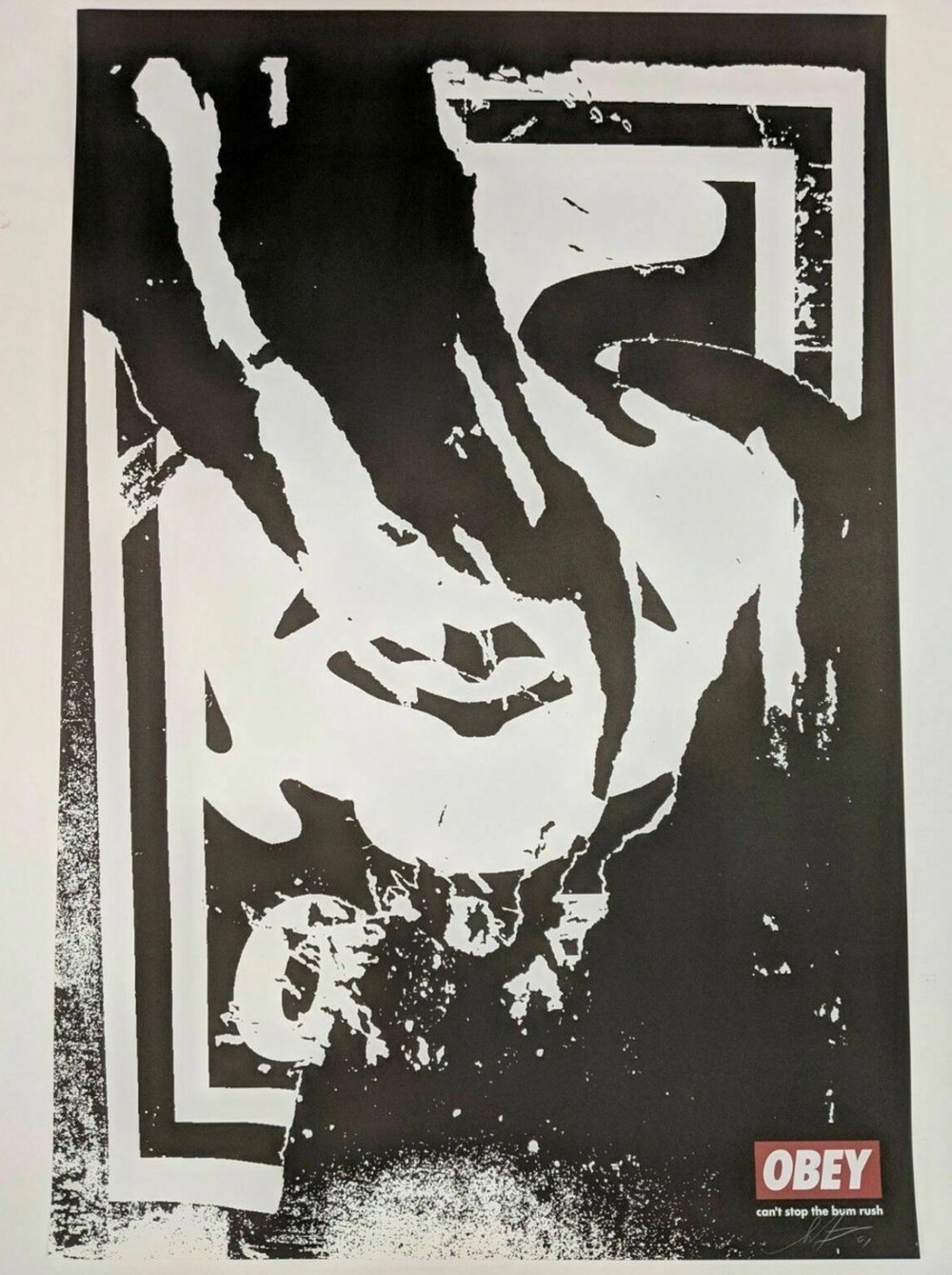
Obey (Ripped) by Shepard Fairey is a raw and provocative lithograph created in 2001. The print features Fairey’s signature bold contrast of black and white, with a distressed, torn appearance that hints at rebellion and the impermanence of public art. The iconic Obey logo in the bottom corner, along with the jagged, fragmented imagery, evokes a sense of urban grit and countercultural resistance. Fairey’s work, often associated with street art and political statements, uses a simplified palette and impactful design to draw attention to themes of power, control, and dissent. This open edition print is hand-signed and dated by Fairey, adding a personal touch to the piece’s commentary on authority and subversion.
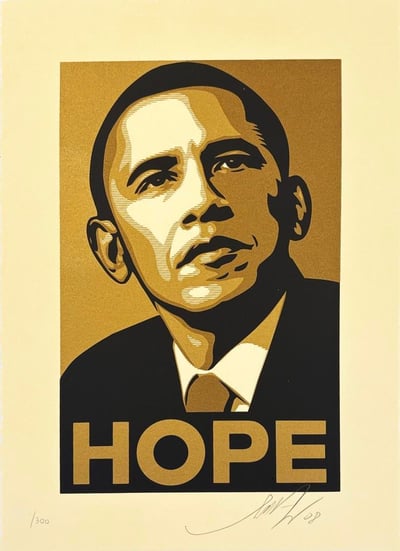
Shepard Fairey (USA, 1970) is a contemporary street artist and graphic designer, best known for his iconic Obey Giant campaign and the Hope poster for Barack Obama. Merging bold graphics with political messages, his work critiques power, consumerism, and social issues.
Lithograph Lithography is a printing method based on the principle that water and oil do not mix. It can be used to print artwork or text onto paper or other suitable materials. Traditionally, an image was drawn with wax, fat, or oil onto a lithographic limestone surface or plate. Today, metal plates and other surfaces are also used in lithographic printing.
Obey (Ripped) by Shepard Fairey is a raw and provocative lithograph created in 2001. The print features Fairey’s signature bold contrast of black and white, with a distressed, torn appearance that hints at rebellion and the impermanence of public art. The iconic Obey logo in the bottom corner, along with the jagged, fragmented imagery, evokes a sense of urban grit and countercultural resistance. Fairey’s work, often associated with street art and political statements, uses a simplified palette and impactful design to draw attention to themes of power, control, and dissent. This open edition print is hand-signed and dated by Fairey, adding a personal touch to the piece’s commentary on authority and subversion.
Shepard Fairey (USA, 1970) is a contemporary street artist and graphic designer, best known for his iconic Obey Giant campaign and the Hope poster for Barack Obama. Merging bold graphics with political messages, his work critiques power, consumerism, and social issues.
Street art, of course, is political, because it's illegal; so the very act of doing it is an act of defiance.
- Shepard Fairey
Shepard Fairey (b. 1970 USA) is an American contemporary artist, activist, and founder of OBEY Clothing, known for his distinctive style that blendsstreet art, graphic design, and political commentary. Fairey rose to prominence with his "Andre the Giant Has a Posse" sticker campaign in the late 1980s, which evolved into the iconic "OBEY" series, reflecting his exploration of propaganda, power, and control. He is perhaps best known for his "HOPE" poster created during Barack Obama's 2008 presidential campaign, which became a symbol of the era. Fairey’s work, which spans murals, posters, and fine art, is characterized by its bold use of color, imagery, and typography, often addressing themes of social justice, environmentalism, and anti-authoritarianism. His contributions have significantly shaped the visual language of contemporary activism and have made him one of the most influential figures in modern street art. (Artist website)
Graffiti art refers to drawings and writings that are painted, scratched, or scribbled on walls or other surfaces, typically in public spaces. This art form ranges from small tags to elaborate wall paintings. Graffiti has been in existence since ancient times, with examples dating back to the Roman Empire, Ancient Greece, and Ancient Egypt.