
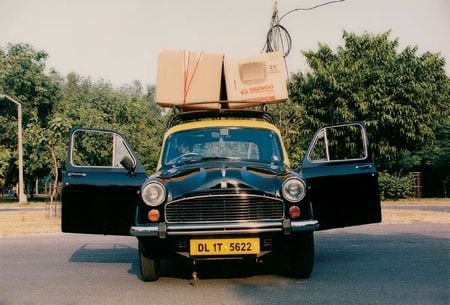
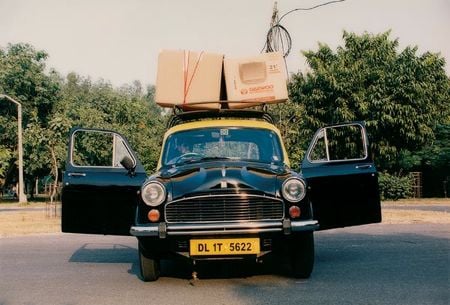
// This untitled photograph by Subodh Gupta, taken in 2006, captures an iconic image of a black taxi in India, likely a Hindustan Ambassador, with cardboard boxes tied on the roof. The doors of the car are open, inviting a sense of halted motion or transition, and the yellow and black taxi, with its classic design, evokes the everyday life and unique charm of Indian streets. Gupta’s work often explores themes of migration, cultural identity, and the intersections between tradition and modernity. By focusing on a common object laden with cargo, he reflects the ingenuity and resourcefulness embedded in daily life. Limited to an edition of just 5, this photograph encapsulates Gupta's fascination with the symbolic power of ordinary objects within Indian culture.
Artwork Copyright © Subodh GuptaSubodh Gupta (India, 1964) is an Indian contemporary artist renowned for transforming everyday objects into monumental sculptures and installations. Utilizing materials like stainless steel utensils, bicycles, and milk pails, his work reflects on India's economic transformation and cultural identity. Notable pieces include 'Very Hungry God' and 'Gandhi's Three Monkeys.'
Artwork Copyright © Subodh Guptatitle unknown, 2006
Form
Medium
Size
- Inches
- Centimeters
Edition
Price
Available works →
- Authenticity Guaranteed
- Insured Shipping
- Online Since 2005
●
●Inventory 1341
●Signed
●Comes with gallery invoice and certificate
●Sell Us a Similar Artwork. Learn more.
// This untitled photograph by Subodh Gupta, taken in 2006, captures an iconic image of a black taxi in India, likely a Hindustan Ambassador, with cardboard boxes tied on the roof. The doors of the car are open, inviting a sense of halted motion or transition, and the yellow and black taxi, with its classic design, evokes the everyday life and unique charm of Indian streets. Gupta’s work often explores themes of migration, cultural identity, and the intersections between tradition and modernity. By focusing on a common object laden with cargo, he reflects the ingenuity and resourcefulness embedded in daily life. Limited to an edition of just 5, this photograph encapsulates Gupta's fascination with the symbolic power of ordinary objects within Indian culture.
Artwork Copyright © Subodh GuptaSubodh Gupta (India, 1964) is an Indian contemporary artist renowned for transforming everyday objects into monumental sculptures and installations. Utilizing materials like stainless steel utensils, bicycles, and milk pails, his work reflects on India's economic transformation and cultural identity. Notable pieces include 'Very Hungry God' and 'Gandhi's Three Monkeys.'
Artwork Copyright © Subodh Gupta- Recently Added
- Price (Low-High)
- Price (High-Low)
- Year (Low-High)
- Year (High-Low)
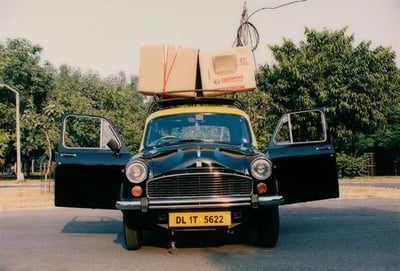
Subodh Gupta
title unknown, 2006
Photography
Photograph
Currently Not Available
Related Artists

Artwork by SH Raza
What is Contemporary art from India?
Contemporary art from India dates from 1985 to the present, marking the post-liberalization era. During this period, artists have felt free to create independently of traditional Hindu or social conventions. They often incorporate distinctly Indian materials and objects in their work, reflecting a blend of modern ideas and cultural heritage.

Subodh Gupta
title unknown, 2006
95 x 140 cm


