

8 prints portfolio - Screenprint on Mirripaper in a box 50 x 70 cm (each) / 19.7 x 27.6 inches - Ed. 8 / 8 ; 2 E.A. ; 2 H.C.; 2 E.E - Numbered, dated & signed on the back
Artwork Copyright © Sylvie FleurySylvie Fleury (Switzerland, 1961) is a contemporary artist known for blending Pop Art and feminism. Her works often recontextualize luxury goods, fashion, and consumer culture, using humor and critique to explore themes of desire, identity, and societal values.
Artwork Copyright © Sylvie FleuryRay Guns, 2004
Form
Medium
Size
- Inches
- Centimeters
Edition
Price
Available works →
- Authenticity Guaranteed
- Insured Shipping
- Online Since 2005
●
●Inventory 3652
●Signed
●Comes with gallery invoice and certificate
●Sell Us a Similar Artwork. Learn more.
8 prints portfolio - Screenprint on Mirripaper in a box 50 x 70 cm (each) / 19.7 x 27.6 inches - Ed. 8 / 8 ; 2 E.A. ; 2 H.C.; 2 E.E - Numbered, dated & signed on the back
Artwork Copyright © Sylvie FleurySylvie Fleury (Switzerland, 1961) is a contemporary artist known for blending Pop Art and feminism. Her works often recontextualize luxury goods, fashion, and consumer culture, using humor and critique to explore themes of desire, identity, and societal values.
Artwork Copyright © Sylvie Fleury- Recently Added
- Price (Low-High)
- Price (High-Low)
- Year (Low-High)
- Year (High-Low)

Sylvie Fleury
Gate of hell (purple), 2017
Tapestry
Textile
EUR 6,000

Sylvie Fleury
Gate of hell (red), 2017
Tapestry
Textile
EUR 6,000

Sylvie Fleury
Gate of hell (orange), 2017
Tapestry
Textile
EUR 6,000
Available works by Sylvie Fleury
See all →Sylvie Fleury
Gate of hell (purple), 2017
Tapestry
Textile
EUR 6,000
Sylvie Fleury
Gate of hell (red), 2017
Tapestry
Textile
EUR 6,000
Sylvie Fleury
Gate of hell (orange), 2017
Tapestry
Textile
EUR 6,000
Related Artists


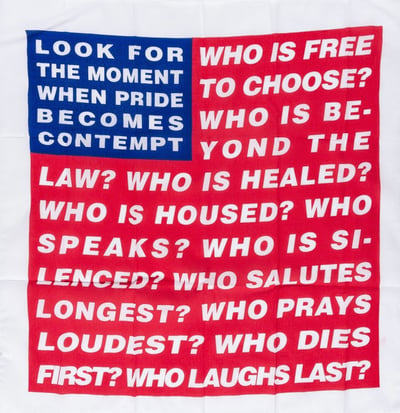


Artwork by Shepard Fairey
What is appropriation?
Appropriation in art involves using pre-existing images or objects with little or no modification. This technique has played a significant role across various art forms, including visual arts, music, performance, and literature. In visual arts, appropriation refers to the practice of adopting, sampling, recycling, or borrowing elements—or even entire forms—of existing visual culture, integrating them into new works to create meaning or critique.


