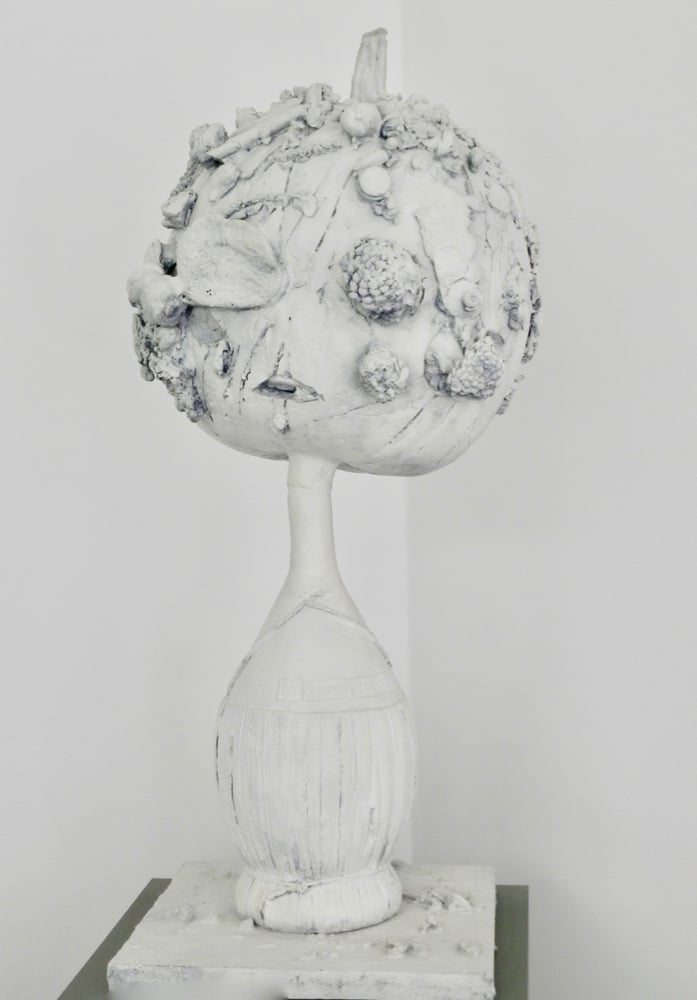
Bronze with white patina - signed and numbered by the artist
Soya and Litschi by Tal R is a bronze sculpture with a unique white patina finish, standing 67 cm tall. Created in 2006, this artwork showcases Tal R’s interest in blending familiar objects with abstract forms. The piece has an organic yet surreal shape, resembling a spherical form balanced atop a vase-like structure. The sphere’s surface is intricately textured, dotted with various shapes and patterns, evoking a sense of growth or accretion, almost as if natural elements are embedded into the form. The contrast between the rough, almost chaotic detailing on the upper part and the smoother, more structured lower section gives the sculpture a dynamic quality, suggesting themes of harmony between nature and man-made forms. The piece, signed and numbered by the artist, is part of a limited edition of three, adding a layer of exclusivity.
Artwork Copyright © Tal RTal R (Denmark, 1967) is an Israeli-born Danish artist renowned for his vibrant, eclectic works that blend painting, collage, sculpture, and printmaking. His art often incorporates elements from diverse sources, a method he describes as 'kolbojnik,' Hebrew for 'leftovers.' Tal R's distinctive style reflects a fusion of cultural influences and a playful exploration of form and color.
Artwork Copyright © Tal RSoya and Litschi, 2006
Form
Medium
Size
- Inches
- Centimeters
Edition
Price
Available works →
- Authenticity Guaranteed
- Insured Shipping
- Online Since 2005
●
●Inventory 5512
●Signed
●Comes with gallery invoice and certificate
●Sell Us a Similar Artwork. Learn more.
Bronze with white patina - signed and numbered by the artist
Soya and Litschi by Tal R is a bronze sculpture with a unique white patina finish, standing 67 cm tall. Created in 2006, this artwork showcases Tal R’s interest in blending familiar objects with abstract forms. The piece has an organic yet surreal shape, resembling a spherical form balanced atop a vase-like structure. The sphere’s surface is intricately textured, dotted with various shapes and patterns, evoking a sense of growth or accretion, almost as if natural elements are embedded into the form. The contrast between the rough, almost chaotic detailing on the upper part and the smoother, more structured lower section gives the sculpture a dynamic quality, suggesting themes of harmony between nature and man-made forms. The piece, signed and numbered by the artist, is part of a limited edition of three, adding a layer of exclusivity.
Artwork Copyright © Tal RTal R (Denmark, 1967) is an Israeli-born Danish artist renowned for his vibrant, eclectic works that blend painting, collage, sculpture, and printmaking. His art often incorporates elements from diverse sources, a method he describes as 'kolbojnik,' Hebrew for 'leftovers.' Tal R's distinctive style reflects a fusion of cultural influences and a playful exploration of form and color.
Artwork Copyright © Tal R- Recently Added
- Price (Low-High)
- Price (High-Low)
- Year (Low-High)
- Year (High-Low)
Tal R
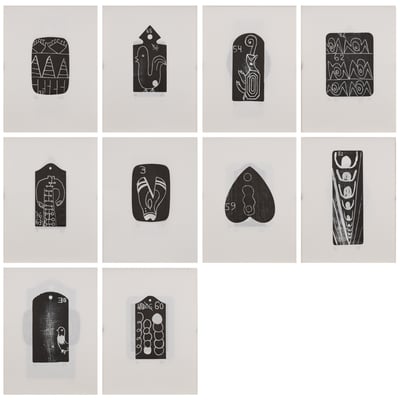
Almanach (67 prints), 2015
Limited Edition Print
Woodcut
EUR 35,000

Tal R
Soya and Litschi, 2006
Sculpture / Object
Bronze
Currently Not Available
Available works by Tal R
See all →Tal R
Almanach (67 prints), 2015
Limited Edition Print
Woodcut
EUR 35,000
Related Artists

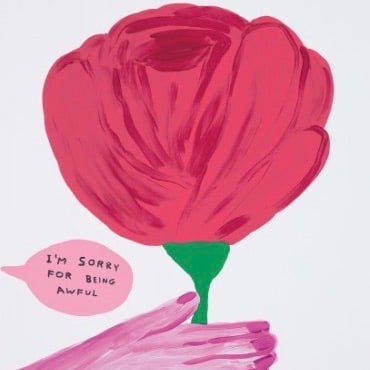
Artwork by David Shrigley
What is Naive Art?
Naïve art describes a style of artwork that is simple and unsophisticated, often created by artists without formal training in an academy or art school. The style is characterized by a lack of advanced techniques, giving it a childlike appearance. Naïve art often features bright colors, simple shapes, and a straightforward approach to subject matter, reflecting the artist's untrained perspective.