

Edition of 36 - Hand Deckled Paper
Red Marilyn by William Anastasi is a limited edition etching that reflects the artist’s engagement with pop culture and media. This piece reimagines Andy Warhol’s iconic Marilyn Monroe image, overlaid on a newspaper-style background with an article headline reading, “Warhol ‘Red Marilyn’ Sets Record at Christie’s.” The etching's monochromatic red tone adds a bold, intense visual impact, emphasizing the cultural fascination with celebrity and the commodification of art. By incorporating a newsprint effect, Anastasi blurs the line between art and media, inviting viewers to reflect on the legacy of Marilyn Monroe and the commercialization of her image in contemporary art. With only 36 copies, this work is both rare and evocative.
Artwork Copyright © William AnastasiWilliam Anastasi (USA, 1933–2023) was a pioneering conceptual artist whose work explored chance, indeterminacy, and the unconscious. Known for his 'Subway Drawings,' created in transit with closed eyes, Anastasi challenged traditional artistic authorship. His innovative practice included drawing, sculpture, photography, and sound art, with works held in major museums like MoMA and the Whitney.
Artwork Copyright © William AnastasiRed Marilyn
Form
Medium
Size
- Inches
- Centimeters
Edition
Price
- USD
- EUR
- GBP
- CHF
- Authenticity Guaranteed
- Insured Shipping
- Online Since 2005
●Inventory 3197
●Signed
●Comes with gallery invoice and certificate
●Sell Us a Similar Artwork. Learn more.
Edition of 36 - Hand Deckled Paper
Red Marilyn by William Anastasi is a limited edition etching that reflects the artist’s engagement with pop culture and media. This piece reimagines Andy Warhol’s iconic Marilyn Monroe image, overlaid on a newspaper-style background with an article headline reading, “Warhol ‘Red Marilyn’ Sets Record at Christie’s.” The etching's monochromatic red tone adds a bold, intense visual impact, emphasizing the cultural fascination with celebrity and the commodification of art. By incorporating a newsprint effect, Anastasi blurs the line between art and media, inviting viewers to reflect on the legacy of Marilyn Monroe and the commercialization of her image in contemporary art. With only 36 copies, this work is both rare and evocative.
Artwork Copyright © William AnastasiWilliam Anastasi (USA, 1933–2023) was a pioneering conceptual artist whose work explored chance, indeterminacy, and the unconscious. Known for his 'Subway Drawings,' created in transit with closed eyes, Anastasi challenged traditional artistic authorship. His innovative practice included drawing, sculpture, photography, and sound art, with works held in major museums like MoMA and the Whitney.
Artwork Copyright © William Anastasi- Recently Added
- Price (Low-High)
- Price (High-Low)
- Year (Low-High)
- Year (High-Low)

William Anastasi
A Painting of a Soup Can
Limited Edition Print
Silkscreen
USD 2,400

William Anastasi
The Want Portfolio (3)
Limited Edition Print
Silkscreen
USD 7,800

William Anastasi
Red Marilyn
Limited Edition Print
Etching
USD 3,800
Related Artists

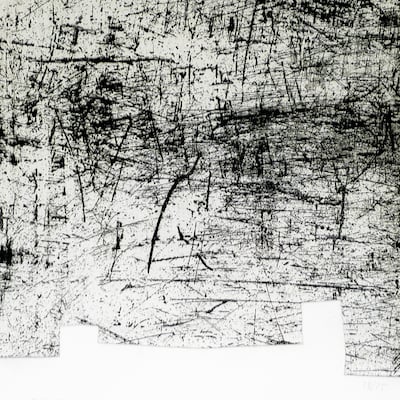
Artwork by Eduardo Chillida
What is abstract art?
Abstract art uses form, shape, line, and color to create a visual experience without attempting to represent external reality. The composition exists independently of the world's visual references, focusing on expressing ideas and emotions through non-representational means.


William Anastasi
Red Marilyn
33 x 35.5 cm


