
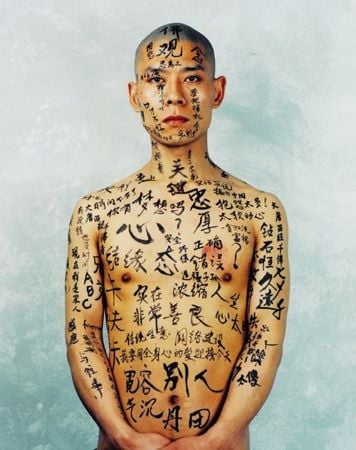
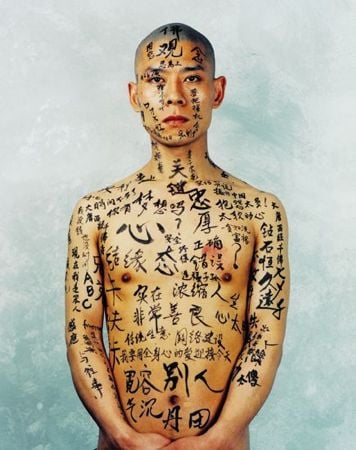
// 1/2 by Zhang Huan, created in 1998, is a striking limited edition silkscreen print that explores themes of identity, language, and cultural heritage. The artwork features a frontal portrait of the artist’s body, entirely covered in black Chinese characters painted onto his skin. These characters represent a variety of phrases, words, and symbols, creating an intricate tapestry of text that transforms his body into a living canvas. Zhang Huan often uses his own body in his works to express the intersections between personal experience and broader societal constructs. This piece reflects the weight of cultural memory, the passage of ancestral knowledge, and the complex relationship between self and society. It is an iconic example of Zhang's introspective and physically immersive approach to contemporary art.
Artwork Copyright © Zhang HuanZhang Huan (China, 1965) is a Chinese artist known for his provocative performance art, photography, and sculpture. His early works often involved physical endurance, exploring themes of identity and spirituality. Notable pieces include '12 Square Meters' and 'To Add One Meter to an Anonymous Mountain.' Zhang's art challenges cultural norms and reflects on human existence.
Artwork Copyright © Zhang Huan1/2, 1998
Form
Medium
Size
- Inches
- Centimeters
Price
Available works →
- Authenticity Guaranteed
- Insured Shipping
- Online Since 2005
●
●Inventory 1328
●Signed
●Comes with gallery invoice and certificate
●Sell Us a Similar Artwork. Learn more.
// 1/2 by Zhang Huan, created in 1998, is a striking limited edition silkscreen print that explores themes of identity, language, and cultural heritage. The artwork features a frontal portrait of the artist’s body, entirely covered in black Chinese characters painted onto his skin. These characters represent a variety of phrases, words, and symbols, creating an intricate tapestry of text that transforms his body into a living canvas. Zhang Huan often uses his own body in his works to express the intersections between personal experience and broader societal constructs. This piece reflects the weight of cultural memory, the passage of ancestral knowledge, and the complex relationship between self and society. It is an iconic example of Zhang's introspective and physically immersive approach to contemporary art.
Artwork Copyright © Zhang HuanZhang Huan (China, 1965) is a Chinese artist known for his provocative performance art, photography, and sculpture. His early works often involved physical endurance, exploring themes of identity and spirituality. Notable pieces include '12 Square Meters' and 'To Add One Meter to an Anonymous Mountain.' Zhang's art challenges cultural norms and reflects on human existence.
Artwork Copyright © Zhang Huan- Recently Added
- Price (Low-High)
- Price (High-Low)
- Year (Low-High)
- Year (High-Low)

Zhang Huan
Shanghai Family Tree, 2023
Photography
Giclée printing
Currently Not Available
Zhang Huan
1/2, 1998
Limited Edition Print
Silkscreen
Currently Not Available
Related Artists

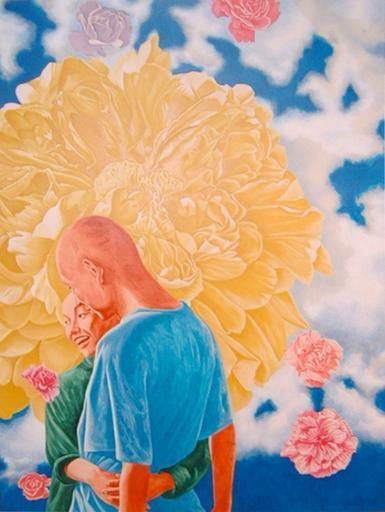

Artwork by Zhang Dali
What is Live Art?
Live art is a form of performance that began in the 1960s and is generally exploratory and innovative. It involves a single artist or an artist group presenting the work before a live audience. The performances can include humans, animals, and living plants, often blurring the boundaries between art and life, and encouraging interaction with the audience.

Zhang Huan
1/2, 1998
141 x 120 cm


