

Set of 9 Giclee prints on 310 gsm Exhibition Photo Baryta paper
- 31 x 43 cm (12.2 x 16.9 in) each
- Signed and numbered on a label affixed to the back
Shanghai Family Tree by Zhang Huan is a photographic series composed of nine giclée prints, each measuring 31 x 43 cm, on Exhibition Photo Baryta paper. Created in 2023, this work explores themes of identity and transformation. The artist uses his own face as a canvas, progressively covering it with Chinese calligraphy in each frame. The calligraphy, symbolizing personal and cultural history, becomes denser, almost obscuring facial features. This visual evolution reflects the interplay of individual identity with collective heritage and memory. The methodical arrangement of the images highlights the tension between clarity and obscurity, inviting viewers to contemplate how identity is shaped and overwritten by historical narratives.
Artwork Copyright © Zhang HuanZhang Huan (China, 1965) is a Chinese artist known for his provocative performance art, photography, and sculpture. His early works often involved physical endurance, exploring themes of identity and spirituality. Notable pieces include '12 Square Meters' and 'To Add One Meter to an Anonymous Mountain.' Zhang's art challenges cultural norms and reflects on human existence.
Artwork Copyright © Zhang HuanShanghai Family Tree, 2023
Form
Medium
Size
- Inches
- Centimeters
Edition
Price
Available works →
- Authenticity Guaranteed
- Insured Shipping
- Online Since 2005
●
●Inventory 14737
●Signed on a label
●Comes with gallery invoice and certificate
●Sell Us a Similar Artwork. Learn more.
Set of 9 Giclee prints on 310 gsm Exhibition Photo Baryta paper
- 31 x 43 cm (12.2 x 16.9 in) each
- Signed and numbered on a label affixed to the back
Shanghai Family Tree by Zhang Huan is a photographic series composed of nine giclée prints, each measuring 31 x 43 cm, on Exhibition Photo Baryta paper. Created in 2023, this work explores themes of identity and transformation. The artist uses his own face as a canvas, progressively covering it with Chinese calligraphy in each frame. The calligraphy, symbolizing personal and cultural history, becomes denser, almost obscuring facial features. This visual evolution reflects the interplay of individual identity with collective heritage and memory. The methodical arrangement of the images highlights the tension between clarity and obscurity, inviting viewers to contemplate how identity is shaped and overwritten by historical narratives.
Artwork Copyright © Zhang HuanZhang Huan (China, 1965) is a Chinese artist known for his provocative performance art, photography, and sculpture. His early works often involved physical endurance, exploring themes of identity and spirituality. Notable pieces include '12 Square Meters' and 'To Add One Meter to an Anonymous Mountain.' Zhang's art challenges cultural norms and reflects on human existence.
Artwork Copyright © Zhang Huan- Recently Added
- Price (Low-High)
- Price (High-Low)
- Year (Low-High)
- Year (High-Low)

Zhang Huan
Shanghai Family Tree, 2023
Photography
Giclée printing
Currently Not Available
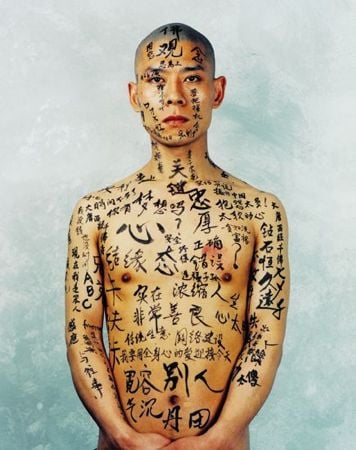
Zhang Huan
1/2, 1998
Limited Edition Print
Silkscreen
Currently Not Available
Related Artists


Artwork by Zhang Dali
What is Live Art?
Live art is a form of performance that began in the 1960s and is generally exploratory and innovative. It involves a single artist or an artist group presenting the work before a live audience. The performances can include humans, animals, and living plants, often blurring the boundaries between art and life, and encouraging interaction with the audience.



